 Save
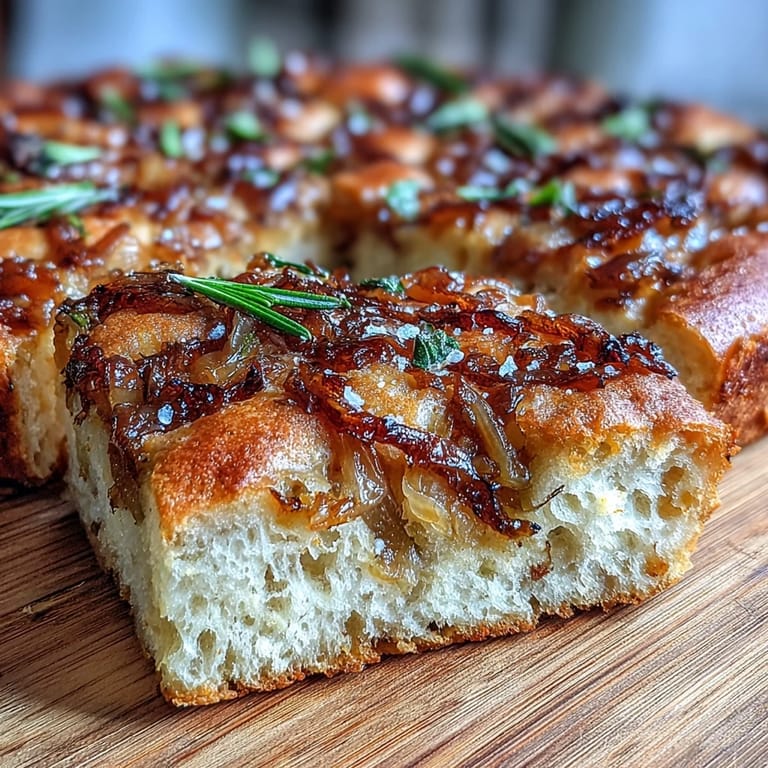
Save My neighbor brought over a warm slice of focaccia one afternoon, and I still remember the way the dimpled surface glistened with olive oil under the kitchen light. The caramelized onions melted on my tongue, and I thought, "I have to figure out how to make this." Years later, after a few burnt batches and plenty of patience with my sourdough starter, I finally nailed it—and honestly, it's become my go-to bread for impressing people without breaking a sweat.
I made this for a dinner party once, pulling it straight from the oven just as guests arrived, and the moment they walked in, they stopped talking mid-sentence. There's something about fresh focaccia—the way it cracks when you tear into it, the steam rising up—that makes people feel genuinely welcomed. That night, this bread became the star of the table, not the side dish.
Ingredients
- Active sourdough starter (100 g at 100% hydration): This is your leavening agent and flavor foundation; if your starter isn't bubbly and active, give it a few more hours at room temperature to wake up properly.
- Bread flour (400 g): The higher protein content builds structure and creates that chewy, open crumb you want in focaccia.
- Lukewarm water (300 ml): This hydration level creates an extensible dough that's forgiving to work with; use filtered water if your tap water is heavily chlorinated, as it can slow fermentation.
- Fine sea salt (10 g): Add this after the autolyse to avoid inhibiting gluten development in those early stages.
- Extra-virgin olive oil (20 ml for dough, plus more for pan and topping): Quality matters here because the oil is a main flavor player; use one you actually enjoy tasting straight from the bottle.
- Yellow onions (2 medium, thinly sliced): Low and slow caramelization transforms them into glossy, sweet strands that cling beautifully to the dimpled surface.
- Flaky sea salt (1 tsp) and fresh rosemary (optional): These finishing touches provide textural contrast and herbaceous brightness that prevents the bread from feeling one-dimensional.
Tired of Takeout? 🥡
Get 10 meals you can make faster than delivery arrives. Seriously.
One email. No spam. Unsubscribe anytime.
Instructions
- Mix and rest the base:
- Combine your active starter, flour, and water in a large bowl until everything is shaggy and no dry flour remains. Cover and let it sit for 30 minutes—this autolyse period allows the flour to fully hydrate and makes the dough easier to work with once you add salt.
- Incorporate salt and oil:
- Wet your hand, add the salt and olive oil to the dough, and squeeze it through with your fingers until fully incorporated. It'll feel slippery and slightly fragile, which is exactly right.
- Build gluten with stretch and folds:
- Over the next 2 hours, every 30 minutes, grab one side of the dough, stretch it up, and fold it over itself—repeat this from all four sides. You'll feel the dough become stronger and more cohesive with each set; these folds replace kneading and create the structure you need.
- First rise:
- Cover the bowl and let the dough rise at room temperature for 6 to 8 hours until roughly doubled. The exact timing depends on your kitchen temperature, so trust your eyes over the clock.
- Shape into the pan:
- Generously oil your 9x13-inch baking pan to prevent sticking. With oiled hands, gently transfer the dough and lightly stretch and press it to fit the pan, being careful not to knock out all the air you've built up.
- Cold final proof:
- Cover the pan and refrigerate overnight (8 to 12 hours). This slow fermentation develops deeper flavor and makes the dough easier to handle and dimple.
- Meanwhile, caramelize the onions:
- Heat 1 tablespoon of olive oil in a skillet over medium-low heat, add your thinly sliced onions, and stir occasionally for 20 to 25 minutes until they're golden, soft, and smelling absolutely incredible. They should shrink down to about one-quarter their original volume—be patient, rushing this ruins the magic.
- Bring dough to room temperature:
- Remove the dough from the refrigerator about 1 hour before baking so it can warm up slightly and become easier to dimple.
- Add the toppings:
- Preheat your oven to 220°C (425°F). With slightly oiled fingertips, press dimples all across the dough surface—don't be shy, these dimples catch the oil and create textural interest. Drizzle lightly with olive oil, scatter your cooled caramelized onions evenly, sprinkle flaky sea salt, and add rosemary and pepper if using.
- Bake to golden:
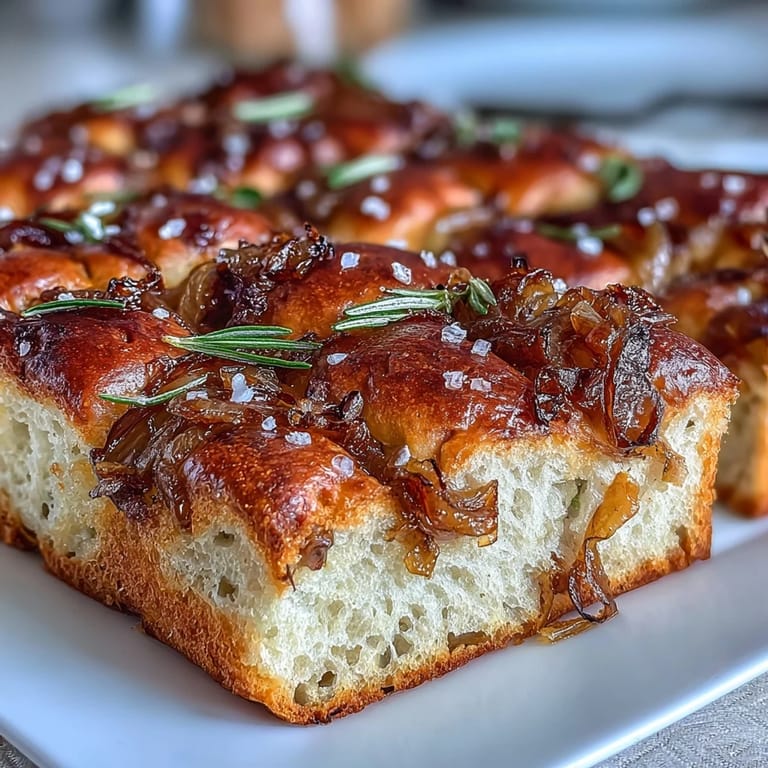
- Bake for 25 to 30 minutes until the edges are crispy and deeply golden and the top is set. You're looking for a bread that feels sturdy, not soft or pale.
- Cool and serve:
- Let it cool for a few minutes on the pan—this allows the bottom to set—then slice and serve warm while the interior is still slightly steamy.
 Save
Save The first time someone asked for seconds and then a slice to take home, I realized this bread had crossed from recipe to ritual. It's become the thing I make when I want to show up for people, and that matters more than any perfect crust or perfect rise.
Understanding Sourdough Fermentation
Sourdough isn't complicated, but it does reward attention and observation over strict timing. Your kitchen temperature, the strength of your starter, and even the humidity in the air will shift how fast your dough rises, so learning to read the dough's behavior becomes more useful than any timer. When the dough has roughly doubled and shows a gentle dome with a slight jiggle, you're in the right window, not a minute earlier or later necessarily.
The Secret to Perfect Caramelization
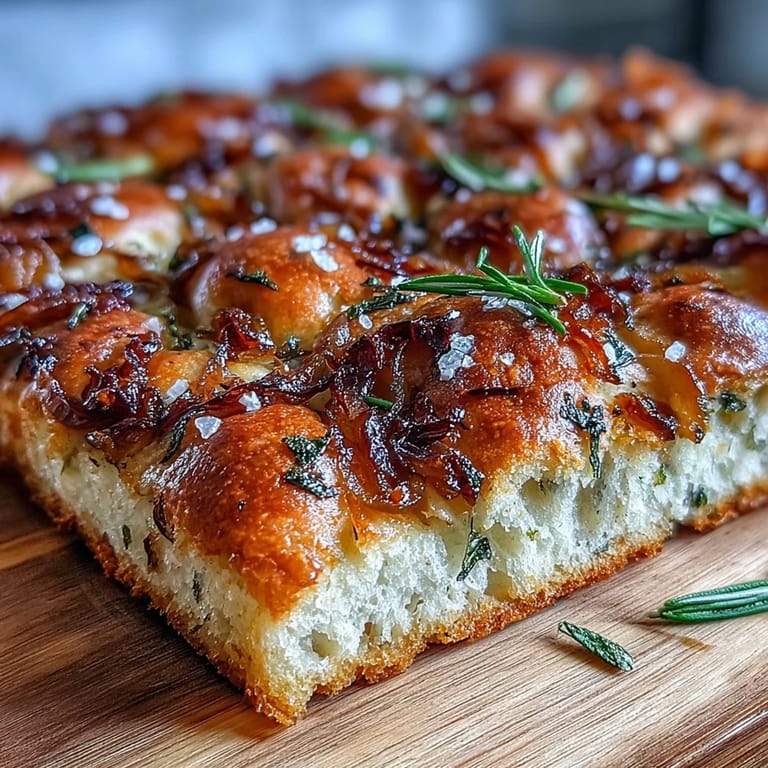
Caramelizing onions is meditative and requires patience that our instant-everything culture doesn't often reward. The Maillard reaction and gradual moisture loss turn sulfurous raw onions into silky sweetness, and there's no shortcut—no high heat, no rushing. Once they're cool and tucked onto your dimpled dough, they become a flavor anchor that makes people stop and ask what makes your focaccia taste like that.
Storing and Reheating Like a Pro
Focaccia stays fresh for a day or two wrapped loosely at room temperature, though honestly, it rarely lasts that long in my house. If you do have leftovers, a quick reheat in a toaster oven at 160°C (320°F) for 5 to 10 minutes brings back the crispy edges and softens the interior without drying it out—much better than microwaving, which turns it to rubber.
- Wrap cooled focaccia in parchment, then foil, if storing in the refrigerator for up to a week.
- Frozen focaccia thaws at room temperature and reheats beautifully, giving you fresh-tasting bread anytime.
- Leftover caramelized onions are excellent on grilled cheese, in a quesadilla, or on top of roasted vegetables.
 Save
Save This focaccia taught me that good bread doesn't need to be complicated or stressful; it just needs time, a few honest ingredients, and your gentle attention. Make it once, and you'll understand why people have been baking bread since the dawn of civilization.
Kitchen Q&A
- → What makes sourdough focaccia different from regular focaccia?
Sourdough focaccia uses a natural starter, which adds a tangy flavor and contributes to a chewier texture and better keeping quality compared to yeast-only versions.
- → How do I caramelize onions for the topping?
Slice onions thinly and cook slowly in olive oil over medium-low heat, stirring occasionally until they turn golden and soft, which usually takes 20–25 minutes.
- → Why is the dough refrigerated overnight?
Refrigeration slows fermentation, enhancing flavor complexity and improving the focaccia’s texture by allowing gluten to relax and flavors to meld.
- → Can I add other toppings besides onions?
Yes, additions like sliced olives or sun-dried tomatoes work well to complement the caramelized onions and add extra flavor layers.
- → How should I store leftovers?
Keep leftovers in an airtight container at room temperature or lightly wrap and reheat in a toaster oven to restore crispness before serving.
- → What is the best way to bake focaccia evenly?
Ensure even dimpling of the dough and use a well-oiled pan. Preheating the oven to a high temperature helps achieve a golden crust with a soft crumb.