 Save
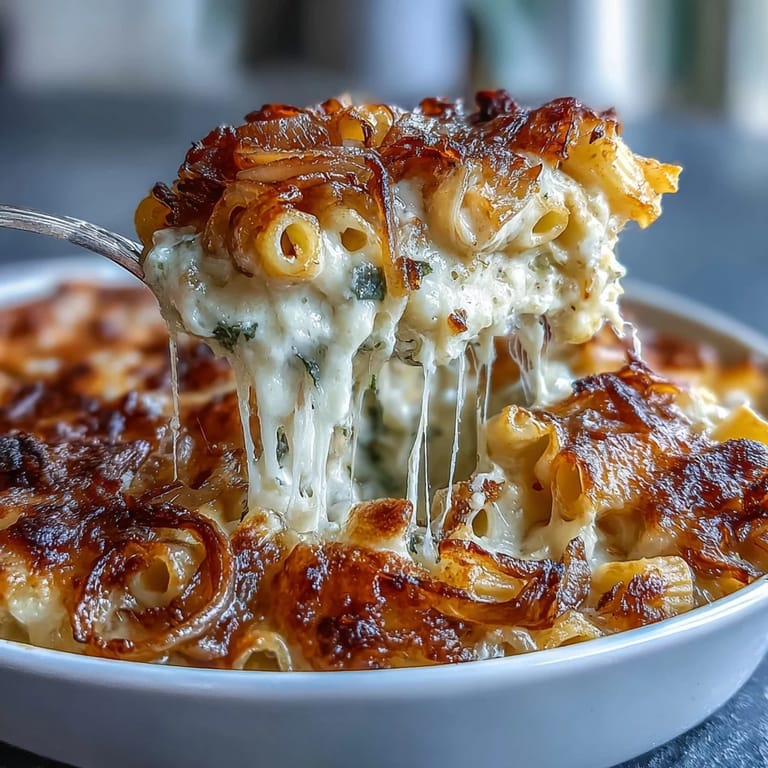
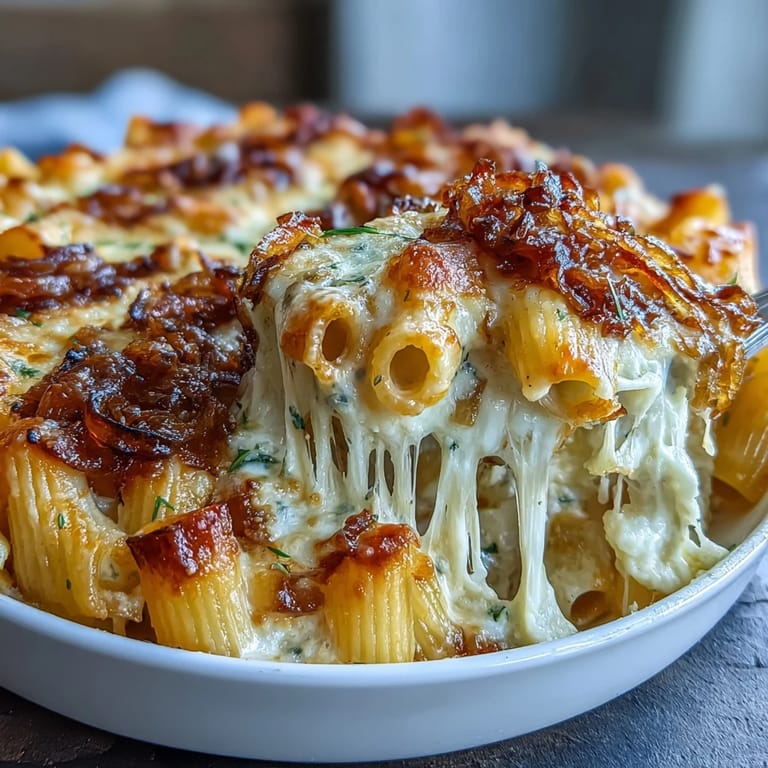
Save There's a particular Tuesday evening when my neighbor stopped by with a bottle of wine and caught me staring at a pot of caramelized onions, wondering what on earth I'd do with them. That's when it hit me—why not steal the soul of French onion soup and pour it over pasta? What started as kitchen improvisation became something we couldn't stop talking about, the kind of dish that makes you slow down between bites.
I made this for my parents on a cold November evening, and my mother—who claims not to like onions—asked for seconds without even blinking. My dad was already mentally planning leftovers before we'd finished the first serving. That's when I knew the alchemy of caramelized onions meeting creamy pasta was something special worth repeating.
Ingredients
- Short pasta (300 g): Rigatoni or penne works best because the ridges catch the creamy onion sauce and hold onto those precious caramelized bits.
- Yellow onions (3 large): Don't rush this—low and slow is the only way to coax out their natural sweetness into deep golden caramel.
- Unsalted butter (2 tbsp) and olive oil (1 tbsp): The combination gives you richness while preventing the butter from burning during those long minutes of caramelizing.
- Salt and sugar (1/2 tsp each): Salt draws out onion moisture so they caramelize faster, while a pinch of sugar accelerates browning and balances any bitterness.
- Garlic (2 cloves): Mince it finely so it disappears into the onions rather than dominating the flavor.
- Fresh thyme (1 tbsp) or dried (1 tsp): This is the herb that ties everything to French onion soup—don't skip it or use a substitute.
- Dry white wine (120 ml): The acidity cuts through richness and the deglazing step pulls up all those golden, flavorful bits stuck to the pan.
- Beef or vegetable broth (500 ml): Use low-sodium so you control the salt level; homemade tastes noticeably better but good store-bought works too.
- Worcestershire sauce (1 tbsp): Just enough to add umami depth without making the dish taste overtly meaty.
- Heavy cream (120 ml): This transforms the onion broth into a silky sauce that coats every piece of pasta.
- Gruyère, mozzarella, and Parmesan (100 g, 60 g, 40 g): The trio creates layers of flavor—Gruyère for nutty depth, mozzarella for stretch, Parmesan for sharp finish.
Tired of Takeout? 🥡
Get 10 meals you can make faster than delivery arrives. Seriously.
One email. No spam. Unsubscribe anytime.
Instructions
- Get everything ready:
- Preheat your oven to 200°C and lightly grease a baking dish about 20x30 cm. This gives you a moment to take a breath and make sure nothing gets left behind in the next steps.
- Start the pasta:
- Bring a pot of salted water to a rolling boil and cook your pasta about 2 minutes under the package time—it'll finish cooking in the oven, so you want it still a bit firm. Drain it well and set aside.
- Begin the caramelization:
- In a large skillet over medium heat, melt your butter with the olive oil. Add the thinly sliced onions along with salt and sugar, then stir frequently for 20 to 25 minutes until they turn a deep mahogany brown—this is where the magic happens, so don't skip ahead or crank up the heat.
- Build the aromatics:
- Once your onions are gorgeously caramelized, add the minced garlic and thyme, stirring constantly for about a minute until the kitchen smells like a French bistro at closing time.
- Deglaze the pan:
- Pour in your white wine and use a wooden spoon to scrape up all those flavorful browned bits stuck to the bottom. Let it bubble away for about 3 minutes until it reduces by roughly half.
- Add the broth:
- Stir in your beef or vegetable broth along with the Worcestershire sauce, then let everything simmer gently for 5 minutes so the flavors get to know each other. Taste and adjust the black pepper to your liking.
- Cream it gently:
- Reduce the heat to low and stir in the heavy cream, then immediately take the skillet off the heat—you're just warming it through, not cooking it further.
- Combine everything:
- In a large mixing bowl, toss together your cooked pasta, the entire onion and cream mixture, and all three cheeses—Gruyère, mozzarella, and Parmesan. Mix thoroughly until every pasta strand is coated.
- Into the oven:
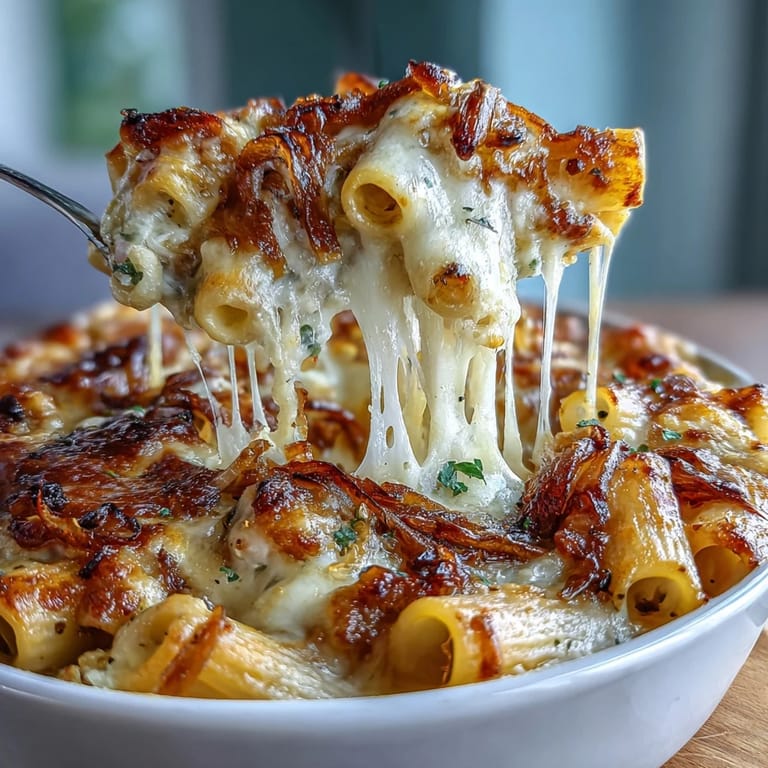
- Transfer the mixture into your prepared baking dish, spread it evenly, then scatter that final handful of Gruyère across the top. This is what creates that irresistible golden, bubbly crust you're after.
- Bake to golden perfection:
- Bake for 15 to 20 minutes until the cheese is melted, bubbling at the edges, and the top turns a beautiful golden brown. You'll know it's ready when you can't resist it anymore.
- Rest and finish:
- Let it sit for 5 minutes out of the oven—this helps it set slightly so it doesn't fall apart when you spoon it out. Scatter fresh parsley over the top if you have it, though it's delicious even without.
 Save
Save My sister brought her new partner to dinner and he went quiet after the first bite in a way that made everyone smile. He asked for the recipe that night, then came back the following week asking if I'd teach him how to make it. Sometimes a dish becomes the reason people show up at your table again.
The Caramelization Window
I learned the hard way that caramelizing onions is more art than science. The first time, I set a timer and ignored them—they went from golden to burnt while I was reading on the couch. Now I stir every couple of minutes, watching for that specific deep amber color where the sweetness peaks but the edges don't turn black. The sound changes too—they'll go from releasing steam to making a gentle sizzle, and that's when you know they're almost there.
Make It Your Own
The beauty of this dish is how forgiving it is once you understand the base. I've added roasted mushrooms when I wanted something earthier, stirred in crispy bacon because I found some in the fridge, and once even swapped half the broth for red wine when that's what I had open. Each version tasted different but never wrong, which is the mark of a truly flexible recipe that still keeps its soul.
Serving and Storage
This tastes best the day it's made when the pasta still has some texture and the cheese hasn't completely set, though it reheats beautifully if you need to make it ahead. Simply cover it with foil and warm it in a 160°C oven for about 15 minutes until it's bubbling again. A crisp green salad and a dry white wine alongside this dish feel necessary, not optional—they cut through the richness and make you feel like you're dining somewhere special.
- Leftovers keep for 3 days in an airtight container and taste just as good cold the next day for lunch.
- If the top gets too dark during baking, simply tent it loosely with foil for the last few minutes.
- Double the recipe easily in a larger baking dish if you're feeding more people or want leftovers for the week.
 Save
Save This dish sits at the intersection of comfort and elegance in a way that feels almost accidental. Make it once and you'll understand why it deserves a regular spot in your kitchen rotation.