 Save
Save There's something magical about the moment you realize you don't need pasta to make lasagna sing. I was standing in my kitchen on a weeknight, staring at a bag of zucchini I'd bought with good intentions, when it hit me—why not slice them thin and layer them like noodles? Twenty minutes later, my skillet was bubbling away, and the smell of tomato and melted cheese had my family drifting in from the other room asking what smelled so good. That's when I knew this low-carb twist had found its permanent place in my cooking rotation.
I'll never forget the first time I made this for my brother's family. His daughter is always experimenting with cutting carbs, and I wanted to impress her without making it seem like I was trying too hard. When I pulled that skillet from under the broiler with the cheese just turning golden, she actually paused mid-conversation and said it looked better than the regular version. That moment—when someone realizes comfort food and smart eating aren't opposites—that's what this dish does.
Ingredients
- Zucchini ribbons, 2 medium: Slice lengthwise for long, delicate ribbons that cook through without falling apart; a mandoline makes this effortless and consistent.
- Ground beef, 450 g: Lean meat prevents the skillet from becoming too greasy, but don't skip draining the fat—it keeps the layers clean and the cheese from sliding around.
- Ricotta cheese, 250 g: This creamy layer is what transforms ground beef and sauce into something that feels luxurious; it's worth getting the good stuff if you can.
- Mozzarella cheese, 100 g shredded: The melting workhorse that holds everything together and gets those gorgeous brown spots on top.
- Parmesan cheese, 30 g: A sharp accent that cuts through the richness and adds a subtle umami depth.
- Crushed tomatoes, 400 g: The backbone of the sauce; canned is perfect here because you want that deep, concentrated tomato flavor.
- Tomato paste, 2 tbsp: This small amount intensifies the sauce's character without making it bitter or overly thick.
- Onion and garlic, 1 small and 2 cloves: The aromatic foundation; don't skip the sautéing step, as it mellows the rawness and builds flavor.
- Dried oregano and basil, 1 tsp each: These herbs are essential to the Italian flavor profile; fresh basil added at the end brings brightness.
- Red pepper flakes, 1/4 tsp: Optional but recommended for a subtle warmth that makes people ask what the secret ingredient is.
- Olive oil, 2 tbsp: Use it generously at the start to build a flavor base; it's the first step that matters.
- Salt and black pepper, to taste: Taste as you go, especially after adding the tomatoes, since they can mellow the seasoning.
Tired of Takeout? 🥡
Get 10 meals you can make faster than delivery arrives. Seriously.
One email. No spam. Unsubscribe anytime.
Instructions
- Sauté the aromatics:
- Warm olive oil in your skillet over medium heat, then add the chopped onion. Let it soften and turn translucent—this takes about three minutes and makes your kitchen smell incredible. Stir in the minced garlic for just one minute, breathing in that pungent aroma, because if you let it go longer it can turn bitter.
- Brown the beef:
- Push the meat into the pan and break it apart with a spatula, stirring occasionally until it loses all its pink color and smells deeply savory. If there's a puddle of fat, drain it off—you want the layers to stay structured, not slide around in grease.
- Build the sauce:
- Pour in the crushed tomatoes and tomato paste, stirring them into the beef until everything is coated in that rust-red color. Sprinkle in the oregano, basil, red pepper flakes if using, plus a pinch of salt and pepper. Simmer for five minutes so the flavors meld and the raw tomato taste mellows into something round and complete.
- Layer like a boss:
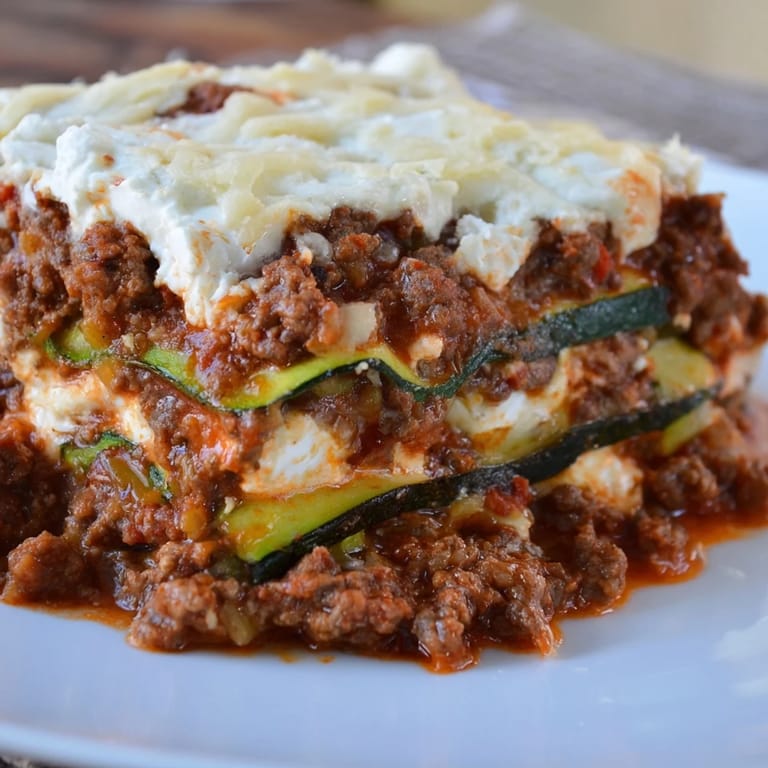
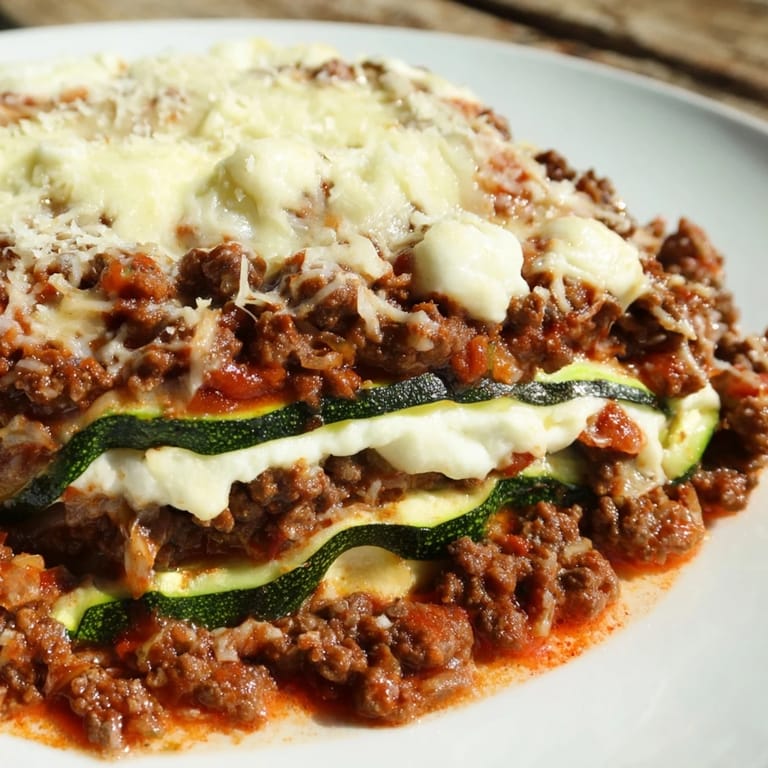
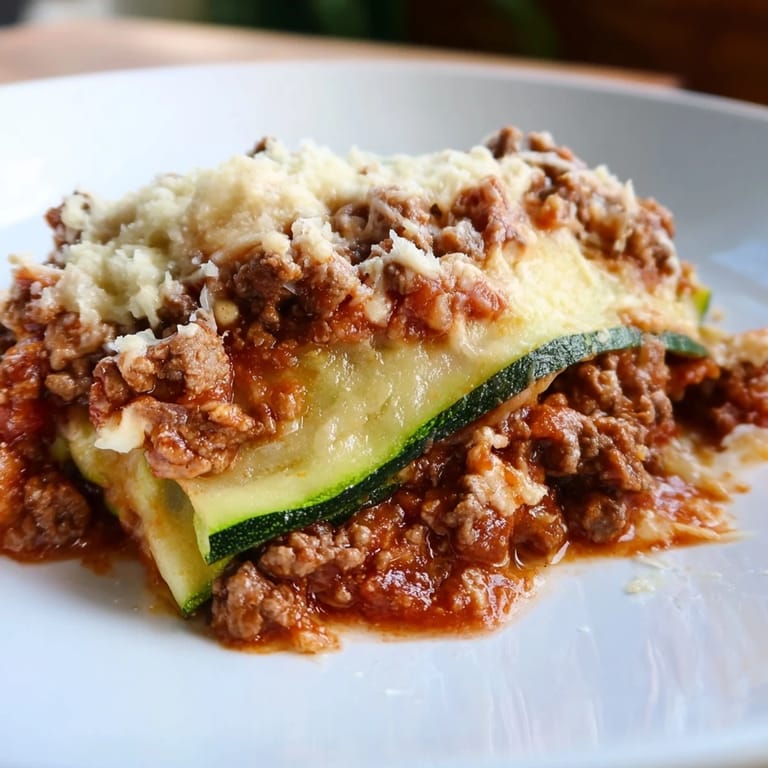
- Arrange half your zucchini ribbons over the beef, laying them flat and overlapping slightly like roof shingles. Dollop half the ricotta across the zucchini in small spoonfuls, then scatter a third of the mozzarella and some Parmesan on top. Repeat with the remaining zucchini and ricotta, then crown everything with the last of the mozzarella and Parmesan, making sure some pieces reach the edge where they'll crisp up.
- Gentle cooking:
- Cover the skillet and turn the heat to low, letting everything cook undisturbed for ten minutes until the zucchini is tender and the cheese starts melting into the gaps. You'll know it's ready when steam escapes from under the lid and you can see the edges starting to bubble.
- Optional broiler finish:
- If you want that restaurant-quality brown-spotted cheese top, slide the skillet under a hot broiler for two to three minutes—watch it closely because it goes from golden to burnt faster than you'd expect. Serve immediately while the cheese is still molten and everything is piping hot.
 Save
Save There was a moment, maybe halfway through cooking, when I lifted the lid to check on the zucchini and the aroma that escaped—savory and cheesy with a hint of tomato brightness—made me pause. My partner walked in at exactly that moment, asked what I was making, and when I told them it was low-carb, they looked genuinely surprised. Food that makes people forget they're being good at something—that's powerful.
Choosing Your Zucchini Wisely
Medium zucchini are the sweet spot; they're large enough to give you substantial ribbons but not so massive that they've developed huge seeds and a watery center. I learned this the hard way by buying the biggest ones I could find, thinking more zucchini meant more abundance. What I got instead was ribbons that fell apart and released so much water that my whole skillet turned into soup. Now I give them a gentle squeeze before buying—they should feel firm and dense, not soft or squishy.
The Ricotta Difference
The quality of your ricotta determines whether this tastes homemade and custardy or grainy and institutional. Whole milk ricotta, if you can find it, has a silkier texture that spreads beautifully across the zucchini. I once grabbed the low-fat version in a hurry and the layers didn't hold together the same way—there was a graininess that no amount of good cheese on top could fix. It's worth the slight splurge to get the better stuff here.
Timing and Temperature Tricks
The key to tender zucchini that isn't mushy is cooking it covered over low heat, where gentle steam does the work instead of aggressive direct heat. I've tried cooking it hot to save time, and the result is always unevenly cooked—some ribbons perfect and others shriveled. The low-and-slow approach takes just ten minutes anyway, and you get consistent, silken zucchini every time. If you really want the broiler finish, have it ready to go; the topping browns incredibly fast and you want to catch it at that perfect golden moment.
- Start checking at eight minutes instead of waiting the full ten; thinner ribbons cook faster than expected.
- If you're using a skillet without an oven-safe handle, wrap the handle in foil before broiling to protect it from heat damage.
- Fresh basil stirred in right before serving adds brightness that makes the whole dish pop.
 Save
Save This skillet has become my weeknight hero precisely because it delivers everything lasagna promises—that cozy, indulgent feeling, those layers of flavor and texture, that moment when melted cheese pulls in gorgeous strings—without any of the carb-heavy aftermath. Make it once and you'll find yourself reaching for it again and again.
Kitchen Q&A
- → Can I substitute ground turkey or chicken?
Yes, ground turkey or chicken works well and provides a leaner alternative while maintaining the dish's texture and flavor.
- → How do I ensure zucchini ribbons cook evenly?
Use a mandoline slicer to achieve thin, uniform zucchini ribbons that cook quickly and evenly in the skillet.
- → What cheese types are best for topping?
A combination of shredded mozzarella and grated Parmesan creates a rich, bubbly, and golden crust when broiled briefly.
- → Can I prepare this dish gluten-free?
Yes, the ingredients used naturally avoid gluten, but always check labels on canned goods and cheeses to be certain.
- → Is broiling necessary at the end?
Broiling for a few minutes adds a beautiful browned finish to the cheese topping but can be skipped if preferred.
- → How long does the cooking process take?
About 45 minutes total, including 20 minutes preparation and 25 minutes cooking time for perfectly tender zucchini and melded flavors.