 Save
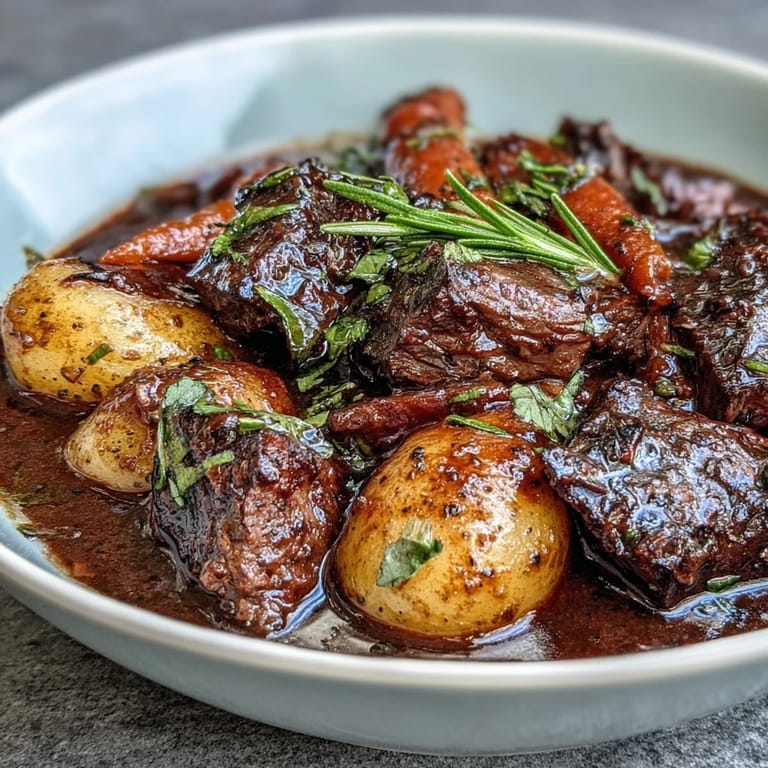
Save There's something about the sound of beef hitting a hot skillet that signals the start of something really good. Years ago, I watched my neighbor stand at her stove on a gray October afternoon, the kitchen filling with that deep, savory smell as she seared chunks of chuck roast. She was making this stew for her daughter's first week of college, sending her off with a container of warmth she could reheat in a dorm room. I've made it countless times since, and it never fails to turn a chaotic day into something manageable and nourishing.
I made this for a dinner party on one of those nights where the weather turned unexpectedly cold, and everyone arrived still dusting off their jackets. By the time they walked in, the whole house smelled like rosemary and wine and beef, and suddenly nobody wanted to leave the kitchen. One guest asked for the recipe before dessert, which told me everything I needed to know.
Ingredients
- Beef chuck, cut into 1.5-inch cubes (2 lbs): This cut has just enough marbling to become incredibly tender after slow cooking—don't be tempted to use leaner cuts, or you'll end up with something stringy.
- Carrots, cut into 1-inch pieces (3 large): They sweeten the broth naturally as they break down, so cutting them into similar sizes means they finish cooking at the same time.
- Parsnips, sliced (2 medium): These add an earthy sweetness that regular potatoes alone can't achieve, and they soften into something almost creamy.
- Yukon Gold potatoes, chopped into chunks (2 large): These waxy potatoes hold their shape beautifully instead of dissolving into the broth like russets would.
- Yellow onion, diced (1 large): The foundation of flavor—dicing it small lets it almost melt into the base of the stew.
- Celery stalks, sliced (3): Adds a subtle depth that people rarely notice but definitely notice when it's missing.
- Garlic, minced (3 cloves): Raw garlic stirred in at the beginning mellows into something gentle and savory rather than sharp.
- Tomato paste (2 tbsp): This concentrate adds umami richness and a subtle tang that makes everything taste more developed.
- Worcestershire sauce (1 tbsp): A little goes a long way—it amplifies the savory notes without making the stew taste fishy if you use just the right amount.
- Bay leaf (1): Always remove this before serving, or you'll bite into it and immediately regret it (speaking from experience).
- Dried thyme and rosemary (1 tsp each): These herbs infuse the broth with warm, woodsy notes that make everything feel intentional and thoughtful.
- Beef broth (4 cups): Use good quality broth—it becomes the backbone of every spoonful, so it matters more than you'd think.
- Dry red wine (1 cup): The alcohol cooks off but leaves behind a depth and slight acidity that brightens the richness of the beef.
- Cornstarch mixed with cold water (2 tbsp each): This slurry thickens the stew in the final minutes, turning it from soupy to luxuriously thick without any flour.
- Kosher salt and black pepper (1/2 tsp each): Season the beef before searing so it browns properly instead of steaming.
Tired of Takeout? 🥡
Get 10 meals you can make faster than delivery arrives. Seriously.
One email. No spam. Unsubscribe anytime.
Instructions
- Season and sear the beef:
- Pat the beef cubes dry, then coat them generously with salt and pepper. Working in batches so they're not crowded, place them in a hot skillet and let them sit undisturbed for a minute or two—you're after a deep golden crust, not gray meat that's been shuffled around.
- Build the foundation:
- Transfer the browned beef to your slow cooker, then add all the vegetables and seasonings in layers. This isn't just aesthetics; layering helps the flavors distribute more evenly as everything cooks down.
- Add the liquids:
- Pour the beef broth and wine over everything, stirring gently to combine without breaking apart the vegetables. You want the liquid to come up and around all the vegetables, not completely submerge them.
- Let time do the work:
- Cover the slow cooker and cook on low for 8 hours. The house will smell increasingly incredible, and that's your signal that everything is breaking down into something beautiful.
- Thicken at the finish:
- Once the beef and vegetables are tender, mix the cornstarch slurry in a small bowl, then stir it into the stew. Cook uncovered on high for 15 minutes, and watch as it transforms from broth-like into something luxuriously thick.
- Final adjustments:
- Remove the bay leaf, taste carefully, and adjust salt and pepper if needed. Remember that the flavors have concentrated, so add seasoning gradually.
 Save
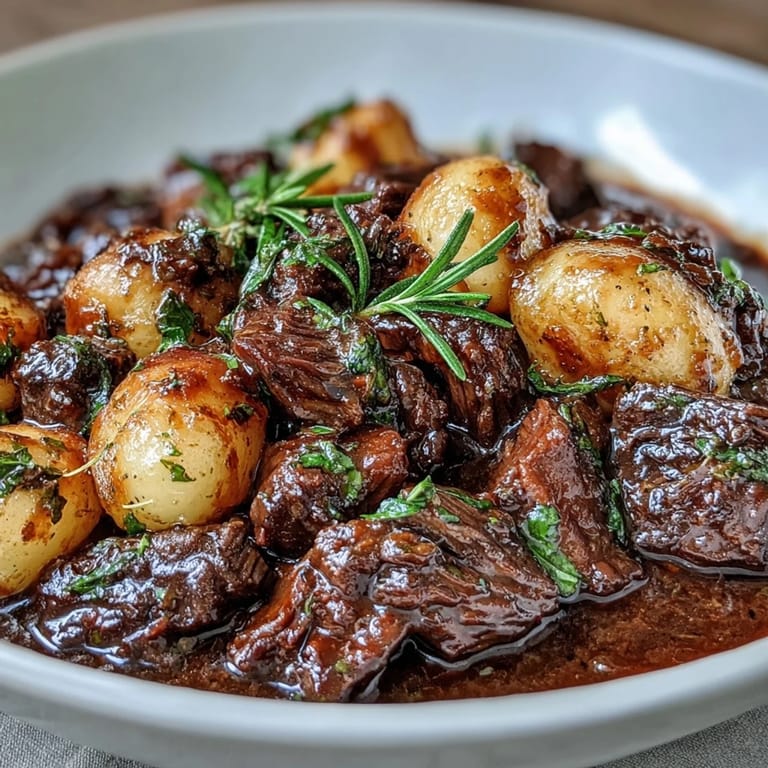
Save My six-year-old once asked why her bowl of stew tasted like a hug, and I realized that's exactly what this dish is—something warm and familiar that makes you feel looked after. There's real magic in food that asks nothing of you except to show up with an appetite.
Why This Stew Never Disappoints
The slow cooker method is forgiving in ways other cooking isn't. You can't overcook it (within reason), and even if you add an extra hour by accident, everything just becomes softer and more deeply flavored. The long, gentle heat also means the beef releases collagen that thickens the broth naturally, so you're not relying entirely on that cornstarch slurry.
Variations Worth Trying
Once you've made this stew a few times, you start seeing possibilities everywhere. Some people stir in mushrooms an hour before the end of cooking, letting them absorb all that savory broth. Others swap sweet potatoes for regular potatoes, which shifts the whole flavor profile toward something slightly sweeter and different but equally comforting. You can even omit the wine entirely if you'd rather (just use more broth), and the stew tastes different but no less satisfying.
Serving and Storage Wisdom
This stew actually tastes better the next day, once the flavors have had time to settle and meld. I make a full batch and eat it for several days, spooning it over mashed potatoes or torn pieces of crusty bread. It freezes beautifully too—just let it cool completely, then portion it into containers and freeze for up to three months. Reheat gently on the stovetop with a splash of broth if it seems thick.
- Crusty bread is non-negotiable—you'll want something to soak up every last bit of broth.
- If you add frozen peas at the very end, they stay bright green and add a fresh textural contrast.
- Serve in wide bowls so people can actually enjoy the vegetables, not just the broth.
 Save
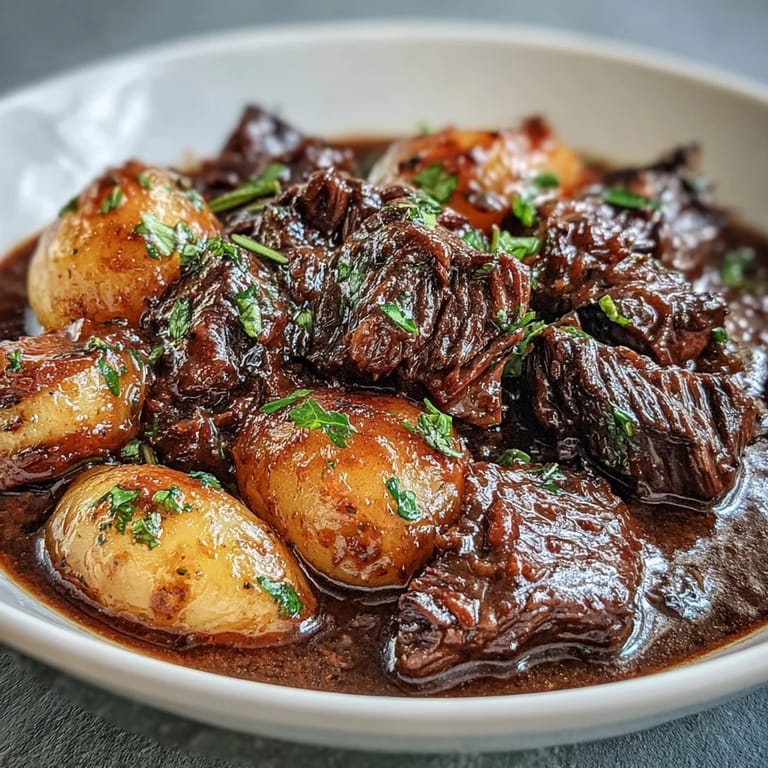
Save This is the kind of recipe that becomes part of your life—something you reach for on tired weeknights, something you make for people you care about, something that tastes like home no matter when you eat it. Once you've made it once, you'll make it again and again.
Kitchen Q&A
- → How do I achieve tender beef in this stew?
Brown the beef cubes first to lock in flavor, then cook low and slow for 8 hours to ensure tenderness.
- → Can I use different root vegetables?
Yes, sweet potatoes or turnips work well as alternatives and add a unique sweetness.
- → Is red wine necessary for the broth?
Red wine adds depth, but can be replaced with additional broth for an alcohol-free version.
- → How is the stew thickened at the end?
A mixture of cornstarch and cold water is stirred in and cooked on high to thicken the stew nicely.
- → What are good serving suggestions?
Serve warm with crusty bread or over creamy mashed potatoes to complement the rich flavors.