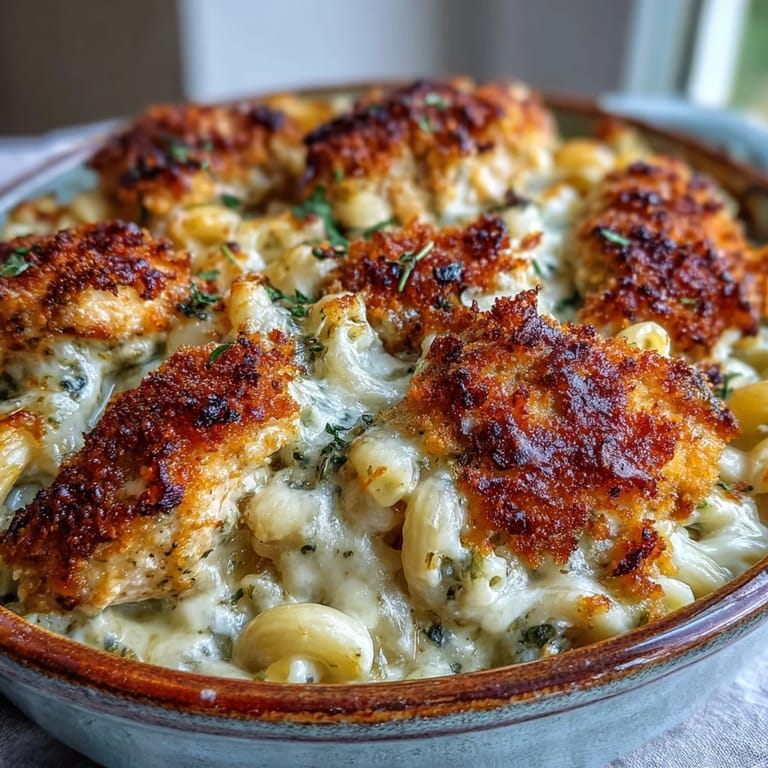
 Save
Save My sister called me in a mild panic last Tuesday—she had promised to bring dinner to a friend's house, totally forgotten about it until 3 PM, and had nothing but chicken, pasta, and half a jar of pesto in her fridge. I talked her through this dish over the phone while she chopped, and twenty minutes later she was pulling a golden, bubbling casserole out of the oven. The relieved laugh she gave when she saw that crispy top told me everything I needed to know about this recipe. It's become our go-to when life gets messy and hunger doesn't wait.
I made this for my book club last spring, and what I remember most isn't the compliments—though there were plenty—but the way Sarah stood over the baking dish and asked for the recipe three times because she couldn't believe how simple it actually was. She'd assumed anything this good required some secret technique or obscure ingredient. When I told her it was just good butter, proper cheese, and not rushing the roux, something shifted in her face. Sometimes the best meals are the ones that prove you don't need to be fancy to be delicious.
Ingredients
- Elbow macaroni, 400 g (14 oz): Cook it just shy of fully tender—it'll finish cooking in the oven and you want it to hold its shape, not turn to mush by the time the cheese crust browns.
- Boneless, skinless chicken breast, 500 g (1.1 lb): Cut into honest bite-sized pieces, not too small or they'll disappear into the sauce, and season generously before cooking so the flavor actually develops.
- Olive oil, 2 tbsp (for chicken) plus 1 tbsp (for topping): Use a decent one for the topping—it makes the breadcrumbs taste intentional instead of cardboard-like.
- Basil pesto, 100 g (1/2 cup): Store-bought is perfectly fine here and honestly saves your sanity, but if you make it fresh, don't blend it to death or it turns bitter and gray.
- Unsalted butter, 3 tbsp: This is your roux foundation, so don't cheap out—it's the difference between silky sauce and gritty sauce.
- All-purpose flour, 3 tbsp: This thickens everything without being heavy if you cook it right, which means whisking it into that melted butter for a full minute before adding milk.
- Whole milk, 700 ml (3 cups): Cold milk added to hot roux is how you avoid lumps—it's almost a ritual at this point, but it works every single time.
- Mozzarella cheese, 150 g (1 1/2 cups), shredded: The mild one that melts smoothly and stretches, not the fresh kind—we're building sauce here, not topping a pizza.
- Parmesan cheese, 100 g (1 cup) shredded, plus 30 g (1/4 cup) grated for topping: The shredded kind from the block tastes infinitely better than the stuff in the green can, and it melts without getting weird.
- Sharp cheddar cheese, 100 g (1 cup), shredded: The sharp variety gives the sauce real flavor and personality—mild cheddar would be a crime here.
- Garlic powder, 1/2 tsp: A whisper of it, not overwhelming, just enough to round out the flavor when you're not using fresh garlic.
- Panko breadcrumbs, 40 g (1/2 cup): These stay crispy, unlike regular breadcrumbs which get sad and soggy no matter what you do.
- Dried Italian herbs, 1/2 tsp: For seasoning the chicken so it has a story before it even meets the sauce.
Tired of Takeout? 🥡
Get 10 meals you can make faster than delivery arrives. Seriously.
One email. No spam. Unsubscribe anytime.
Instructions
- Set your stage:
- Preheat the oven to 200°C (400°F) and grease a 23x33 cm (9x13 in) baking dish with a little butter or oil—don't skip this, or you'll be scraping dried cheese off porcelain for an hour.
- Cook the pasta:
- Bring a large pot of salted water to a rolling boil, then add the macaroni and cook it until it's just barely al dente, with the slightest resistance when you bite it. Drain it, toss with a tiny bit of oil so it doesn't clump into a brick, and set it aside.
- Brown the chicken with intention:
- While the pasta's cooking, heat 2 tbsp olive oil in a skillet over medium heat until it shimmers—you'll know it's ready when a piece of chicken sizzles immediately. Add the chicken pieces in a single layer if possible, sprinkle with salt, pepper, and dried Italian herbs, and let them sit for a couple of minutes to actually develop color instead of steaming themselves into submission. Cook for 6–8 minutes, stirring occasionally, until they're golden and cooked through—a meat thermometer should read 165°F if you're being precise about it.
- Marry the chicken with pesto:
- Remove the skillet from heat and toss the cooked chicken with the basil pesto until every piece is coated. The warmth of the chicken will wake up the pesto's aroma in a way that's almost meditative.
- Build the cheese sauce carefully:
- In a separate large saucepan, melt the butter over medium heat—once it's foaming, whisk in the flour and cook it for a full minute, stirring constantly, to cook out the raw flour taste. This is the roux, and it's your foundation for everything that comes next.
- Incorporate the milk:
- Pour in the cold milk slowly while whisking constantly—this prevents lumps from forming and creates that smooth, silky sauce texture everyone loves. Keep whisking and let it bubble gently for about 4–5 minutes until it's noticeably thickened and coats the back of a spoon.
- Add the cheese with restraint:
- Pull the saucepan off the heat and stir in the mozzarella, Parmesan, and sharp cheddar one handful at a time, letting each addition melt completely before adding the next. Season with garlic powder, salt, and pepper—taste it and adjust, because this is the final moment to balance the flavors.
- Bring it all together:
- In a large bowl, combine the cooked macaroni, the cheese sauce, and the pesto chicken, folding gently so everything gets coated evenly without breaking the pasta or deflating the whole thing. This is where all those separate components become one unified dish.
- Transfer to the baking dish:
- Spoon the mixture into your prepared baking dish in an even layer, smoothing the top roughly with the back of a spoon.
- Create the golden crust:
- In a small bowl, combine the panko breadcrumbs, grated Parmesan, and 1 tbsp olive oil, mixing with a fork until the breadcrumbs look like coarse sand and every crumb is touched with oil. Sprinkle this evenly over the casserole—the oil is what makes it brown and crisp instead of pale and bland.
- Bake to golden perfection:
- Slide the baking dish into the preheated oven and bake for 20–25 minutes until the top is golden brown and the edges are actively bubbling. You'll see small bubbles breaking the surface around the perimeter, which means the casserole is hot all the way through.
- Let it rest:
- Remove from the oven and let it sit for 5 minutes—this allows everything to set slightly so it won't be a soupy mess when you scoop it, and honestly, it gives you time to make a salad or pour a drink.
 Save
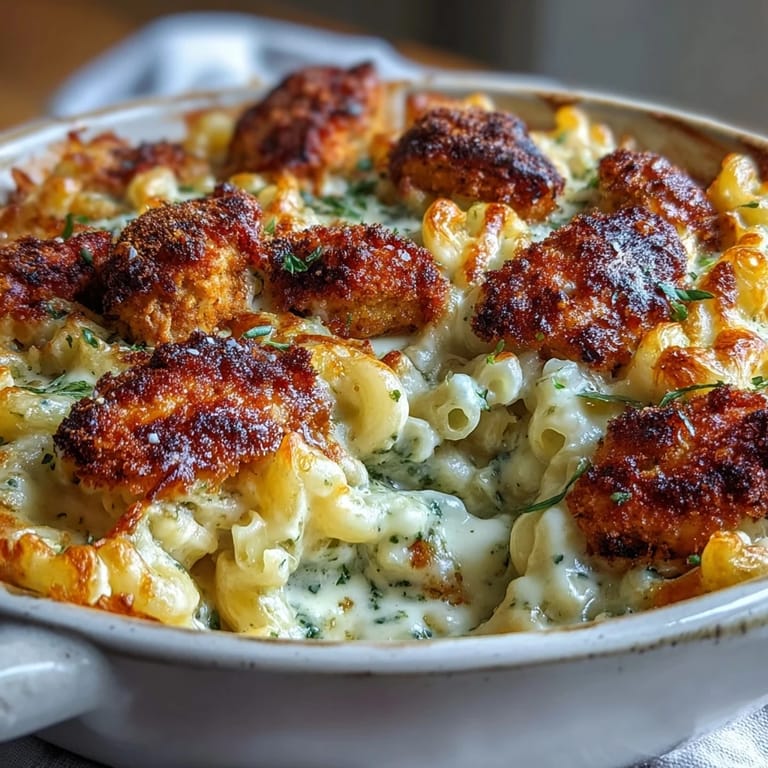
Save What gets me about this dish is watching people's faces when they realize mac and cheese doesn't have to be heavy or one-note—the pesto adds this bright, herby dimension that feels almost sophisticated without being pretentious. It's comfort food that doesn't apologize, and that's something worth keeping in your rotation.
Why This Works as a Crowd-Pleaser
There's something about a casserole that feels generous and welcoming without requiring you to fuss at the table or worry about plating. You can make it two hours ahead and reheat it gently, you can stretch it a little further by adding spinach or sun-dried tomatoes if you need to feed more people, and honestly, it never tastes like leftovers even on the third day. The three cheeses work together in a way that's greater than the sum of their parts—mozzarella is smooth, Parmesan adds sharpness and salt, and cheddar brings depth.
The Pesto Moment
I've learned that adding the pesto to warm chicken instead of mixing it into the sauce at the end is the key to keeping its flavor bright and distinct. If you stir pesto into a hot cheese sauce, something about the heat and fat combination dulls it—you lose that herby punch that makes the whole dish interesting. Tossing it with the chicken first means the basil stays alive and visible, little green flecks throughout instead of a muddy color.
Variations That Actually Work
The beauty of this casserole is that it's forgiving enough to adapt to whatever's in your kitchen or whatever you're craving. Add a big handful of fresh spinach that's been squeezed dry, layer in some sun-dried tomatoes for tanginess, swap the sharp cheddar for smoked gouda if you want a different kind of depth, or use a rotisserie chicken when you're short on time. I've even made it with crispy bacon stirred into the sauce when I was feeling indulgent, and suddenly it became something else entirely.
- Sautéed fresh spinach adds color and nutrition without making anything taste green or bitter.
- Sun-dried tomatoes bring acidity that brightens the richness of all that cheese.
- Rotisserie chicken cuts your active cooking time almost in half and tastes just as good as homemade.
 Save
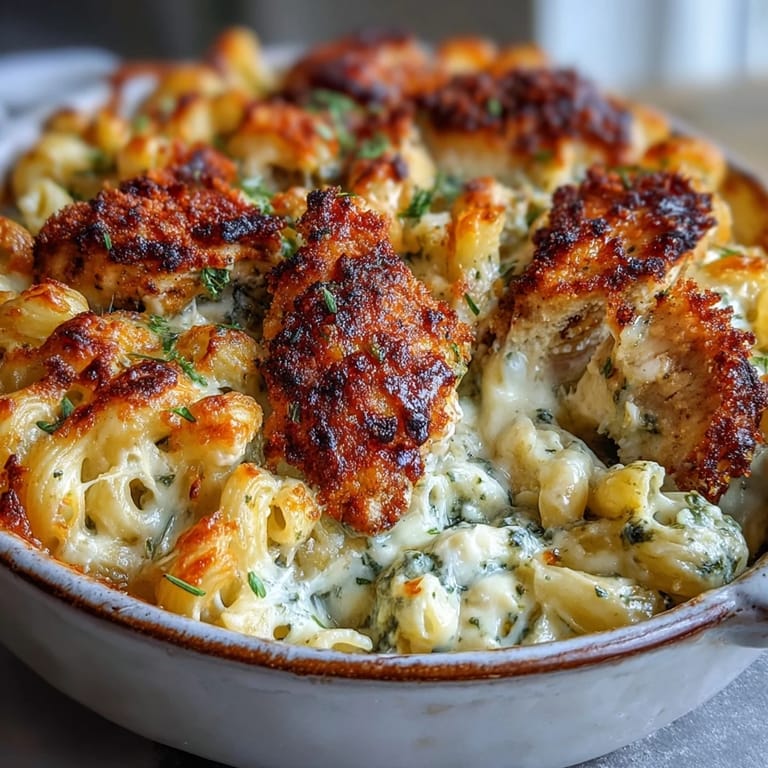
Save This recipe has quietly become my answer to almost every dinner emergency or moment when I want to feed people something that tastes like I actually tried. It's worth making once just to see why.
Kitchen Q&A
- → Can I make this ahead of time?
Yes, assemble the casserole up to 24 hours in advance and refrigerate. Add 5-10 minutes to baking time if baking from cold.
- → What pasta shapes work best?
Elbow macaroni, cavatappi, or penne capture the sauce beautifully. Choose pasta with ridges or tubes to hold the creamy cheese coating.
- → Can I freeze leftovers?
Portion cooled leftovers into airtight containers and freeze for up to 3 months. Thaw overnight in the refrigerator before reheating.
- → How do I know when it's done?
The casserole is ready when bubbling around the edges and the topping turns golden brown. The internal temperature should reach 165°F (74°C).
- → What cheese combinations work well?
Mozzarella provides stretch, Parmesan adds salty depth, and sharp cheddar brings tang. Try substituting Gruyère, fontina, or smoked gouda for variety.
- → Is homemade pesto better than store-bought?
Homemade pesto offers fresher basil flavor and control over ingredients. Quality store-bought versions work perfectly for convenience without sacrificing taste.