 Save
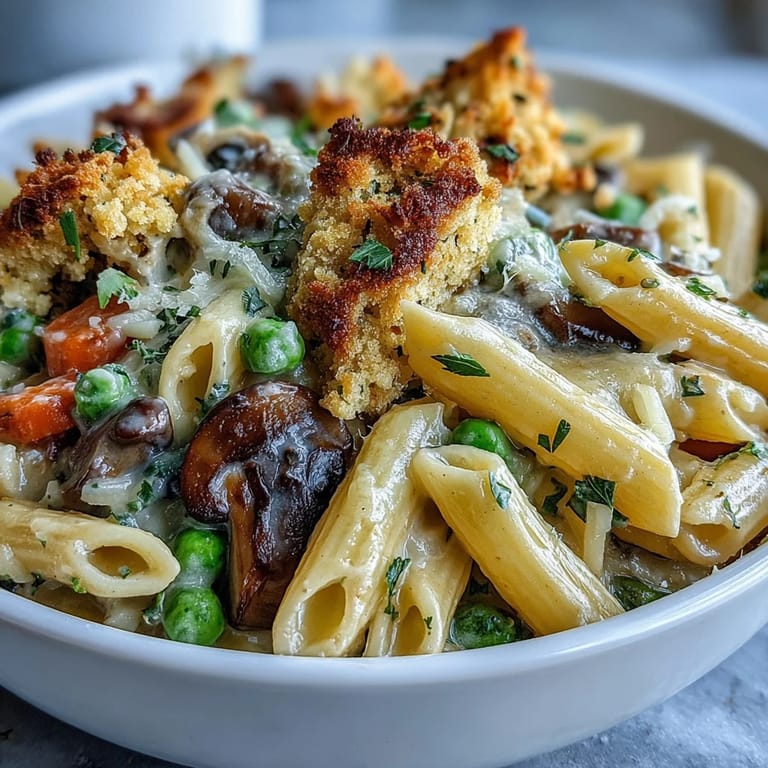
Save There's something magical about the moment when a dish arrives at your table that feels like two completely different meals decided to become friends. That's exactly what happened the first time I layered creamy pasta with roasted vegetables and topped it all with buttery biscuit crumbs—suddenly, pot pie wasn't just comfort food anymore, it was comfort food with a twist that made everyone at the table pause mid-bite and smile. The buttery crunch against the silky sauce felt like discovering a secret menu item that somehow became my kitchen obsession. What started as an experiment born from a random weeknight question—what if we made pasta taste like pot pie?—turned into the dish I now make whenever I want to feel like I've actually nailed something in the kitchen.
I'll never forget serving this to my neighbor who'd just moved in, standing in my kitchen listening to her exclaim that she didn't know something this restaurant-quality could come straight from home. We ended up talking for two hours after dinner, and somehow this pasta became the thing we bonded over. Now whenever she stops by, she asks if I'm making it again, and I always say yes.
Ingredients
- Unsalted butter: Two tablespoons creates the foundation for everything—melt it low and slow so it becomes your aromatics' best friend without browning.
- Yellow onion, carrots, celery: This trio is the holy trinity for a reason; they build deep, natural sweetness that cream sauce absolutely sings on top of.
- Button mushrooms: Slice them thin so they cook down quickly and release that umami depth that makes the whole dish taste less like "pasta night" and more like something you thought about for days.
- Frozen peas and corn: Don't sleep on frozen vegetables—they're picked at peak ripeness and their texture holds up beautifully against the cream sauce.
- Garlic: Mince it fine and add it after the mushrooms so it doesn't burn, bringing that sweet aromatic punch without any harsh edges.
- All-purpose flour: This makes the roux that thickens your sauce, so whisk it in immediately after sautéing to prevent lumps.
- Vegetable broth and whole milk: Together they create the creamy sauce base—use real milk if you can because it adds richness that plant-based versions can mimic but not quite replicate.
- Short pasta: Penne, fusilli, or shells work because their shapes trap sauce in every crevice, making each bite substantial and satisfying.
- Dried thyme and parsley: These herbs keep the pot pie flavor profile alive without fresh herbs wilting mid-cooking.
- Smoked paprika: Just a quarter teaspoon adds a whisper of depth that makes people ask what that incredible flavor is.
- Parmesan cheese: Stir it in after the pasta finishes so the heat melts it into the sauce without making it grainy.
- Cold butter for topping: Keep it genuinely cold because that's what creates those irregular, crunchy crumbs instead of a dense crust.
Tired of Takeout? 🥡
Get 10 meals you can make faster than delivery arrives. Seriously.
One email. No spam. Unsubscribe anytime.
Instructions
- Heat your oven and prep your workspace:
- Set the oven to 400°F and find your oven-safe pot or Dutch oven—this is your only real vessel, so pick something you love looking at. Having everything within arm's reach makes the next steps feel like a dance instead of a scramble.
- Build your vegetable base:
- Melt butter over medium heat and listen for that gentle sizzle before adding onion, carrots, and celery; they need five full minutes to soften and release their sweetness into the butter. This slow sauté is where the real flavor gets built, so resist the urge to rush it.
- Layer in the mushrooms and garlic:
- After three minutes of cooking the mushrooms, you'll notice the pan smells like a forest—that's exactly right. Add your minced garlic and let it wake up for just sixty seconds, releasing that pungent aroma that signals you're on the right track.
- Create your thickening base:
- Sprinkle flour over the vegetables and stir constantly for one full minute to cook out the raw flour taste and coat everything evenly. This roux is what transforms broth and milk into something silky and sauce-like.
- Build the creamy sauce:
- Whisk in the vegetable broth and milk gradually, stirring constantly to prevent lumps, then let it simmer for three minutes until it coats the back of a spoon. If you rush this step, you'll have lumps; if you let it sit, you'll have magic.
- Add pasta and seasonings:
- Stir in your dry pasta along with thyme, parsley, salt, pepper, and smoked paprika, then cover and let it simmer for ten to twelve minutes, stirring occasionally so nothing sticks to the bottom. The pasta absorbs the liquid and flavor as it cooks, so check it regularly and add a splash more broth if things look too thick.
- Finish with frozen vegetables and cheese:
- After the pasta reaches al dente, stir in the peas, corn, and Parmesan, simmering uncovered for two to three more minutes just until the peas are heated through and the cheese melts into the sauce. This final step brings everything together with a burst of color.
- Make your biscuit crumb topping:
- While the pasta simmers, combine flour, baking powder, and salt in a separate bowl, then cut in cold butter cubes using your fingertips or a pastry cutter until pea-sized crumbs form. Add milk and fresh parsley, stirring just until it comes together—overworking this topping makes it dense instead of light and crumbly.
- Assemble and bake:
- Sprinkle the biscuit crumb mixture evenly over the hot pasta, transfer the whole pot to the oven, and bake uncovered for ten to twelve minutes until the topping turns golden and crisp. You'll smell it before you see it turn color, so that aroma is your heads-up that it's almost done.
- Cool and serve:
- Let everything rest for five minutes before serving—this allows the sauce to set slightly and the topping to stay crispy instead of immediately softening from the steam.
 Save
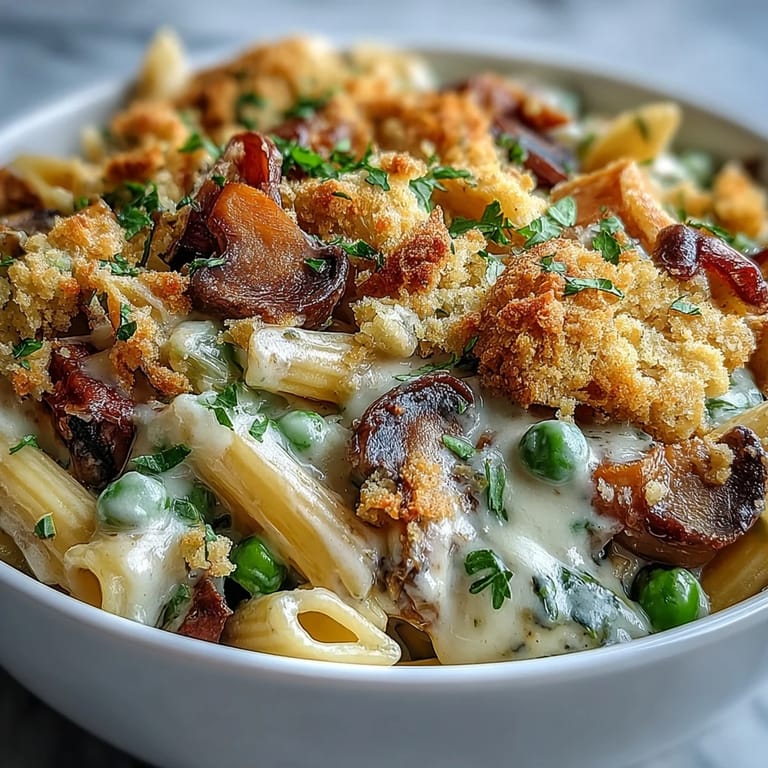
Save My favorite moment is always when someone takes that first bite and their eyes widen because they're tasting pot pie and pasta and biscuits all at once. There's this split second where they're trying to figure out how all these textures exist in one dish, and that's the moment I know it worked.
Texture is Everything Here
The magic of this dish lives in the contrast between what's happening in each layer. The pasta underneath gets tender from the creamy sauce, the vegetables soften into the mixture, and then that biscuit crumb topping stays crisp and buttery on top. If you let it sit uncovered after baking, the topping will slowly absorb steam and soften, so eat it fairly quickly if you want that crunch to stick around. I've learned this the hard way by leaving it on the counter while setting the table—still delicious, but the topping becomes more of a crunchy-chewy hybrid instead of truly crisp.
Making This Dish Your Own
The vegetable combination I've given you is solid, but this dish actually thrives on adaptation. One week I added fresh spinach instead of corn and loved the earthiness it brought, another time I stirred in some diced roasted bell peppers because I had them hanging around. The biscuit crumb topping stays constant because it's the signature move, but everything inside the pot can shift based on whatever vegetables are making your kitchen smell good that day. Just stick to the ratio of vegetables to sauce—you want about four cups of mixed vegetables to prevent the dish from becoming either too brothy or too thick.
Storage and Serving Thoughts
Leftovers actually improve after a day or two because the sauce continues to thicken and the flavors deepen, though the topping loses some crispness overnight. I like to reheat individual portions in a skillet over low heat, sometimes adding a fresh sprinkle of biscuit crumb topping before serving so everyone gets that original texture back. Pair this with a simple green salad dressed with lemon vinaigrette to cut through the richness, or serve alongside roasted broccoli if you want to add more green to the plate.
- Make the biscuit crumb topping right before you need it—waiting even thirty minutes lets the butter warm up and ruins the texture you worked for.
- If your sauce thickens too much during the pasta cooking, a splash of broth or milk brings it back to creamy perfection without diluting the flavor.
- Use an oven-safe Dutch oven if you have one because going from stovetop to oven in the same vessel is not just practical, it's honestly the whole point of this recipe.
 Save
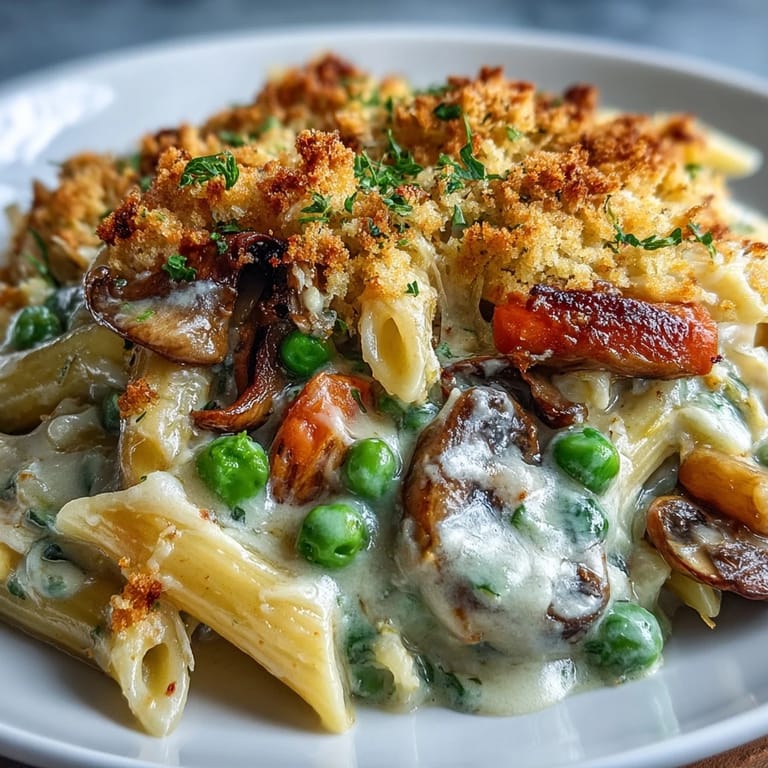
Save This dish has become my answer to the question of what to cook when I want to feel proud of dinner but not stressed about it. It's one of those meals that tastes like love without requiring love-level amounts of effort.
Kitchen Q&A
- → Can I make this dairy-free?
Yes, substitute plant-based butter and non-dairy milk. Use vegan cheese or omit the Parmesan entirely. The creamy texture remains delicious with these alternatives.
- → What pasta shapes work best?
Short pasta varieties like penne, fusilli, or shells are ideal because they catch the creamy sauce well. Macaroni or farfalle would also work nicely in this dish.
- → Can I prepare this ahead of time?
You can assemble the dish up to step 8, then refrigerate. Add the biscuit crumbs just before baking. You may need a few extra minutes in the oven since it will be cold.
- → How do I store leftovers?
Store in an airtight container in the refrigerator for up to 3 days. Reheat in the oven at 350°F to restore the crispy topping, or microwave for a softer texture.
- → Can I add protein?
Absolutely. Cooked shredded chicken or turkey works wonderfully. For vegetarian protein, try white beans or chickpeas added with the vegetables in step 3.
- → Is this gluten-free adaptable?
Yes, use gluten-free pasta and a 1:1 gluten-free flour blend for both the sauce thickening and biscuit topping. The texture remains satisfying with these substitutions.