 Save
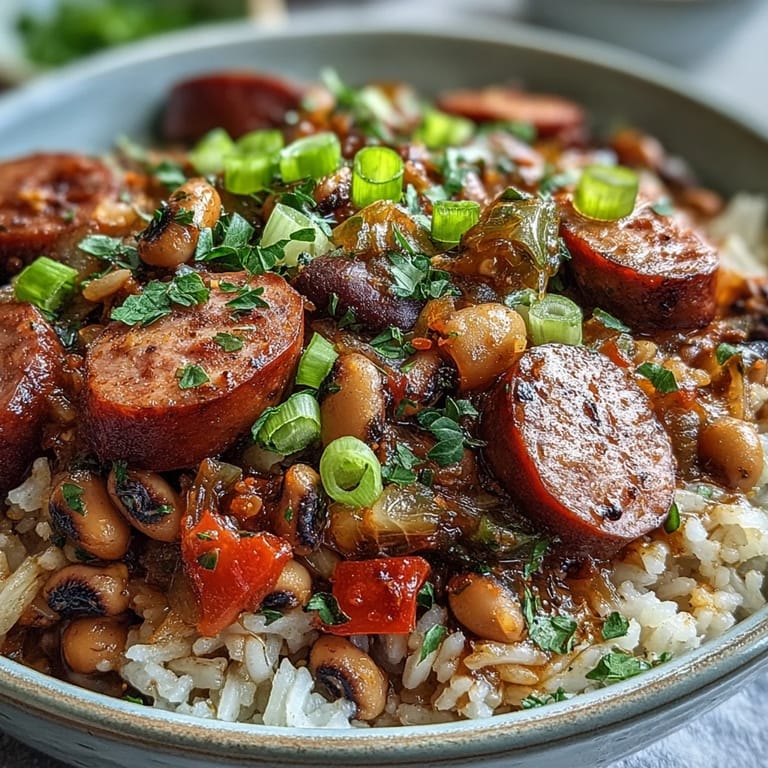
Save There's something about the smell of smoked sausage hitting hot oil that makes you feel like you're doing something right in the kitchen. My neighbor handed me a container of homemade Cajun seasoning one afternoon, and I spent the better part of an hour wondering what to actually make with it. Then jambalaya clicked, and suddenly I was browning sausage like I'd been doing it my whole life, even though I absolutely hadn't. That one pot became my answer to almost everything after that.
I made this for my sister's book club night because she called asking for something that wouldn't stress her out, and I remember her standing in the kitchen while it simmered, just sort of amazed that a dish could smell that good for that long. By the time the rice absorbed all that broth and spice, everyone had already gathered around sniffing the air like we were at some kind of food event. It became the dish she requests now, which is its own kind of compliment.
Ingredients
- Smoked sausage (340 g / 12 oz), sliced: Andouille has more personality, but kielbasa works just fine if that's what's at your store; the smokiness is non-negotiable though.
- Onion (1 medium), diced: This is your foundation, so don't skip it or rush the chopping; a proper dice means it breaks down into the dish instead of staying chewy.
- Celery stalks (2), diced: People skip this thinking it's filler, but it adds a subtle earthiness that makes everything taste more intentional.
- Bell peppers (1 red, 1 green), diced: The red one is a little sweeter, the green one more crisp; together they balance each other out.
- Garlic (3 cloves), minced: Fresh is always better than the jar version, and you'll know it the second the smell hits the pot.
- Black-eyed peas (1 can, 425 g / 15 oz), drained and rinsed: Rinsing them actually matters because it removes excess sodium and starch, leaving them clean and ready to absorb all that Cajun flavor.
- Long-grain white rice (300 g / 1½ cups): Don't use risotto rice or short-grain; you need the kind that stays separate and lets the broth do its thing.
- Chicken broth (800 ml / 3⅓ cups), low-sodium: Low-sodium gives you control; regular broth can make the whole dish taste like salt water.
- Diced tomatoes (1 can, 400 g / 14 oz) with juices: The juices matter because they're part of the liquid ratio; don't drain them unless you want crunchy rice.
- Olive oil (2 tbsp): Enough to brown the sausage without turning the dish greasy, but enough that everything that follows cooks in actual flavor.
- Cajun seasoning (1½ tsp): This is your spice anchor; taste a tiny bit on your finger first to know what you're working with.
- Smoked paprika (1 tsp): The smoke is the whole point; regular paprika is just color, which isn't the same thing.
- Dried thyme (½ tsp): Earthy and subtle; it plays nicely with the oregano instead of fighting it.
- Dried oregano (½ tsp): A hint of Mediterranean flavor sneaking into the Cajun party.
- Bay leaf (1): This has to come out before serving; leaving it in is like forgetting to remove the produce sticker from an apple you're about to bite into.
- Salt (½ tsp) and black pepper (¼ tsp), or to taste: You'll probably need more by the end; taste as you go.
- Cayenne pepper (¼ tsp, optional): Only if you like heat; otherwise the Cajun seasoning gives you plenty of warmth already.
- Spring onions (2), sliced, for garnish: These add brightness and a little crunch right at the finish line.
- Fresh parsley (2 tbsp), chopped, for garnish: Just a garnish, but it makes people think you know what you're doing.
Tired of Takeout? 🥡
Get 10 meals you can make faster than delivery arrives. Seriously.
One email. No spam. Unsubscribe anytime.
Instructions
- Brown the sausage first, really let it sit:
- Heat the oil in your pot over medium heat, and when it shimmers, add the sausage slices in a single layer; don't move them around for the first 2 minutes or so, because that's when the edges get crispy and golden. You're looking for actual browning, not just cooked-through-ness, because that browning is flavor.
- Build the vegetable base one layer at a time:
- Once the sausage is done, toss in the onion, celery, and bell peppers and let them soften for a full 5 minutes; don't rush this because they're releasing their own flavors into the oil and sausage bits. Then add the garlic and cook for just a minute more until it stops smelling raw.
- Toast the rice in oil and vegetables:
- Add the rice and stir it around for a minute or two so each grain gets coated and the rice starts to smell nutty instead of grainy. This step feels unnecessary until you taste the difference it makes.
- Add all liquids and seasonings at once:
- Pour in the broth, tomatoes with their juices, black-eyed peas, and all the spices; stir everything together so nothing settles on the bottom where it might burn. Bring it to a boil, then drop the heat down low, cover it, and let it do its thing for 20 to 25 minutes.
- Let the rice finish absorbing everything:
- Don't peek too much or uncover it constantly; the steam is doing important work. When you uncover it, the rice should be tender and the liquid should be gone or nearly so.
- Rest it for 5 minutes before serving:
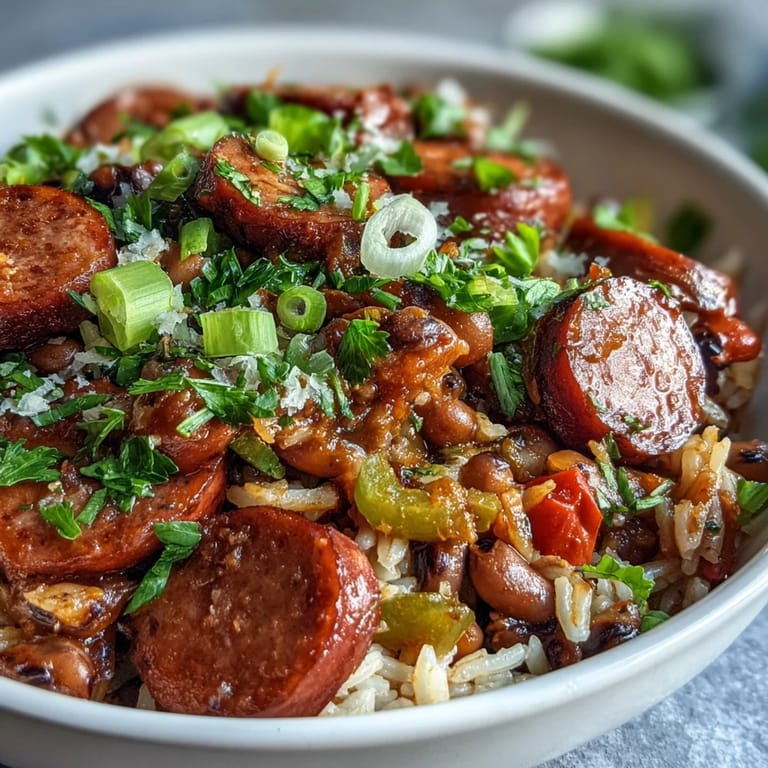
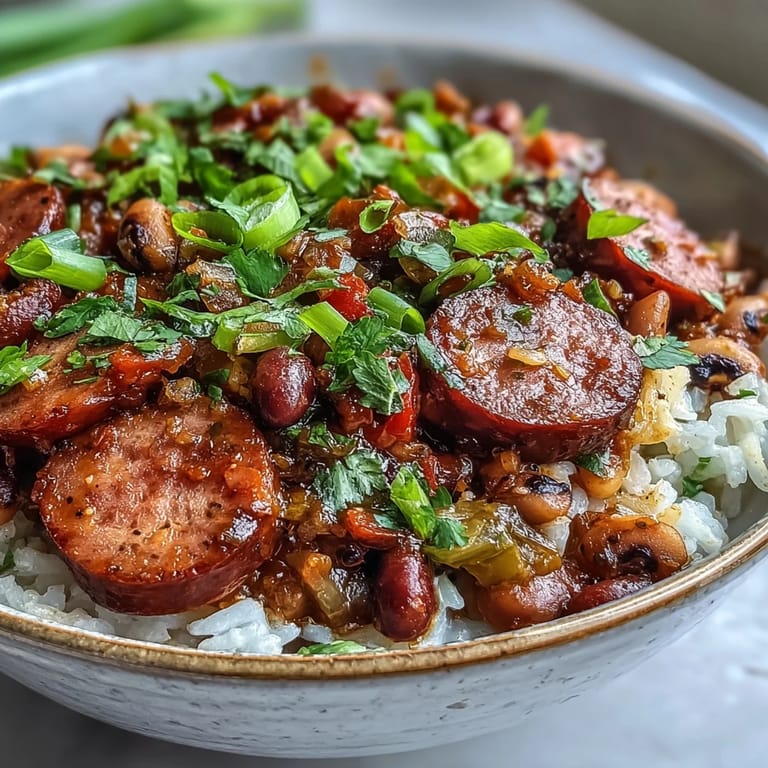
- This sounds small, but it lets everything settle and the flavors kind of marry together in that quiet time. Fluff it with a fork, fish out the bay leaf, scatter the spring onions and parsley on top, and call everyone to the table.
 Save
Save I served this at a potluck once where someone asked for the recipe before they'd even finished eating, which felt like winning something I didn't know was a competition. That's when I realized this dish isn't fancy or complicated, but it tastes like someone actually cared, which might be the whole point.
The Magic of Smoked Sausage
Smoked sausage is not just an ingredient; it's your seasoning shortcut wearing a meat suit. The first time I made this with regular pork sausage out of desperation, the whole dish felt flat and pale in comparison, even with all the same spices. Andouille is worth hunting for, but if you can't find it, kielbasa from the deli counter will do the job almost as well. The smoke is what you're after, not the brand name.
Why This Works as One Pot
Every component in this pot serves a purpose in building layers of flavor; the sausage seasons the oil, the oil carries that flavor to the vegetables, the vegetables soften and add sweetness, and then the rice absorbs everything while cooking in that spiced broth. It sounds like it shouldn't work, but by the time you're fluffing that rice with a fork, you understand why people in New Orleans figured this out generations ago. Nothing is happening in isolation; it's all connected.
Customize Without Losing Yourself
This is a template more than a rigid recipe, and it handles changes better than you'd think. If you're vegetarian, skip the sausage and add mushrooms or extra beans; if you like heat, add the cayenne and maybe a dash of hot sauce on the side; if you're cooking for someone who doesn't like one of the vegetables, swap it for something else you have. The structure stays the same, just with different players.
- Vegetarian swap: Use vegetable broth and add mushrooms, extra beans, or even cubed squash for substance.
- Heat adjustment: Start with the cayenne amount given, taste it, and add more if you're feeling brave.
- Make-ahead reality: This actually tastes better the next day after sitting in the fridge; the spices keep getting friendlier with the rice.
 Save
Save This jambalaya has become the dish I make when I want to feel competent and also make someone happy at the same time. It's that rare recipe that looks more complicated than it actually is, which means you'll feel proud serving it even though you barely broke a sweat.
Kitchen Q&A
- → What makes this dish authentic Cajun?
The combination of the holy trinity (onion, celery, bell peppers), smoked Andouille sausage, Cajun seasoning, and the one-pot rice cooking method creates authentic Cajun flavors.
- → Can I make this vegetarian?
Yes. Simply omit the sausage and substitute vegetable broth for chicken broth. Add extra black-eyed peas, mushrooms, or plant-based sausage to maintain heartiness.
- → How spicy is this jambalaya?
The base dish has mild to medium heat from Cajun seasoning. Adjust the spice level by reducing or increasing the cayenne pepper and additional Cajun seasoning to your preference.
- → Why let it stand covered after cooking?
Letting the dish rest covered for 5 minutes allows the rice to finish absorbing remaining liquid evenly and prevents the grains from becoming gummy when fluffed.
- → What can I serve with this?
This complete one-pot meal stands alone well. Consider serving with hot sauce on the side, cornbread, or a simple green salad to complement the bold flavors.