 Save
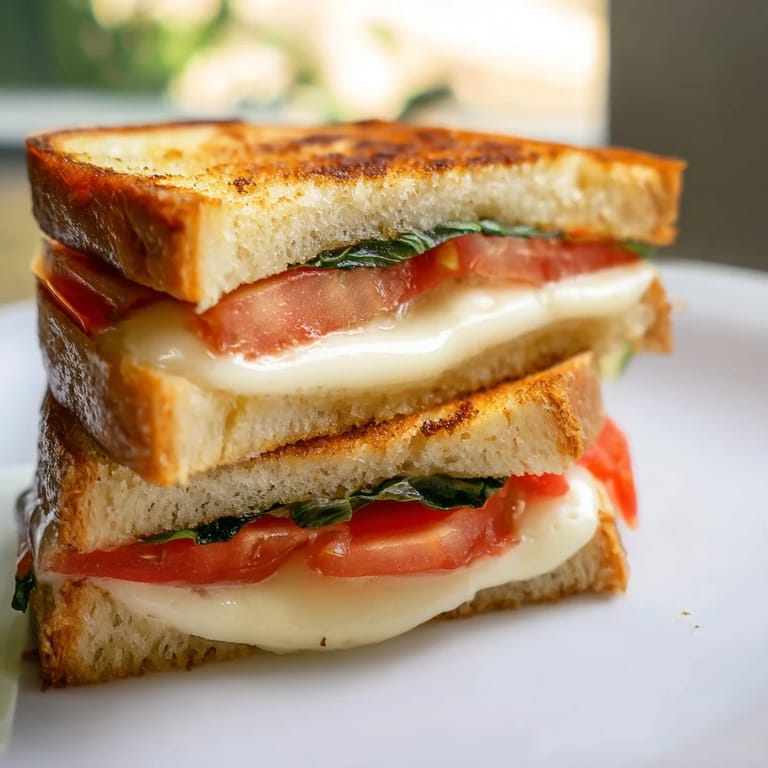
Save There was a Tuesday afternoon when I had nothing but leftover bread and half a ball of mozzarella in the fridge. I was tired, hungry, and not in the mood to think too hard. I sliced a tomato I had picked up that morning, grabbed some basil from the windowsill, and made what turned out to be the best grilled cheese I had eaten in years. Sometimes the simplest combinations teach you the most about flavor.
I made this for my neighbor once when she stopped by unexpectedly, and she asked for the recipe as if it were complicated. I laughed because there is no recipe, just good timing and decent ingredients. She still brings it up every time we talk about food. It is funny how something this straightforward can leave that kind of impression.
Ingredients
- Rustic or sourdough bread: The structure matters here because flimsy bread turns soggy under the tomato, and you want something with enough chew to hold up to the melt.
- Unsalted butter, softened: Softened butter spreads cleanly without tearing the bread, and it gives you that even golden crust that makes or breaks a grilled cheese.
- Fresh mozzarella, sliced: Fresh mozzarella melts differently than the low moisture kind, it gets creamy and stretchy instead of greasy, which is exactly what you want against the tomato.
- Ripe tomato, sliced: A ripe tomato is non negotiable because an underripe one just tastes like wet cardboard, and this whole sandwich depends on that juicy sweetness.
- Fresh basil leaves: Basil is not just garnish here, it cuts through the richness and makes the whole thing taste brighter and more intentional.
- Salt and black pepper: A little salt on the tomato before it goes in makes all the difference, it pulls out the flavor and keeps things from tasting flat.
Tired of Takeout? 🥡
Get 10 meals you can make faster than delivery arrives. Seriously.
One email. No spam. Unsubscribe anytime.
Instructions
- Butter the bread:
- Lay out all four slices and spread softened butter evenly on one side of each. This is the side that will touch the pan, so do not skip any spots or you will end up with pale patches.
- Build the sandwiches:
- Place two slices buttered side down, then layer on the mozzarella, tomato, and basil, seasoning with salt and pepper as you go. Top with the remaining slices, buttered side up, and press gently so everything sticks together.
- Heat the skillet:
- Set a non stick skillet or griddle over medium heat and let it warm up for a minute or two. If the pan is too hot, the bread will burn before the cheese melts, so medium is your friend here.
- Cook the sandwiches:
- Place the sandwiches in the skillet and cook for 3 to 4 minutes per side, pressing gently with a spatula to help the cheese melt and the bread crisp evenly. You will know it is ready when the bread is deeply golden and the cheese starts to ooze at the edges.
- Rest and slice:
- Pull the sandwiches off the heat and let them sit for a minute so the cheese sets just slightly. Slice in half and serve while still warm.
 Save
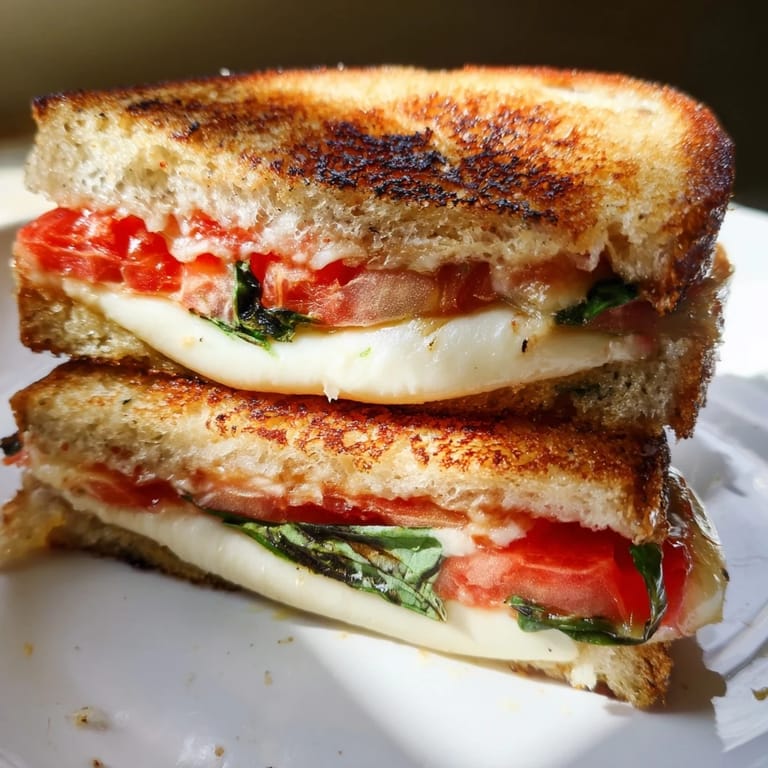
Save One evening I made this after a long day and ate it standing at the counter with a bowl of tomato soup. The house was quiet, the sandwich was perfect, and I realized I had been overthinking dinner for weeks. Sometimes you just need something simple that works.
Choosing Your Bread
I have tried this with all kinds of bread, and while white sandwich bread works in a pinch, sourdough or a rustic loaf with some texture makes it feel more substantial. The crust crisps up better and the interior stays soft enough to soak up a little of the tomato juice without falling apart. If you can find a bakery loaf, use it.
Making It Your Own
You can swap the mozzarella for provolone if you want something sharper, or use cheddar if that is what you have. I have added a drizzle of balsamic glaze right before serving, and it adds a sweet tangy note that plays really well with the basil. Sometimes I throw in a few thin slices of red onion if I am feeling adventurous.
Serving and Pairing
This sandwich is perfect on its own, but it really shines next to a bowl of tomato soup or a simple green salad. I have also served it with a handful of kettle chips and called it lunch. It is one of those meals that does not need much else to feel complete.
- Serve it with a side of pickles for a little acid to cut the richness.
- If you are feeding kids, cut it into smaller triangles so it feels more fun.
- Leftovers do not really work here, so make only what you will eat right away.
 Save
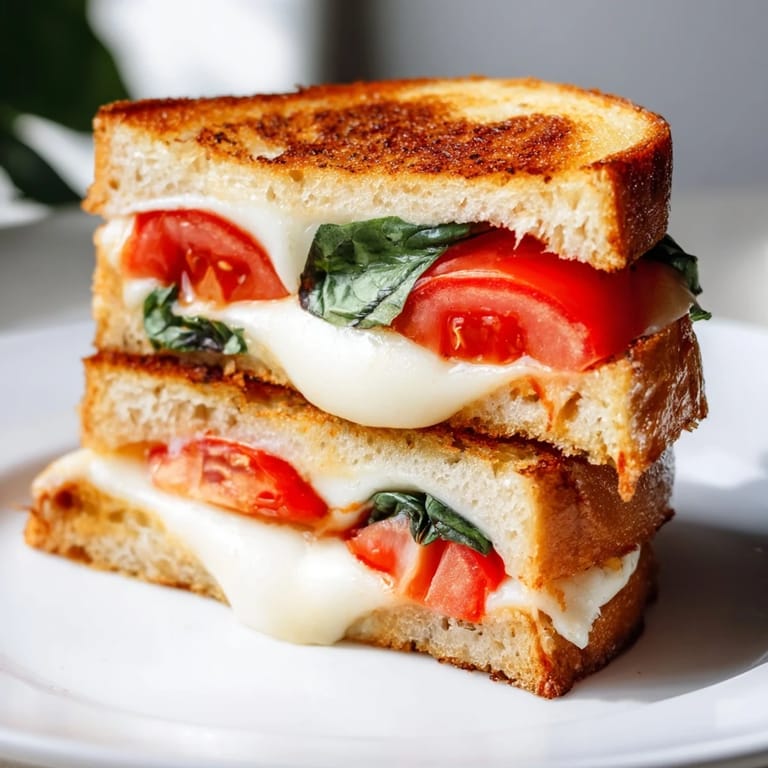
Save This is the kind of recipe you will make again and again without thinking twice. It is easy, it is satisfying, and it never gets old.
Kitchen Q&A
- → How do I prevent the bread from burning while the cheese melts?
Cook over medium heat rather than high heat, which gives the cheese time to melt as the bread toasts. If needed, reduce heat to medium-low. You can also cover the skillet briefly with a lid during the last minute to trap heat and speed up melting.
- → What's the best bread choice for this sandwich?
Rustic sourdough and hearty multigrain breads work excellently due to their sturdy structure and flavor. Avoid thin sandwich bread, which can become too soft. Whole wheat also provides nice texture and complements the fresh basil and tomato well.
- → Can I prepare the sandwich ahead of time?
Assemble the sandwich just before cooking to prevent the tomato from making the bread soggy. You can slice your ingredients in advance and store them separately in the refrigerator, then assemble and cook when ready to serve.
- → What cheese alternatives work best?
Provolone offers a slightly sharper flavor, while cheddar provides a richer taste. Fresh buffalo mozzarella gives the most delicate, creamy result. Avoid pre-sliced cheese when possible, as freshly sliced varieties melt more smoothly and evenly.
- → Why is pressing the sandwich during cooking important?
Gentle pressing with a spatula promotes even contact between the bread and skillet, ensuring uniform browning and helping the cheese distribute evenly throughout the sandwich for consistent melting.
- → Can I add other ingredients to this sandwich?
Absolutely. Consider thin slices of red onion, arugula, or spinach for added freshness. A drizzle of balsamic glaze or pesto before assembly enhances the flavor. Keep additions minimal to maintain the sandwich's structural integrity.