 Save
Save My daughter came home from school one afternoon with a crumpled permission slip for a field trip, and I realized I'd been packing the same sad sandwich in her lunchbox for weeks. That night, I stood in front of the fridge thinking there had to be something better—something she'd actually want to eat, something that wouldn't get squished in her backpack. I remembered how she'd pick at hummus at dinner parties, dipping vegetables like they were treasure, and suddenly these little cups felt like the answer. Now they're her favorite thing to request, and honestly, I pack them for myself too.
I brought these to a neighborhood potluck last summer, expecting them to sit untouched while everyone gravitated toward the cheese board. Instead, I watched kids and adults alike grab them first, standing around comparing which vegetable was crunchiest and asking if they could take extras home. There was something about the portability and the bright colors that made eating vegetables feel less like nutrition and more like fun, and suddenly I understood why my picky eater had been asking for them every single day.
Ingredients
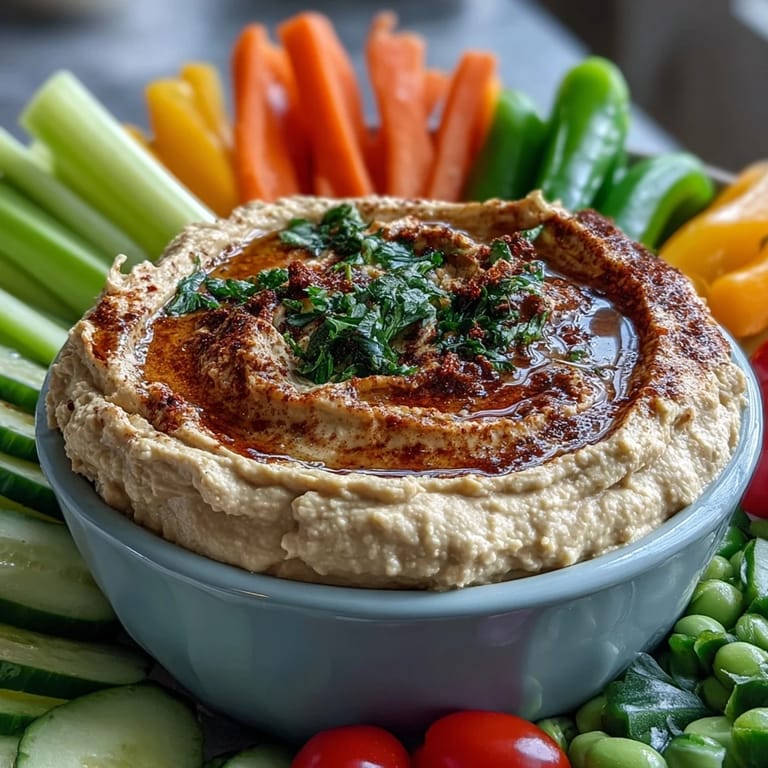
- Hummus: Use creamy store-bought or make your own—either way, it's the glue that holds everything together and keeps vegetables from getting soggy, so don't skimp on quality.
- Carrots: Cut them thick enough to hold their crunch but thin enough to fit comfortably in a cup, and peel them smooth so they slide through hummus without resistance.
- Cucumber: The most water-logged vegetable here, so pat them dry after cutting to prevent the hummus from becoming watery over time.
- Red and yellow bell peppers: These add sweetness and color, but always remove the seeds and white membranes completely so each piece is pure vegetable goodness.
- Snap peas: Their natural sweetness makes them irresistible, and they're sturdy enough to stand up in hummus without wilting within hours.
- Cherry tomatoes: Leave them whole if they're small enough, or halve larger ones—they add bursts of brightness and a little tang.
- Optional celery and jicama: Celery adds earthiness, while jicama brings a surprising crispness that lasts longer than most vegetables.
Tired of Takeout? 🥡
Get 10 meals you can make faster than delivery arrives. Seriously.
One email. No spam. Unsubscribe anytime.
Instructions
- Wash and prep everything:
- Rinse all vegetables under cool water, rubbing them gently to remove any dirt. Pat them completely dry with paper towels because water is the enemy of freshness in these little cups.
- Cut with intention:
- Use a sharp knife to cut vegetables into sticks or bite-sized pieces, making sure each piece is thick enough to dip without breaking apart. The carrots and cucumbers should be about the size of your pinky finger for the perfect dipping experience.
- Divide the hummus:
- Spoon approximately 1/4 cup of hummus into each small cup or jar, spreading it slightly so it covers the bottom and creates a base for vegetables to stand in. The hummus should be thick enough to hold vegetables upright but spreadable enough to coat everything evenly.
- Arrange vegetables thoughtfully:
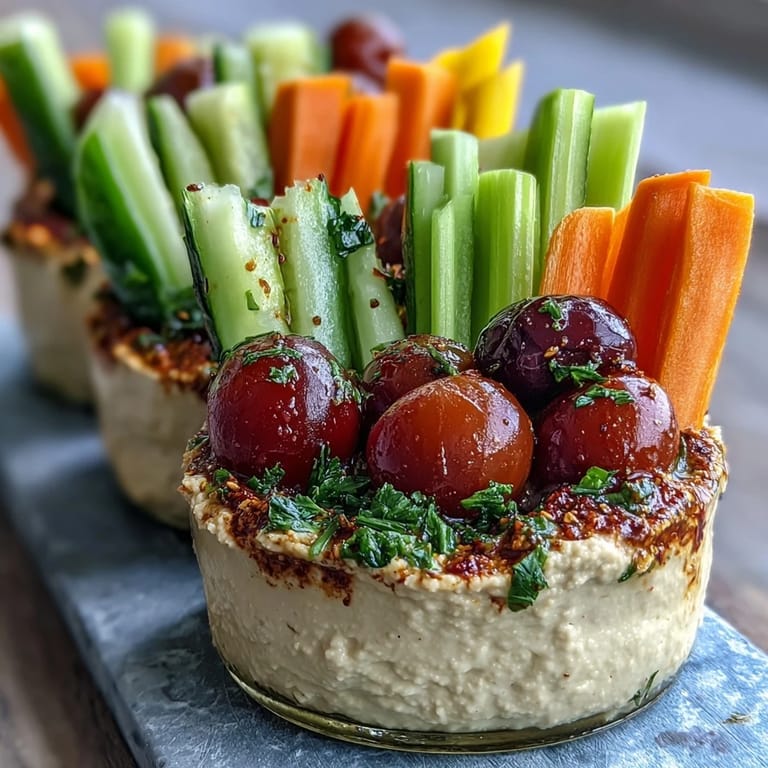
- Stand vegetables upright in the hummus like a little edible bouquet, mixing colors and textures so every dip brings variety. Group similar vegetables together for visual appeal and so you know exactly what you're grabbing.
- Seal and chill:
- Cover each cup with a tight-fitting lid and refrigerate until you're ready to eat. These will keep for up to two days, though they taste best consumed within 24 hours when vegetables are at peak crispness.
 Save
Save My son once asked why these snack cups tasted better than the same vegetables I'd put on a plate at home, and I realized it wasn't really about the hummus or the vegetables at all. It was the ritual of opening his own little container, the independence of choosing what to dip first, and maybe just the fact that something so intentionally packed felt like love in portable form. Now whenever we go anywhere, he asks if we're bringing our special snack cups, and the answer is almost always yes.
Flavor Boosters That Transform Everything
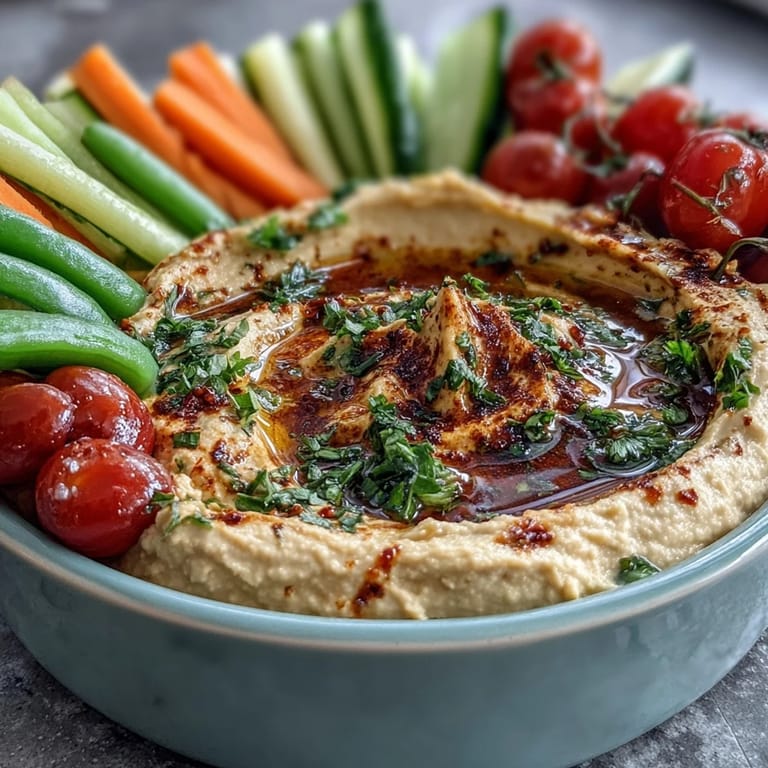
Plain hummus is wonderful, but a moment before you seal those cups, consider what might make them sing. A light dusting of paprika adds smokiness without overpowering the fresh vegetables, while za'atar brings a subtle tanginess that makes everything taste more intentional. I've also drizzled a tiny amount of olive oil across the top—just enough to catch the light and add richness—and watched people's faces light up as if they'd discovered something secret. Even a sprinkle of fresh herbs like parsley or dill transforms these from simple snacks into something that feels restaurant-quality, and it takes literally ten seconds.
Seasonal Swaps and Variations
These cups are only as limiting as your imagination, and I've learned that the best versions change with what's available. In spring, I blanch tender green beans until they're just barely soft, then chill them completely before packing. Summer calls for radishes, which stay crisp for days and add a peppery kick that surprises people. Fall brings roasted asparagus pieces and even sliced apples if I'm feeling adventurous, while winter is all about blanched broccoli florets and cauliflower pieces that hold up beautifully in the cold. The vegetables matter less than the spirit of putting together something fresh and nourishing with your own hands.
Making Them Even More Protein-Packed
Sometimes these snack cups need to become more substantial—maybe you're packing them for a longer outing or someone's hungry enough that vegetables alone won't cut it. I've started adding small cubes of baked tofu that I season lightly with soy sauce, or including a small handful of roasted chickpeas tucked into the hummus. For non-dairy occasions, I've even added cubes of sharp cheddar or sliced mozzarella, which somehow feels more indulgent than it should for something so simple.
- Baked tofu cubes seasoned with your favorite spices add substance without overpowering the fresh vegetables.
- Roasted chickpeas provide extra crunch and protein, making these cups feel like a complete snack rather than just a starter.
- A small handful of nuts or seeds sprinkled on top adds nutrition and texture, though always check for nut allergies before sharing.
 Save
Save These little cups have become my secret weapon for actually getting vegetables into people who claim they don't like them, and somehow making healthy choices feel less like obligation and more like adventure. There's something magical about portable, colorful, intentional food that tastes good and makes you feel good.