 Save
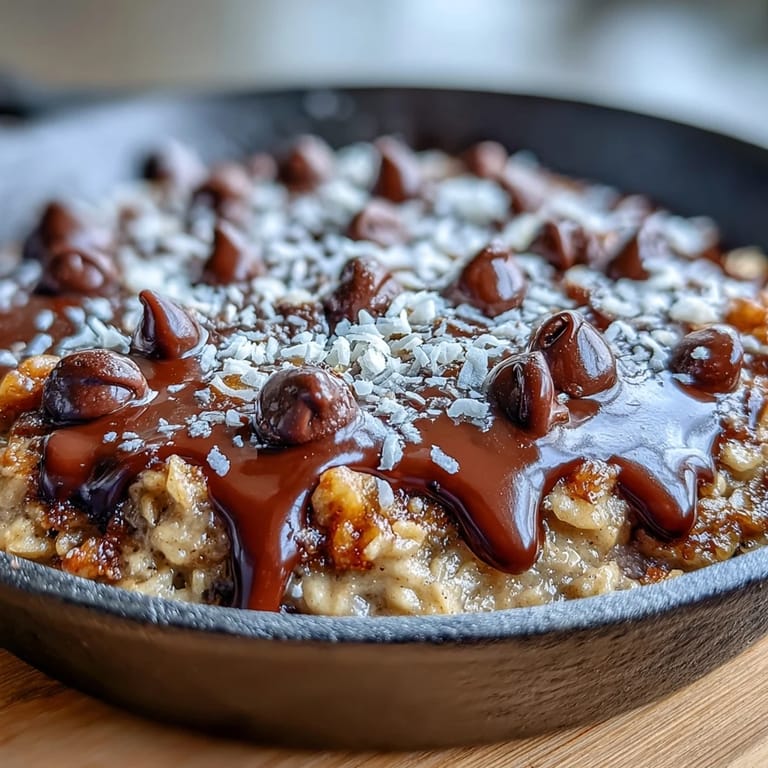
Save My roommate came home one afternoon craving something sweet but didn't want to fuss with individual cookies, so I grabbed a cast-iron skillet and started layering banana, chocolate, and oats like I was building something meant to be shared straight from the pan. That first warm slice, still soft in the middle with those melted chocolate chips, felt like dessert and comfort food had finally agreed on something. Now whenever I make this, I'm reminded that the best recipes are often born from wanting to feed someone quickly without sacrificing that homemade taste.
I made this for a game night once and didn't expect how it would become the thing people talked about more than the actual game. My friend Sarah, who's usually skeptical of fruit in desserts, went back for thirds and asked if I'd ever considered selling these. That moment taught me that sometimes the most memorable dishes aren't complicated—they're just warm, unpretentious, and made with enough care that people can taste it.
Ingredients
- Old-fashioned rolled oats (1 1/2 cups): These give the cookie its texture and heartiness; don't use instant oats or the whole thing becomes gummy instead of chewy.
- All-purpose flour (1 cup): It provides structure without making things dense, so the skillet stays tender even after baking.
- Baking soda (1/2 teaspoon): This is your leavening agent, helping the cookie rise slightly and brown beautifully; measure carefully because too much leaves a metallic taste.
- Salt (1/2 teaspoon): Never skip this—it balances the sweetness and makes the banana flavor pop unexpectedly.
- Ground cinnamon (1/2 teaspoon): Warm spice that whispers in the background without overpowering anything else.
- Unsalted butter, melted (1/2 cup): Melt it and let it cool for a minute so it doesn't scramble the egg when you add it; this small step keeps everything silky.
- Light brown sugar and granulated sugar (3/4 cup combined): The combination gives you caramel notes from the brown sugar and brightness from the white sugar.
- Large egg (1): This binds everything and adds moisture without making it cake-like.
- Vanilla extract (2 teaspoons): Use pure vanilla if you can; the flavor difference is noticeable in a simple recipe like this.
- Ripe bananas, mashed (about 1 cup): Choose bananas with brown spots—they're sweeter and blend more smoothly than pale yellow ones.
- Semisweet chocolate chips (1/2 cup): These melt slightly in the warm batter, creating pockets of chocolate that soften as everything bakes.
- Chopped walnuts (1/2 cup): Toast them lightly before chopping if you have time; it wakes up their flavor and makes them taste less like an afterthought.
- Unsweetened shredded coconut (1/4 cup, optional): This adds chew and tropical notes, but it's easy to leave out if you prefer simplicity.
Tired of Takeout? 🥡
Get 10 meals you can make faster than delivery arrives. Seriously.
One email. No spam. Unsubscribe anytime.
Instructions
- Get your oven ready:
- Heat your oven to 350°F and give your 10-inch cast-iron skillet a light butter or spray coating. Cast iron holds heat beautifully, so your edges will crisp while the center stays tender.
- Mix your dry base:
- Whisk together oats, flour, baking soda, salt, and cinnamon in a large bowl until everything looks evenly distributed. This step prevents clumps of baking soda from showing up as bitter surprises in your finished cookie.
- Build your wet mixture:
- In a separate bowl, whisk the melted butter with both sugars until smooth and slightly glossy, then add the egg and vanilla and whisk again. You should hear the whisk moving freely, which means everything's combining.
- Add the banana magic:
- Stir the mashed bananas into your wet mixture until you don't see white streaks anymore. The batter will look slightly thick and creamy at this point.
- Bring wet and dry together:
- Pour the wet ingredients into the dry bowl and mix until just barely combined—a few flour streaks are perfectly fine and actually what you want. Overmixing makes things tough.
- Fold in the good stuff:
- Gently fold in chocolate chips, walnuts, and coconut if using, being careful not to crush anything. You want distinct pockets of flavor, not a uniform paste.
- Spread into the skillet:
- Turn the batter into your prepared skillet and use a spatula to spread it in an even layer. Don't press down hard; let it settle naturally.
- Bake until golden:
- Slide it into the oven for 20 to 24 minutes, watching around minute 20 for the top to turn golden brown. The edges should look set while the very center still jiggles slightly when you gently shake the skillet.
- Cool and serve:
- Let it rest in the skillet for 10 minutes—this gives the structure time to set without becoming dry. Serve warm, straight from the pan, with ice cream if you're feeling indulgent.
 Save
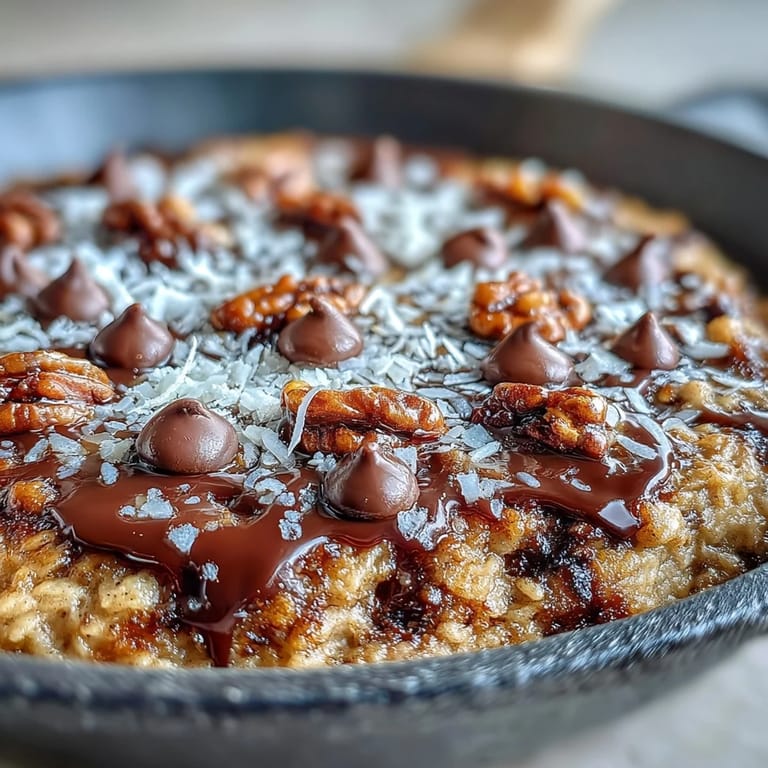
Save There's something about eating dessert warm from a skillet that makes people linger at the table longer, leaning in to talk instead of rushing off. I think it's because sharing from one pan creates an intimacy that individual plated desserts never quite achieve.
Choosing Your Bananas Wisely
The ripeness of your bananas sets the entire tone for this cookie, and I learned this the hard way after using barely-yellow ones and ending up with a slightly grainy texture that caught me off guard. Now I wait for that moment when the peel shows brown freckles—still firm enough to slice, but sweet enough to blend into silky mush that disappears into the batter. If your bananas aren't quite ripe enough, you can sit them on the counter for a day or wrap them loosely in foil to speed things along.
Why Cast Iron Is Worth It Here
A regular baking pan would work fine, but cast iron creates something magical—the bottom and edges brown to this deep, almost caramelized color that you simply can't achieve elsewhere, and the heat retention means your cookie stays warm and slightly gooey longer. My cast-iron skillet has become the unofficial star of my dessert repertoire because it delivers restaurant-quality browning without any fuss. Plus, serving straight from the skillet feels a little bit special without actually being complicated.
Storage and Reheating Tips
Leftovers, if you somehow have them, keep beautifully in an airtight container for three days, and you can gently reheat slices right back in the skillet over low heat for a minute or two to bring back that warm, melted chocolate feeling. I've also found that leaving the cookie in the skillet and just covering it loosely with foil works perfectly for casual storage. Here are three more thoughts to keep in your back pocket when making this:
- If you're serving a crowd, this skillet actually stays warm long enough to let people come back for seconds without you having to reheat anything.
- Swap out the walnuts for pecans or even almonds if that's what you have on hand; any nut brings a similar toasty contrast to the chocolate.
- The optional coconut really does add something special if you enjoy tropical flavors, but the recipe is completely satisfying without it.
 Save
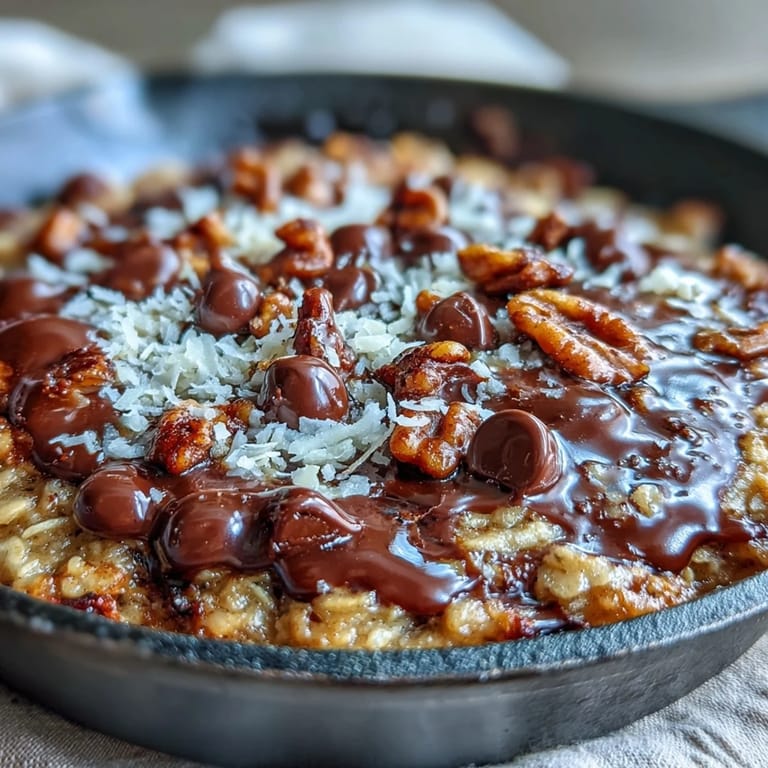
Save This skillet cookie exists somewhere between the comfort of old-fashioned baking and the ease of wanting something sweet right now. Make it once and you'll find yourself reaching for your cast iron whenever you want to feed people something warm and unpretentious.
Kitchen Q&A
- → Can I make this skillet ahead of time?
Yes, you can prepare the dough up to 24 hours in advance and store it covered in the refrigerator. Bake when ready to serve, adding a few extra minutes if baking cold. Leftovers reheat beautifully in the skillet at 350°F for 5-10 minutes.
- → What makes this different from regular cookie bars?
The cast-iron skillet creates unique texture variation—crispy, caramelized edges with a soft, gooey center. The oats add hearty chewiness while mashed bananas provide moisture and natural sweetness throughout every bite.
- → Can I substitute the mix-ins?
Absolutely. Try pecans or almonds instead of walnuts, dark chocolate or white chocolate chips, or add dried fruit like cranberries or raisins. Peanut butter or butterscotch chips also work wonderfully for different flavor variations.
- → How do I know when it's done baking?
The edges should appear golden brown and set while the center remains slightly soft. A toothpick inserted near the edge should come out mostly clean. Remember, residual heat continues cooking the center as it cools.
- → What's the best way to serve this?
Serve warm directly from the skillet, scooped or sliced. Vanilla ice cream creates a perfect temperature contrast. For extra indulgence, drizzle with salted caramel or chocolate sauce. Also delicious at room temperature for a portable treat.
- → Can I use quick oats instead of old-fashioned?
Old-fashioned oats provide better texture and structure. Quick oats will make the final product softer and less hearty. If you only have quick oats, reduce the amount slightly and expect a more cake-like result.