 Save
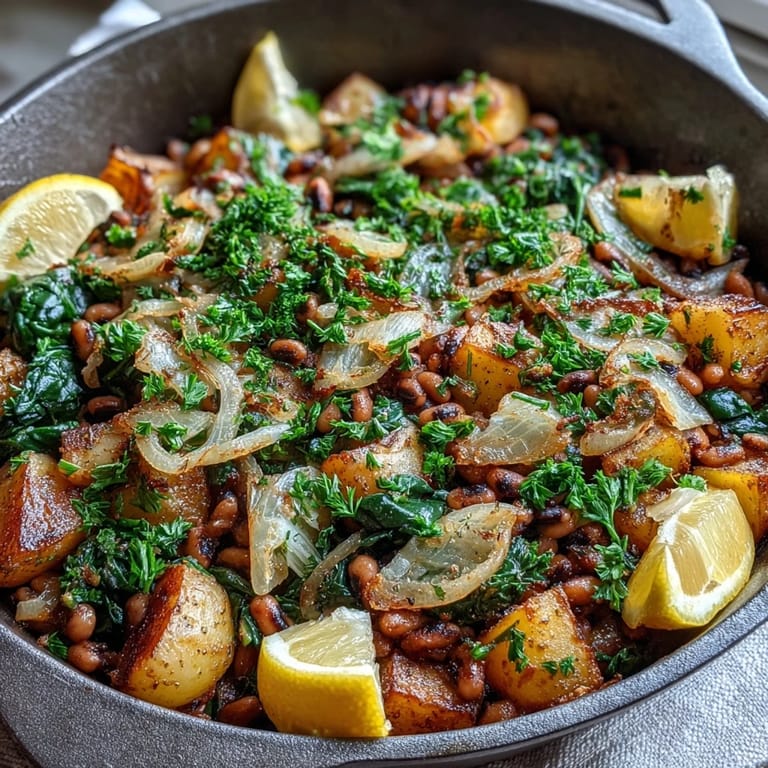
Save There's something grounding about cooking in cast iron, the way heat distributes so evenly that every ingredient gets treated with respect. One weeknight, I found myself with a bag of black-eyed peas, some potatoes, and spinach that needed using up, and instead of overthinking it, I just started layering flavors into that seasoned skillet. By the time the kitchen filled with the smell of smoked paprika and garlic, I realized I'd stumbled onto something that felt both comforting and alive on the plate.
I made this for friends who'd mentioned eating more plant-based meals, and watching them come back for seconds without realizing there wasn't a speck of meat told me everything I needed to know. The way the smoked paprika brought depth, how the spinach wilted into tiny pockets of tenderness—it all just worked together without fanfare.
Ingredients
- Olive oil: Use good quality here because it's one of the few fats carrying the whole dish, and its flavor matters from the first sauté.
- Large yellow onion: Sliced thin so it practically melts into the pan, creating a sweet foundation everything else builds on.
- Yukon Gold potatoes: These waxy potatoes hold their shape during cooking and turn golden without falling apart like russets might.
- Fresh spinach: Add it at the very end so it stays bright and maintains some texture rather than becoming a dark puddle.
- Black-eyed peas: Canned works beautifully if you rinse them well, though cooked dried peas taste even better and cost less.
- Garlic: Three cloves minced fine so they distribute evenly and wake up the whole dish with their sharpness.
- Smoked paprika: This is the secret hero that makes people ask what spice they're tasting, the one that gives everything an unexpected warmth.
- Dried thyme: Just enough to whisper rather than shout, adding an herbal note that rounds out the earthiness.
- Crushed red pepper flakes: Keep them optional and nearby so people can dial up the heat to their preference.
- Vegetable broth: Low-sodium lets you control the salt and keeps the dish tasting fresh rather than canned-tasting.
Tired of Takeout? 🥡
Get 10 meals you can make faster than delivery arrives. Seriously.
One email. No spam. Unsubscribe anytime.
Instructions
- Get your skillet warm and ready:
- Pour the olive oil into your cast iron skillet over medium heat and let it shimmer for a minute, watching it coat the surface evenly. This matters because good heat distribution is what transforms these humble ingredients into something special.
- Build flavor with onions:
- Add the thinly sliced yellow onion and sauté for 3 to 4 minutes, stirring occasionally, until the pieces turn translucent and smell sweet rather than raw. You're not rushing this—let the onions soften and sweeten, becoming the foundation of everything that follows.
- Add potatoes and let them color:
- Stir in the diced potatoes and cook for 10 to 12 minutes, stirring every minute or two, until they develop golden edges and a fork slides through with just a tiny bit of resistance. The occasional browning on the bottom of the pan is good—don't scrape it off, let it build character.
- Wake everything up with aromatics:
- Mince in the garlic, then add the smoked paprika, thyme, and red pepper flakes all at once, cooking for exactly 1 minute while stirring constantly. You'll smell a shift in the air as the spices become fragrant and their flavors bloom from the warmth.
- Simmer with broth and beans:
- Pour in the vegetable broth and stir in the black-eyed peas, scraping any flavorful bits from the bottom of the skillet as you go. Cover and let it simmer for 8 to 10 minutes, checking once halfway through—the potatoes should be tender and most of the liquid should have been absorbed by the peas.
- Finish with fresh greens:
- Uncover the skillet, add the chopped spinach, and stir everything together for 2 to 3 minutes just until the spinach wilts and softens. The residual heat is enough—you want it tender but still bright green, not faded.
- Taste and adjust:
- Season generously with salt and freshly ground black pepper, tasting as you go because black-eyed peas can be shy and need encouraging to shine.
- Serve with intention:
- Transfer to bowls while everything is still steaming, add a scatter of fresh parsley if you have it, and set lemon wedges alongside for people to brighten their own bites. The acidity lifts everything and makes the flavors pop.
 Save
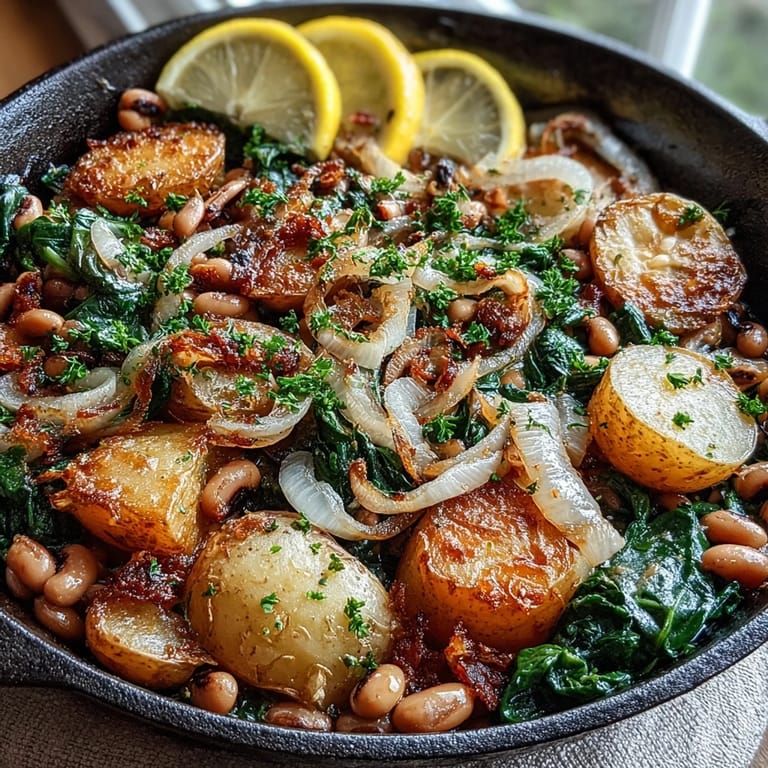
Save A friend with a four-year-old brought her over for dinner, and I was certain the child would pick around the food, but she ate it straight, asking for more because it tasted like "treasure the way all the colors mixed together." That's when I understood this wasn't just a practical weeknight meal—it was the kind of food that reminds people why eating together matters.
Why Cast Iron Changes Everything
Cast iron isn't just about tradition or showing off—it genuinely distributes heat better than aluminum, meaning every part of the skillet cooks evenly rather than hotspotting in the center. I've watched the same recipe cook differently in cast iron versus a regular stainless steel pan, with the cast iron version always developing better color and deeper flavor. If you don't have cast iron, a heavy-bottomed Dutch oven works too, though you'll lose some of that beautiful browning on the sides that makes this dish so visually appealing.
Stretching This Into More Meals
The beauty of this skillet dinner is how forgiving it is when you're thinking about tomorrow's lunch or planning for hungry guests. It reheats wonderfully in the microwave, though I prefer a gentle warm-up on the stovetop with a splash of extra broth to restore the texture. Leftovers actually taste better the next day once the flavors have melded overnight, and you can serve them over rice, polenta, or crusty bread for an entirely different meal without cooking anything new.
Making It Your Own
This recipe is a framework rather than a strict formula, and I've learned that your kitchen preferences matter more than any written instruction ever will. Some nights I add diced bell peppers with the potatoes, other times I use kale if that's what I have, and once I stirred in some cooked farro at the very end because I wanted more texture. If you love heat, jalapeños minced fine work beautifully added right alongside the onions, or you can double the red pepper flakes and let the dish develop a slow burn that builds with each bite.
- Tempeh or tofu cubes sautéed separately add extra protein and a pleasant firmness that contrasts with the softer vegetables.
- A squeeze of fresh lemon juice right at serving brightens all the earthiness and makes the spices sing.
- Serve with cornbread on the side if you want something to soak up every last bit of flavor from the pan.
 Save
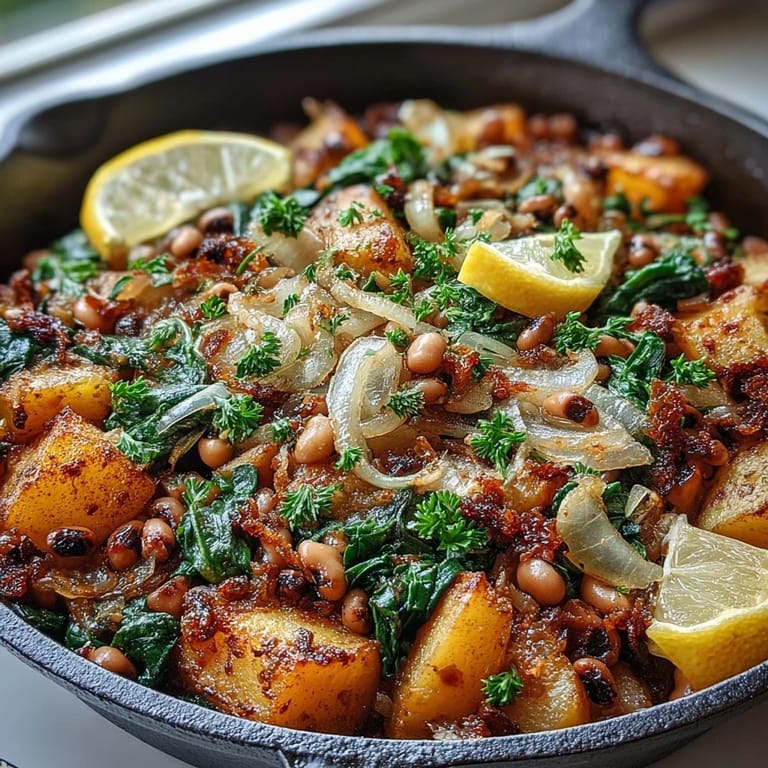
Save There's a quiet pleasure in knowing you can feed yourself and others something this nourishing without fuss or overthinking. This skillet has become the meal I reach for when I want something that tastes like care without demanding a lot of it.
Kitchen Q&A
- → Can I use dried black-eyed peas instead of canned?
Yes, soak 1 cup dried black-eyed peas overnight, then cook them in simmering water for 45-60 minutes until tender before adding to the skillet. You'll need about 2 cups cooked peas for this dish.
- → What other greens can I substitute for spinach?
Kale, Swiss chard, or collard greens work beautifully. Just keep in mind that heartier greens like kale may need an extra 2-3 minutes of cooking time to become tender.
- → Is this freezer-friendly?
The cooked skillet dinner freezes well for up to 3 months. Let it cool completely, transfer to an airtight container, and thaw in the refrigerator overnight before reheating in a skillet over medium heat.
- → Can I make this dish ahead of time?
Absolutely. The flavors actually improve after sitting overnight. Store in the refrigerator for up to 4 days and reheat gently in a skillet, adding a splash of broth or water if needed.
- → What protein options work well with this dish?
Sautéed tempeh cubes, crispy tofu, or even diced chicken can be added during step 5. For a smoky twist, try adding sliced andouille sausage or vegetarian chorizo.