 Save
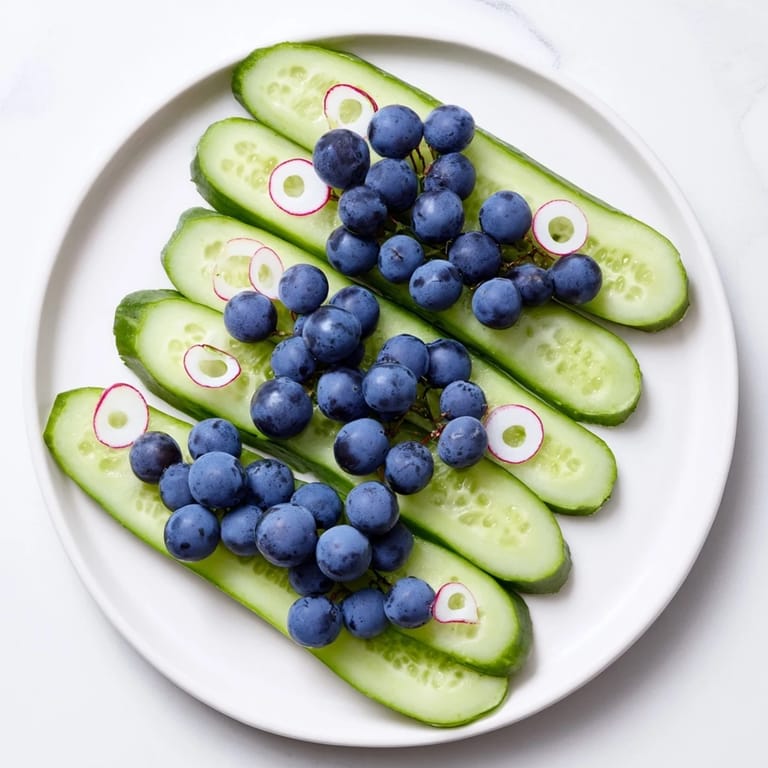
Save I'll never forget the dinner party where I decided to stop bringing the same old cheese board. Instead, I spent an afternoon arranging cucumber slices like peacock feathers on a platter, pressing blue grapes and radish slices into a pattern that actually looked like something alive. My friend walked in, stopped mid-conversation, and just stared. That's when I realized this wasn't just a snack anymore—it was theater.
My sister brought her kids over once when I had leftover grapes and cucumbers, and instead of making the usual fruit platter, I showed them how to build the peacock. The oldest one took the knife and started arranging slices herself, completely focused, tongue poking out in concentration. She called it her masterpiece and wouldn't let anyone eat it for twenty minutes.
Ingredients
- Cucumbers (2 large): The backbone of your peacock—thin, crisp, and best sliced on a bias so they're actually elegant instead of just round.
- Blue or black seedless grapes (1½ cups): These are the magic that makes people lean in closer because the color is almost impossible.
- Radishes (4 medium): Slice them thin and they become the iris of each eye, adding that final detail that makes the whole thing click into place.
- Fresh parsley or dill sprigs (optional): A handful tucked at the base looks feathered and feels intentional.
- Small carrot (optional): Shaved or sliced thin, this becomes the beak and feet—tiny details that somehow complete the picture.
Tired of Takeout? 🥡
Get 10 meals you can make faster than delivery arrives. Seriously.
One email. No spam. Unsubscribe anytime.
Instructions
- Wash and Ready Everything:
- Pat your vegetables completely dry—wet produce is the enemy of a crisp platter. This takes an extra minute but changes everything once you're assembling.
- Slice Cucumbers on the Bias:
- Hold your knife at an angle and cut thin ovals that shimmer a little on the platter. Straight slices are boring; bias cuts are architecture.
- Prep Your Other Pieces:
- Radishes go into thin rounds, carrots into delicate strips or small crescent shapes. Keep everything cool in the fridge until you're ready to build.
- Build Your Fan:
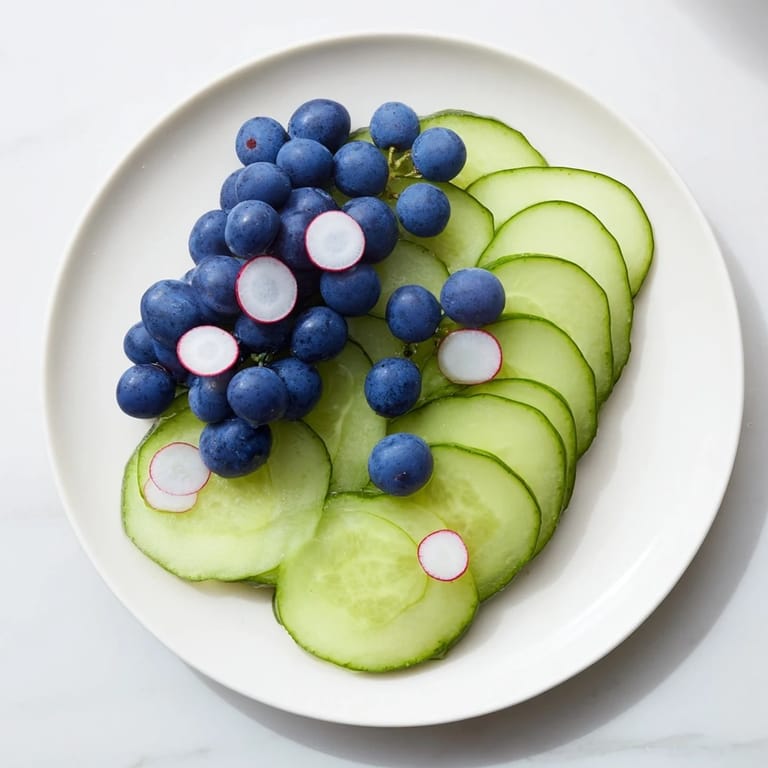
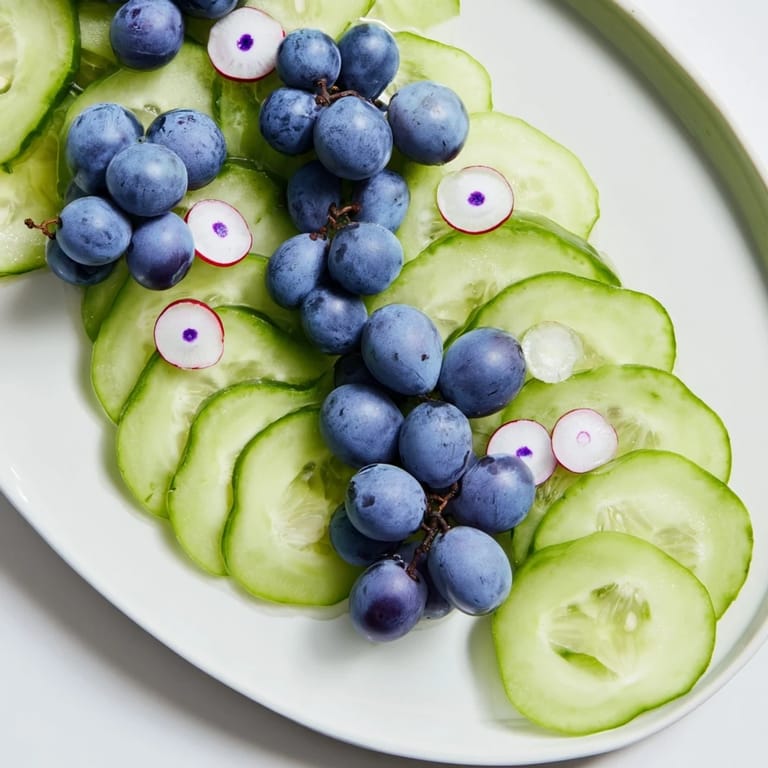
- Start at the narrow end of your platter and overlap those cucumber slices like a spread tail, working outward and slightly upward. This is where the whole thing becomes a visual feast.
- Add the Grapes and Eyes:
- Cluster grapes into little groups, then center a radish slice on top of each cluster to create that otherworldly peacock eye pattern. Space them evenly so your eye travels across the whole platter.
- Shape the Head and Feet:
- Carrot strips or slices become a small beak pointing inward and a couple of feet tucked at the base. These details turn a platter into a story.
- Add Greens and Finish:
- Tuck parsley or dill sprigs at the narrow end to suggest feathering, then step back and let yourself feel proud of what you've made.
 Save
Save There was a moment at my cousin's wedding when her three-year-old pointed at this platter and asked if the peacock was real. Everyone laughed, but I caught the bride's eye and she mouthed thank you, because somehow a vegetable arrangement had become the conversation starter instead of the small talk filler.
When to Make This
This works for almost any gathering where you want people to actually notice the snack table. Summer dinners, potlucks where everyone else brought something predictable, kids' parties where you want them to feel special—it fits everywhere. I've made it for weeknight appetizers when I wanted to feel less rushed, and fancy events where it holds its own next to everything else.
The Secret to a Perfect Platter
The difference between a platter that falls flat and one that stops conversation is in the details and the timing. Your cucumber slices need to overlap like they're deliberately placed, your grapes need to sit in little clusters rather than scattered randomly, and your radish eyes need to actually look intentional. Make everything cold before you assemble, work quickly, and don't second-guess yourself once you start laying it down.
Ways to Riff on This
Once you understand the pattern, you can play. Red or yellow grapes shift the whole mood, colored bell pepper slices can replace some of the radish accents, and even thin golden beet slices add earthiness and surprise. I've swapped in microgreens instead of parsley for a modern feel, and once I used thinly sliced watermelon radishes because their pink interior made the eyes even stranger and more beautiful.
- Mix grape colors in different sections for a rainbow effect that still reads as intentional.
- Add a small bowl of herbed yogurt or hummus in the center for texture and flavor contrast.
- Chill everything separately until assembly so the whole thing stays crisp and cool.
 Save
Save It's wild how something this simple—just vegetables arranged a certain way—can make people pause mid-conversation. Make this, and you'll understand why.
Kitchen Q&A
- → How do I achieve the peacock tail effect?
Slice cucumbers thinly on a bias and arrange them overlapping in a wide fanned shape. Then top with clusters of grapes and radish slices to mimic eye spots.
- → Can I use different grape varieties?
Yes, using yellow or red grapes can add extra color contrast to the platter for a more vibrant look.
- → What garnishes complement this platter?
Fresh parsley or dill sprigs placed at the base and thin carrot slices shaped as a beak and feet enhance the visual appeal.
- → How should this platter be stored if not served immediately?
Cover and refrigerate for up to 2 hours to maintain freshness and crispness before serving.
- → Is any cooking required for this dish?
No cooking is needed. Preparation involves washing and slicing ingredients for an easy, quick assembly.