 Save
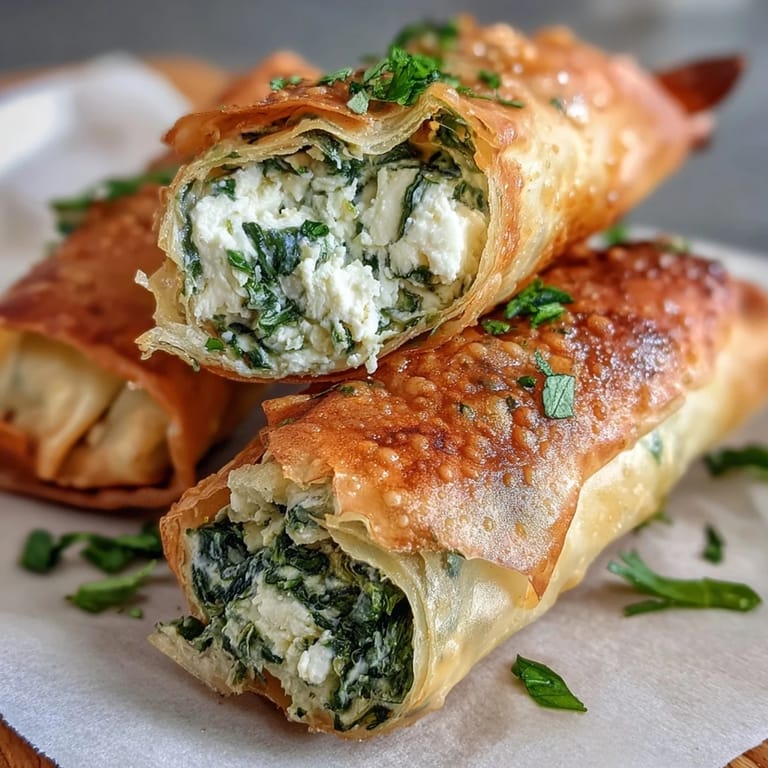
Save There's something about the sizzle of spanakopita spring rolls hitting hot oil that transported me back to a tiny taverna tucked away on a Greek island, where the owner's grandmother was frying batch after batch while telling stories I couldn't quite understand but absolutely felt. Years later, I tried recreating those crispy, herb-filled rolls in my own kitchen, and the smell alone brought me right back to that sun-soaked afternoon. What I discovered was that the magic isn't just in the filling—it's in the patience of getting the texture exactly right, that perfect golden-brown exterior hiding a warm, creamy spinach and feta heart.
I made these for my partner's work friends one evening, and I still remember the quiet that fell over the room the moment someone bit into one—that moment before someone says "Oh my god, what is this?" because their mouth is too busy being happy. Someone actually asked for the recipe that night, which had never happened before, and suddenly I realized these little rolls had become my thing.
Ingredients
- Fresh spinach (300 g), or frozen thawed and squeezed dry (200 g): Squeezing every last drop of moisture is non-negotiable here—excess water makes soggy, weeping rolls, which is the enemy of that crispy exterior you're after.
- Feta cheese, crumbled (150 g): Don't buy the pre-crumbled stuff if you can help it; block feta tastes brighter and doesn't have that dusty texture that throws off your filling.
- Ricotta cheese (100 g): This softens the sharpness of the feta and keeps the filling creamy instead of chalky.
- Spring onions, finely chopped (2): They add a gentle onion bite without being overwhelming; slice them thin so they distribute evenly through the filling.
- Fresh dill, chopped (2 tbsp): This is what makes people say "what is that flavor?"—it's the soul of these rolls, so don't skip it or swap it lightly.
- Fresh parsley, chopped (1 tbsp): The supporting herb that rounds out the dill without competing with it.
- Large egg, lightly beaten (1): This binds everything together and helps the filling hold its shape when you fold the roll.
- Ground nutmeg (1/4 tsp): Just a whisper—enough to make someone pause and wonder what they're tasting, but not enough to announce itself.
- Black pepper and salt (1/4 tsp each): Taste as you go; the feta is already salty, so ease in gradually.
- Spring roll wrappers (12): Keep them covered with a damp towel while you work, or they'll dry out and crack when you try to fold them.
- All-purpose flour mixed with water (2 tbsp flour, 3 tbsp water): This paste is your seal—it's what keeps the roll from unraveling in the oil, so don't skip this step.
- Vegetable oil for frying: You need enough depth to fully submerge each roll, so don't be stingy here.
Tired of Takeout? 🥡
Get 10 meals you can make faster than delivery arrives. Seriously.
One email. No spam. Unsubscribe anytime.
Instructions
- Prepare your spinach:
- Heat a large skillet over medium heat and add the spinach, letting it wilt down completely in about 2 to 3 minutes—if you're using frozen, make sure it's fully thawed and squeeze it absolutely dry in a clean kitchen towel or your hands until your forearms ache a little. Transfer it to a bowl, let it cool completely, then give it a rough chop so pieces are manageable but not minced into oblivion.
- Build the filling:
- Combine your cooled spinach with the crumbled feta, ricotta, spring onions, dill, parsley, beaten egg, nutmeg, pepper, and salt in one bowl, stirring until everything is evenly distributed. Taste a tiny bit on your finger—it should taste almost like a cheese dip, bright and herby with that nutmeg whisper underneath.
- Make your sealing paste:
- Mix flour and water in a small bowl until you have something the consistency of thick yogurt, smooth and lump-free. This is what holds your rolls together in the heat, so get this right.
- Roll with intention:
- Lay a wrapper on a clean, dry surface with one corner pointing toward you, then place about 2 tablespoons of filling near that bottom corner—not too much or it'll burst, not too little or you'll just have a wrapper with a hint of flavor. Fold that bottom corner over the filling, then fold in the left and right corners and roll upward, keeping tension as you go so everything stays snug.
- Seal the final edge:
- When you've almost reached the top corner, brush it lightly with your flour paste and finish the roll so it sticks and holds during frying. Repeat this with all your remaining wrappers.
- Get your oil ready:
- In a deep skillet or pot, heat vegetable oil to 175°C (350°F)—if you don't have a thermometer, drop a tiny piece of wrapper in; if it sizzles immediately and turns golden in about 30 seconds, you're ready. This temperature is crucial; too cool and they're greasy, too hot and the outside burns before the inside warms.
- Fry in batches:
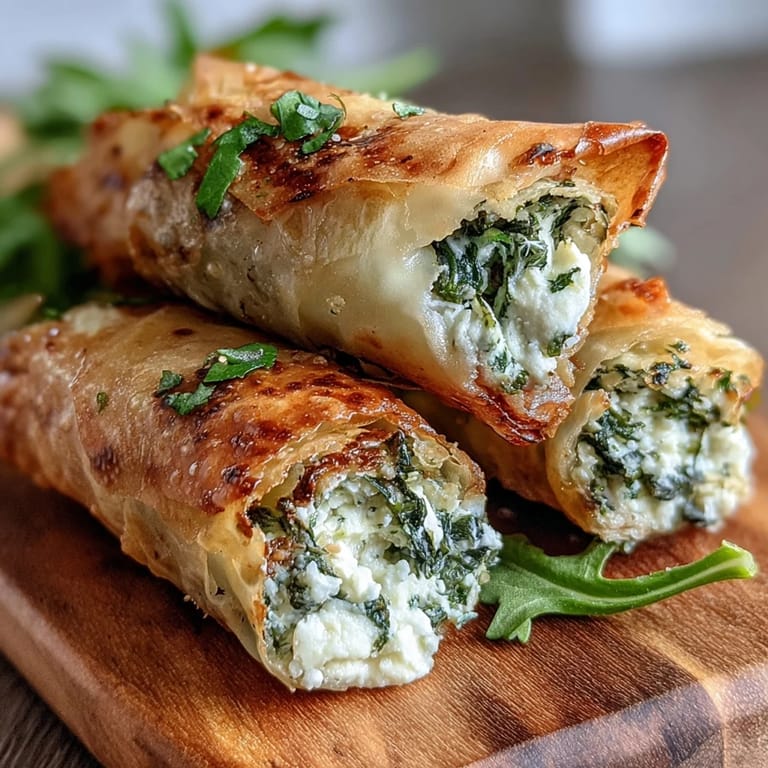
- Working with a few rolls at a time so the oil temperature doesn't plummet, fry each batch for about 2 to 3 minutes per side until they're golden brown all over and the wrapper sounds crispy when you tap it with a spoon. Drain each batch on paper towels immediately so they don't sit and get soggy.
 Save
Save The first batch I made, I forgot to seal the final corner properly, and halfway through frying, one roll came apart in the hot oil and I watched helplessly as the filling scattered everywhere. After fishing out the wrapper pieces and saying a quiet goodbye to that filling, I realized how much those little details actually matter—and now I'm obsessive about that final seal. Honestly, that failure taught me more than any perfect batch ever could.
The Baking Alternative
Not everyone has the nerve to fry, and that's absolutely fine—spray your rolls lightly with cooking oil and bake them at 200°C (400°F) for 16 to 18 minutes, turning them halfway through. They won't have that same shatteringly crispy texture, but they'll still be golden and delicious, and you won't have hot oil sputtering at you or worry about an oil-spattered stovetop afterward.
Flavor Variations Worth Trying
Once you nail the basic recipe, you can play around with the herbs—fresh mint brings a completely different energy, or oregano if you want something earthier and more aggressively Mediterranean. Some people add a tiny bit of crumbled feta-style cheese like mizithra instead of all ricotta, and that shifts the whole savory profile in interesting ways.
What to Serve Alongside
These rolls are dramatic enough to stand alone, but they're also generous enough to share center stage with something cool and creamy. A lemon-dill yogurt dip is the obvious choice—just stir together Greek yogurt, fresh dill, lemon juice, and salt—but tzatziki works beautifully too, as does a bright marinara if you're feeling less Mediterranean and more playful, or even a spicy harissa if someone at your table likes heat.
- Squeeze a fresh lemon wedge over the top right before eating for brightness that makes everything taste sharper and more alive.
- If you're making these ahead, assemble them but don't fry until you're ready to serve; they'll hold in the fridge for up to a day wrapped in plastic wrap.
- Serve them hot and crispy—this is not a dish that improves with sitting around, so time your frying for right before people arrive at your table.
 Save
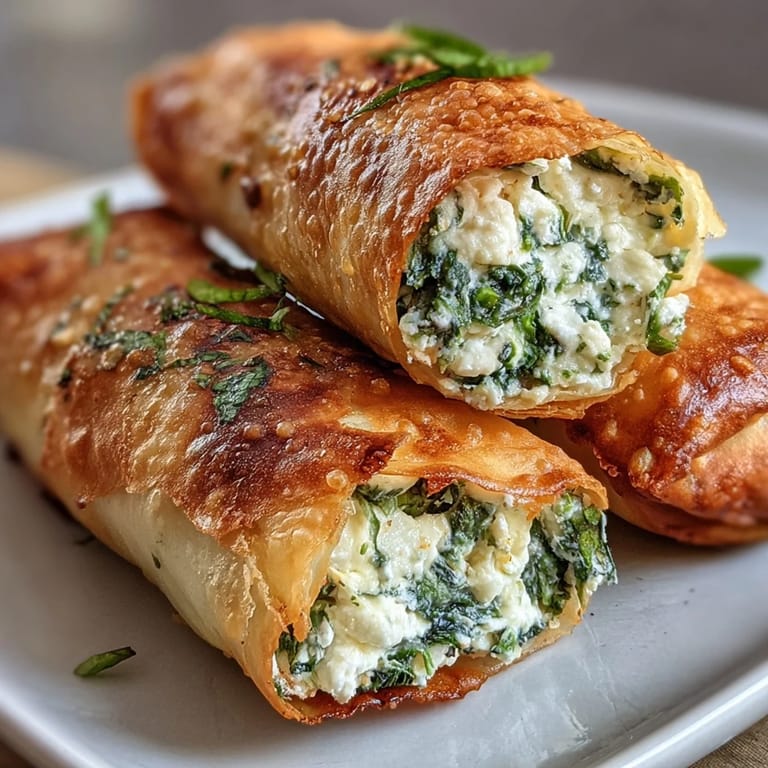
Save These little rolls have a way of turning a regular dinner into something memorable, whether someone's trying them for the first time or you're making them for the thousandth time. There's real joy in watching someone bite into one, hear that crispy crunch, and taste exactly what you intended them to taste like.
Kitchen Q&A
- → Can I bake these instead of frying?
Yes, bake at 200°C (400°F) for 16–18 minutes, turning halfway through, until golden and crispy for a lighter alternative.
- → Can I use frozen spinach?
Absolutely. Use 200 g frozen spinach, fully thawed and squeezed dry to remove excess moisture before mixing with other ingredients.
- → What dipping sauces work best?
Tzatziki, yogurt-dill dip, marinara, or spicy harissa sauce all complement the Mediterranean flavors beautifully.
- → Can I prepare these ahead of time?
Yes, assemble the rolls and refrigerate for up to 24 hours before frying, or freeze uncooked for up to 3 months and fry from frozen.
- → What herbs can I substitute?
Fresh mint or oregano work wonderfully in place of dill or parsley, offering a different but equally delicious flavor profile.
- → How do I prevent the filling from leaking?
Ensure spinach is thoroughly drained, roll tightly, and seal edges well with the flour paste to keep filling secure during cooking.