 Save
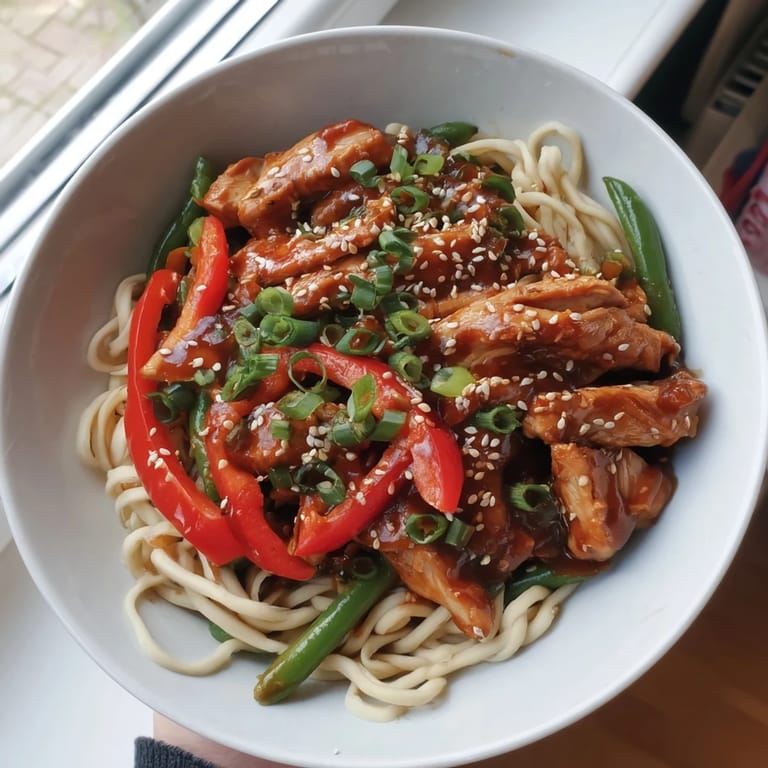
Save The first time I made Mongolian chicken, I was standing in my kitchen on a Tuesday night with half a box of rice noodles and some chicken thighs that needed using up. I'd seen this dish at a local restaurant months before and remembered being struck by how the sauce clung to everything, sweet and savory at once. That night, I decided to reverse-engineer it, mixing what I thought might work, and somehow it turned out better than I expected. Now it's become my go-to when I want something that feels restaurant-quality but comes together in under forty minutes.
I made this for my sister one evening when she dropped by unexpectedly hungry, and I remember her skepticism when I said I could have dinner ready in twenty minutes. Watching her face light up when she took the first bite, then immediately asking for the recipe, made me realize this wasn't just a quick weeknight dinner anymore. It's become the dish I make when I want to impress someone without making a fuss about it.
Ingredients
- Chicken thighs or breasts, thinly sliced: Thighs stay more tender and forgiving than breasts, but either works; the key is slicing them thin so they cook through quickly.
- Cornstarch: This creates a light coating that helps the chicken brown beautifully and gives the sauce something to cling to.
- Soy sauce, hoisin, brown sugar: This trio is the backbone of the sauce, balancing salt, depth, and sweetness in a way that feels both familiar and special.
- Sesame oil: Just a teaspoon is enough to add a nutty aroma that ties everything together at the very end.
- Fresh garlic and ginger: Mincing these yourself makes a noticeable difference in freshness compared to jarred versions.
- Bell pepper and snap peas: They stay crisp if you don't overcook them, which is what you're aiming for here—texture matters as much as taste.
- Rice noodles or leftover pasta: Dried rice noodles are traditional, but I often use whatever cooked pasta I have in the fridge because convenience wins sometimes.
- Sesame seeds for garnish: Toasted seeds add a final layer of nutty flavor and make the dish look intentional.
Tired of Takeout? 🥡
Get 10 meals you can make faster than delivery arrives. Seriously.
One email. No spam. Unsubscribe anytime.
Instructions
- Start the noodles:
- If you're using dried rice noodles, get them going first so they're cool by the time you need them. Rinse them with cold water after draining so they don't stick together in a clump.
- Coat the chicken:
- Toss your chicken slices with cornstarch, salt, and pepper in a bowl until every piece is lightly dusted. This coating is what gives the chicken that slight crispy exterior when it hits the hot pan.
- Mix the sauce ahead:
- Whisk all your sauce ingredients together in a small bowl before you start cooking. This way you're not scrambling to measure things while the pan is hot and everything is moving quickly.
- Sear the chicken:
- Heat oil in a wok or large skillet over medium-high heat and add the chicken in a single layer. Let it sit for a moment before stirring so it can develop some color, then cook until golden and cooked through, about four to five minutes total.
- Cook the vegetables:
- Push the cooked chicken to the side, add a bit more oil, and quickly stir-fry the bell pepper and snap peas for just a couple of minutes. You want them tender but still with a bit of crunch when you bite into them.
- Bring it together:
- Return the chicken to the pan, add the spring onions, pour in your sauce, and stir everything to coat. Let it simmer for a minute or two until the sauce thickens slightly and becomes glossy.
- Add the noodles:
- Toss in your cooked noodles and mix everything together so the noodles absorb some of that beautiful sauce. This should take just a minute or two to heat through.
- Plate and garnish:
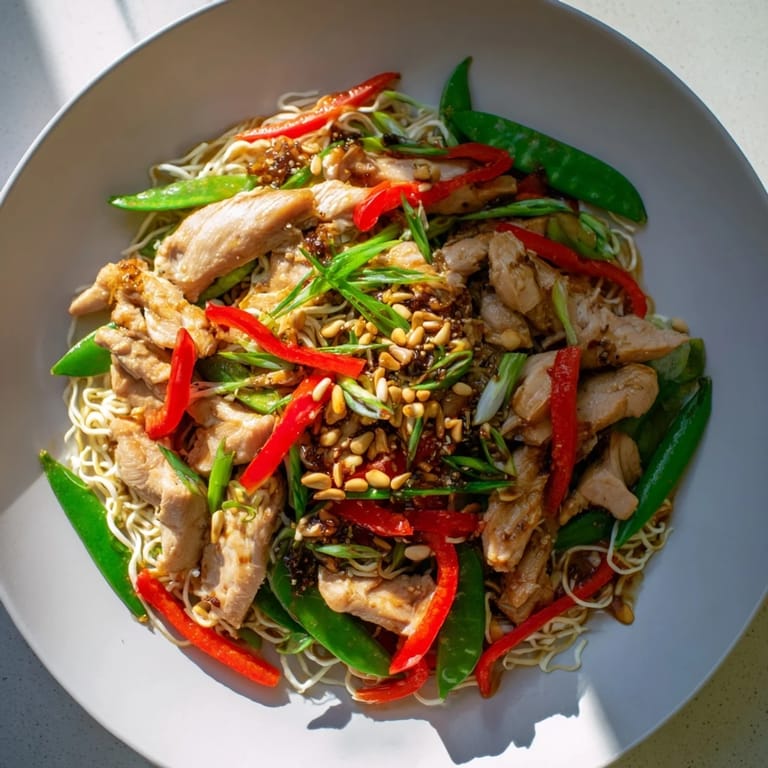
- Serve immediately while everything is still warm, scattered with extra spring onions and those toasted sesame seeds.
 Save
Save There's something satisfying about a dish that delivers so much flavor with so little fuss, and this one does exactly that. Every time I make it, I'm reminded that good cooking often comes down to balance and timing rather than complexity.
The Sauce Is Everything
I've learned that the sauce is where this dish lives or dies, and getting the balance right matters more than perfect technique everywhere else. When I first made it, I was too heavy-handed with the soy sauce and the whole thing turned salty; now I add ingredients slowly and taste as I go. The brown sugar might seem like a lot, but it's what pushes this from just another stir-fry into something that tastes like you spent hours on it.
Timing and Heat
High heat is your friend here, but only because everything cooks so quickly that you can't afford to be slow. I once turned the heat down because I was worried about burning things, and everything ended up steaming instead of searing, which took twice as long and tasted flat. The best batches happen when the pan is truly hot and you're moving briskly from step to step.
Variations and Flexibility
This recipe is forgiving enough that you can swap things around based on what you have or what you're craving. I've made it with shrimp on nights when I wanted something lighter, and it was just as good; I've added cashews for crunch, water chestnuts for texture, or even a splash more vinegar when I wanted extra brightness. The core sauce stays the same, which means the dish always tastes like itself even when you're improvising.
- Tofu works beautifully if you're looking to skip the chicken, and it absorbs the sauce even better than meat does.
- If you want it spicier, add more red pepper flakes or a touch of sriracha to the sauce instead.
- Serve it family-style in a large bowl with extra garnishes on the side so people can adjust flavors to their liking.
 Save
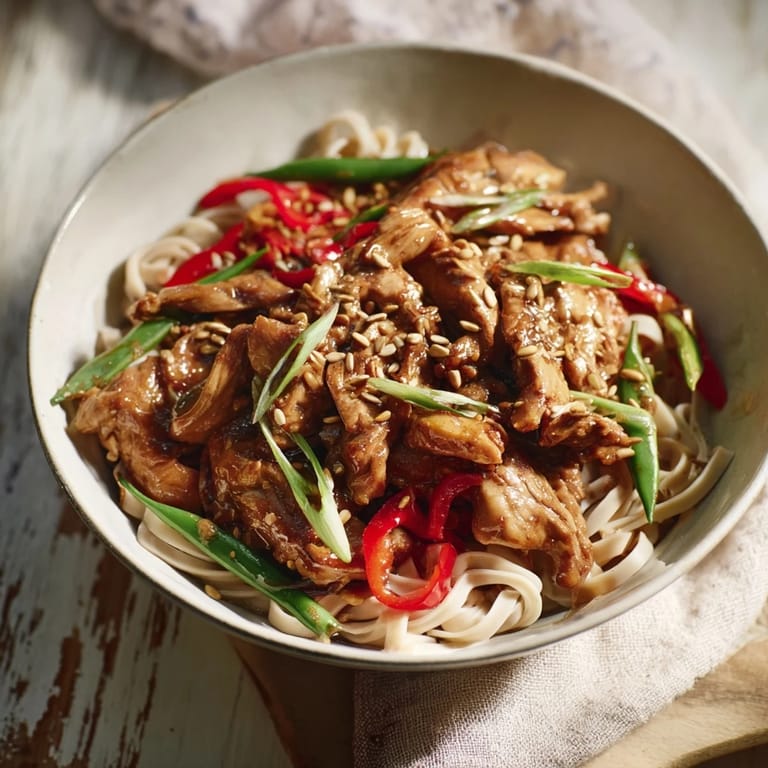
Save This is the kind of dish that proves you don't need complicated techniques or rare ingredients to make something that tastes bold and satisfying. It's become a trusted friend in my kitchen, showing up on nights when I need dinner fast but don't want to sacrifice flavor.
Kitchen Q&A
- → Can I use other proteins instead of chicken?
Yes, tofu or shrimp can be used to suit dietary preferences or to vary the flavor and texture.
- → What type of noodles work best in this dish?
Rice noodles are ideal for their silky texture, but leftover cooked pasta can also be used effectively.
- → How can I adjust the sweetness of the sauce?
Modify the amount of brown sugar in the sauce to make it sweeter or less sweet according to your taste.
- → What vegetables complement this stir-fry nicely?
Bell peppers, snap peas, and spring onions add vibrant colors and crispness, balancing the rich sauce well.
- → Are there any allergen considerations to keep in mind?
The sauce contains soy and may have gluten and shellfish if oyster sauce is used; gluten-free versions can be substituted.