 Save
Save There's something almost meditative about assembling a rice bowl, watching the steam rise off perfectly cooked grains while your hands work through a rhythm of layering protein, vegetables, and that silky sauce. I discovered this Japanese-style bowl on a Tuesday when I had salmon in the fridge, leftover chicken thighs, and absolutely no idea what to do with them—until I remembered a marinade my neighbor casually mentioned over the fence. The result was so good I made it again the next week, then the week after that, tweaking here and there until it became muscle memory in my kitchen.
I made this for a friend who'd been stressed about work, and watching her dig into the bowl with actual relief on her face made me realize food doesn't need to be complicated to be healing. She asked for the recipe before she'd finished eating, which is always the highest compliment in my kitchen.
Ingredients
- Salmon fillets: Two pieces about 300g total gives you enough protein without overwhelming the bowl—look for ones that feel firm when gently pressed.
- Boneless, skinless chicken thighs: These stay juicier than breasts and are honestly more forgiving if you accidentally cook them a minute too long.
- Soy sauce: The backbone of the marinade and the drizzle sauce; tamari works if you need gluten-free.
- Mirin: This sweet rice wine rounds out the salty-umami punch, and it's worth finding the real stuff rather than the corn syrup imposters.
- Sake or dry white wine: Just a tablespoon, but it brings a subtle depth that makes people ask what your secret ingredient is.
- Sesame oil: Use the toasted kind for deeper flavor, but go easy because it's concentrated and can overpower everything.
- Japanese short-grain rice: It's stickier than long-grain and actually hugs your toppings instead of rolling around.
- Avocado: Slice it right before assembly so it doesn't brown and turn that sad gray color.
- Cucumber, carrot, and scallions: The fresh crunch is what makes this bowl sing—don't skip the vegetables thinking they're just garnish.
- Toasted sesame seeds: Toast them yourself if possible; the difference between store-bought and fresh-toasted is genuinely noticeable.
- Nori: Optional but worth the 50 cents because those thin strips add umami whispers to every bite.
Tired of Takeout? 🥡
Get 10 meals you can make faster than delivery arrives. Seriously.
One email. No spam. Unsubscribe anytime.
Instructions
- Prepare your rice foundation:
- Rinse the rice under cold water, stirring gently, until the water runs clear—this removes surface starch and prevents gumminess. Cook in a rice cooker with 2½ cups water, or in a saucepan on medium-low heat covered for about 18 minutes until the water absorbs, then let it steam for 5 minutes before fluffing with a fork.
- Marinate proteins while rice cooks:
- Whisk soy sauce, mirin, sake, sesame oil, and honey together in two separate shallow dishes. The honey dissolves faster if your liquid is still slightly warm. Add salmon to one dish and chicken to the other, coating everything, and let them sit for at least 10 minutes—this is the minimum; 30 minutes is even better if you have time.
- Sear the chicken first:
- Heat your nonstick skillet over medium heat and let it get properly hot before the chicken touches down. Cook chicken thighs for 4–5 minutes per side—you want a golden crust and an internal temperature of 165°F if you're checking, though honestly you'll know it's done when a fork pierces easily with no resistance. Let it rest on a plate for a minute before slicing.
- Cook the salmon gently:
- In the same pan, add salmon fillets skin-side down first and let them sit undisturbed for 2–3 minutes until the skin crisps slightly. Flip and cook the other side for another 2–3 minutes—you want it just cooked through, still tender enough to flake with a fork, not dry. If it's sticking, a little more oil or a moment longer usually helps.
- Prep your vegetables with intention:
- Slice the avocado lengthwise around the pit, twist open, scoop out with a spoon, and slice thinly. Slice cucumber paper-thin on a mandoline if you have one, otherwise a sharp knife and a patient hand work fine. Julienne the carrot—thin matchsticks that catch the light—and slice scallions on a sharp angle so they look intentional.
- Make a sauce worth drizzling:
- Whisk soy sauce, rice vinegar, sesame oil, and sugar together until the sugar completely dissolves. Taste it—that's the fun part, adjusting if you want it tangier or sweeter. This is where your bowl gets its final personality.
- Assemble with care:
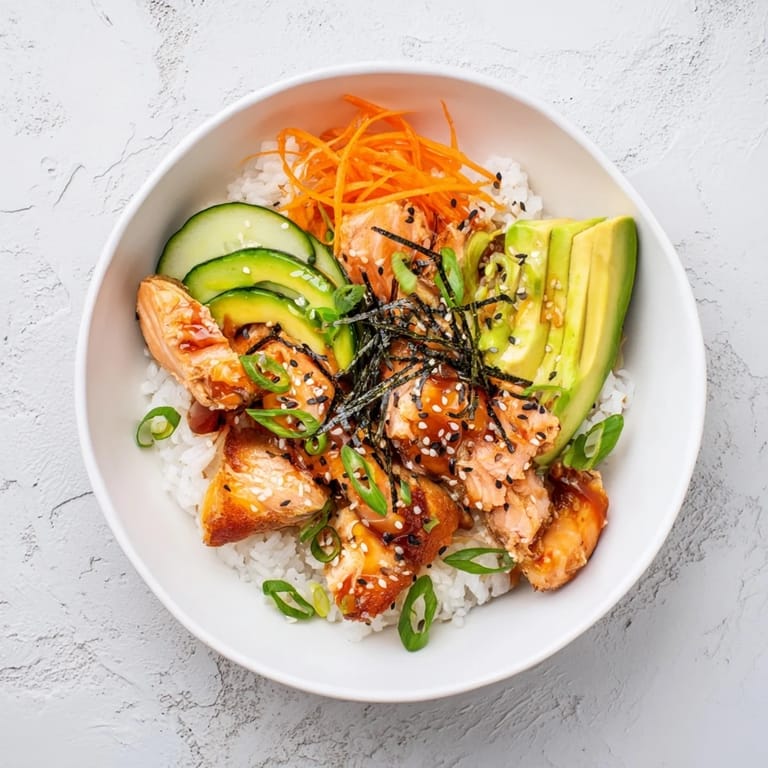
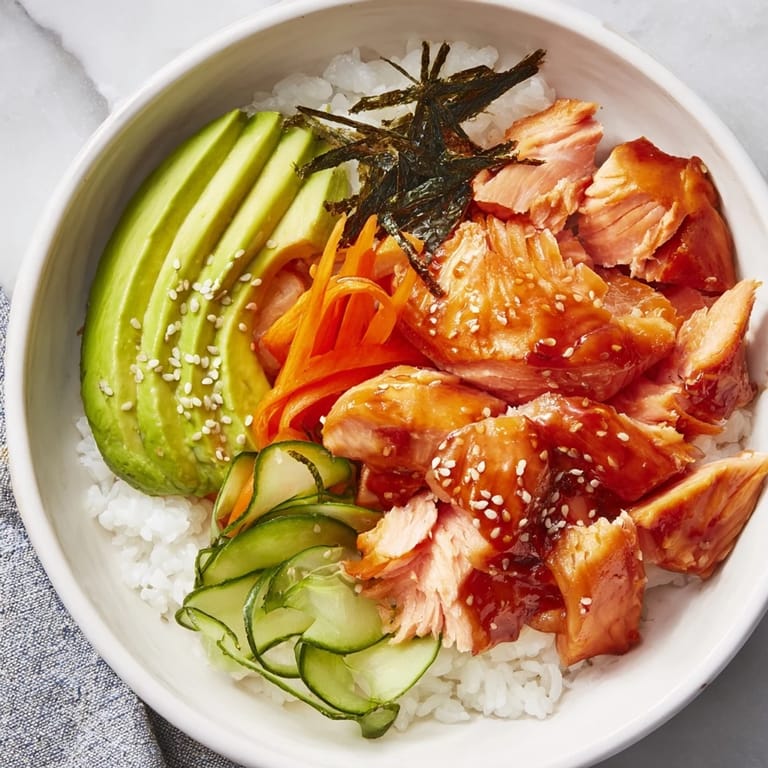
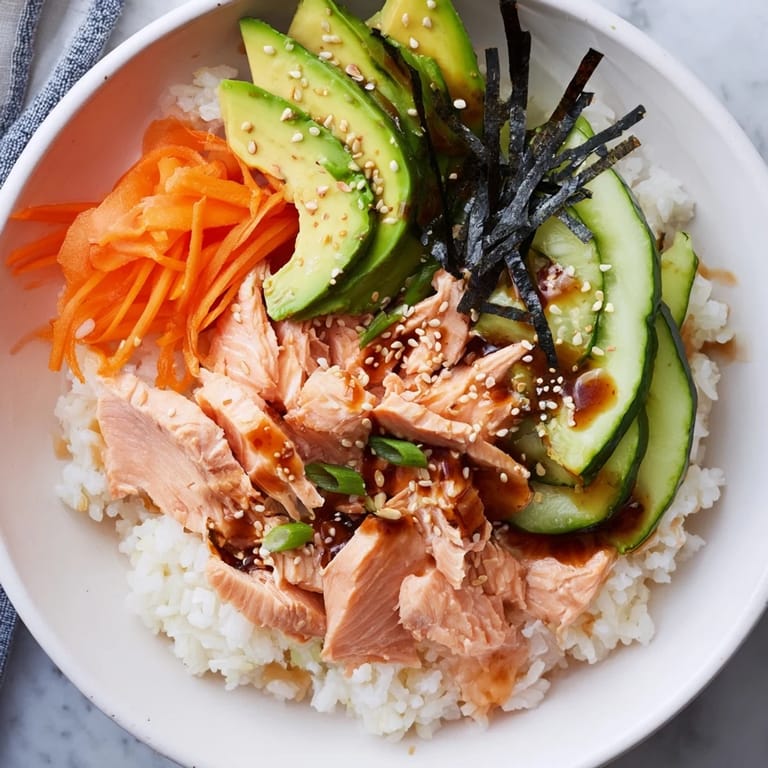
- Divide warm rice among four bowls, creating a slight well in the center. Arrange chicken, salmon, avocado, cucumber, carrot, and scallions in sections on top—the visual presentation is half the pleasure here. Sprinkle sesame seeds across everything and scatter nori strips if using. Drizzle sauce over the whole thing, letting it seep into the rice.
- Master the ice cube reheating hack:
- If you're reheating a pre-assembled bowl, place a single ice cube in the center of the rice, cover with a microwave-safe lid or plastic wrap, and microwave on high for 1–2 minutes. The ice melts slowly, creating steam that keeps rice fluffy and moist instead of turning it hard. Remove any remaining ice before eating.
 Save
Save My sister brought her new partner over and I made four of these bowls, and they sat there just quietly eating, making little sounds of satisfaction. Those small moments—when food bridges the gap between strangers—remind me why I love cooking at all.
The Art of Building a Balanced Bowl
A great rice bowl isn't just about throwing things on top of rice and calling it a day. It's about understanding that every element serves a purpose: the protein gives you substance, the vegetables add crunch and freshness that cuts through richness, the sauce ties everything together with its sweet-salty-tangy complexity, and the rice is the canvas it all lives on. When you think about it this way, assembly becomes intentional instead of random, and your bowls taste noticeably better because you're actually thinking about what you're doing.
Why This Recipe Works for Meal Prep
I started making components in advance because my mornings are chaotic, and I realized this bowl is actually perfect for that. You can cook rice and proteins the night before, store them separately in the fridge, and then assemble fresh bowls in about 5 minutes—add vegetables right before eating so they stay crisp. The sauce keeps for days, and honestly, some people prefer eating this cold the next day, which feels almost like a different dish. It's the rare recipe that tastes just as good cold as hot, which makes it quietly genius for actual life instead of just recipe aesthetics.
Flavor Combinations That Keep Showing Up
The soy-mirin-sesame trio is classic Japanese cooking wisdom that appears in so many dishes because it just works—it's savory, slightly sweet, and nutty all at once. Pairing that with something acidic like rice vinegar in the sauce cuts through the richness of the salmon and avocado, keeping everything balanced. This is the kind of thinking that transforms home cooking from following instructions to actually understanding flavor, and once you get it, you start seeing these same combinations everywhere and you become dangerous in the kitchen in the best way.
- Try adding a drizzle of sriracha or a scoop of sriracha mayo if you want heat without changing the core recipe.
- Pickled ginger on the side bridges everything together—the acidity and slight spice feel designed for this bowl.
- Green tea or cold sake pairs perfectly because neither overwhelms the delicate flavors you've worked to build.
 Save
Save This bowl has somehow become my answer to almost every question—dinner tonight, meal prep for the week, something special when friends visit, even lunch the next day when it's somehow even better. Once you make it a few times, it stops feeling like a recipe and starts feeling like something you just know how to do, which is exactly when cooking becomes effortless.
Kitchen Q&A
- → What is the best way to marinate the salmon and chicken?
Whisk soy sauce, mirin, sake, sesame oil, and honey to create a flavorful marinade. Marinate salmon and chicken separately for at least 10 minutes to enhance taste.
- → How does the ice cube reheating method work?
Placing an ice cube on rice during reheating generates steam as the ice melts slowly, keeping the rice moist and preventing it from drying out.
- → Can I substitute the vegetables with others?
Yes. Avocado can be swapped with edamame or steamed broccoli, and other crunchy vegetables like bell peppers or radish slices work well too.
- → What type of rice is recommended for this bowl?
Japanese short-grain rice is ideal for its sticky texture, which holds the ingredients together and absorbs flavors nicely.
- → Is there a vegetarian alternative for the proteins?
Tofu can replace salmon and chicken, marinated similarly and cooked to add protein while keeping the bowl plant-based.