 Save
Save There's something about the sound of chicken hitting hot oil that makes me slow down in the kitchen. One Tuesday evening, I was rushing through dinner prep when a friend stopped by unexpectedly, and instead of ordering out, I decided to make this crispy chicken with garlic cream sauce—something I'd been meaning to try for weeks. By the time those golden cutlets hit the pan, the whole kitchen smelled like possibility, and we ended up talking for two hours over plates of this dish, sauce pooling into every crevice. That night taught me that the best meals aren't the ones you plan obsessively; they're the ones you make when you're just a little bit brave.
I remember making this for my roommate's birthday dinner last spring, worried the chicken might dry out or the sauce would break. Instead, everything came together so smoothly that I had time to set the table properly and light candles, which never happens when I cook. When she took that first bite and closed her eyes, I knew I'd stumbled onto something that works—not just technically, but emotionally too.
Ingredients
- Boneless, skinless chicken breasts: Pound them thin so they cook evenly and stay tender; I learned the hard way that rushing this step leads to dry edges and wet centers.
- Salt and black pepper: Season generously before breading—this is your only chance to flavor the chicken itself.
- All-purpose flour: This is your adhesive layer; don't skip it or the egg won't stick properly.
- Large eggs: Beat them well so the coating clings to every surface without clumps.
- Panko breadcrumbs and Parmesan cheese: The combination gives you that restaurant-quality crunch with a savory depth that plain panko could never achieve.
- Olive oil: Use enough that the chicken can sizzle and get truly golden, not just pale brown.
- Unsalted butter: This bases the sauce, so unsalted lets you control the salt balance perfectly.
- Garlic cloves: Fresh minced garlic smells like you're doing something right; don't substitute powder here.
- Heavy cream and chicken broth: The cream carries the flavors while the broth keeps it from being too heavy, a balance I stumbled into by accident.
- Fresh parsley: A small handful stirred in and another for garnish transforms the dish from good to inviting.
Tired of Takeout? 🥡
Get 10 meals you can make faster than delivery arrives. Seriously.
One email. No spam. Unsubscribe anytime.
Instructions
- Pound the chicken to even thickness:
- Place breasts between plastic wrap and pound with a meat mallet until they're consistently about half an inch thick. This ensures every part cooks at the same rate, and it's oddly meditative work—the kind of rhythm that settles you into the cooking mood.
- Season and set up your breading station:
- Pat the chicken dry, season both sides with salt and pepper, then arrange three shallow bowls in a line: flour, beaten eggs, then panko mixed with Parmesan. Having everything ready means you won't have moments of doubt mid-dredge.
- Bread each piece with care:
- Dredge in flour first, shaking off excess, then dip in egg so it drips a little, then press gently into the panko mixture. The pressing matters—it helps the coating adhere and stay crispy through cooking.
- Fry until golden and cooked through:
- Heat olive oil in a large skillet over medium-high heat until it shimmers, then add chicken and cook 4 to 5 minutes per side until the coating turns deep golden and the internal temperature reaches 165°F. You'll know it's ready when the color stops changing and the edges look crisp.
- Make the garlic cream sauce in the same pan:
- Lower the heat to medium, melt butter in the hot pan, then add minced garlic and let it sizzle for just one minute—enough to release its perfume but not so long it browns and turns bitter. The pan is already seasoned with all those flavorful browned bits, so you're starting with an advantage.
- Build the sauce with cream and broth:
- Pour in the heavy cream and chicken broth, using a wooden spoon to scrape up all those golden bits stuck to the bottom of the pan. Bring it to a gentle simmer and let it bubble quietly for 3 to 4 minutes until it thickens enough to coat the back of a spoon—not too thick, still glossy and pourable.
- Season and finish with warmth:
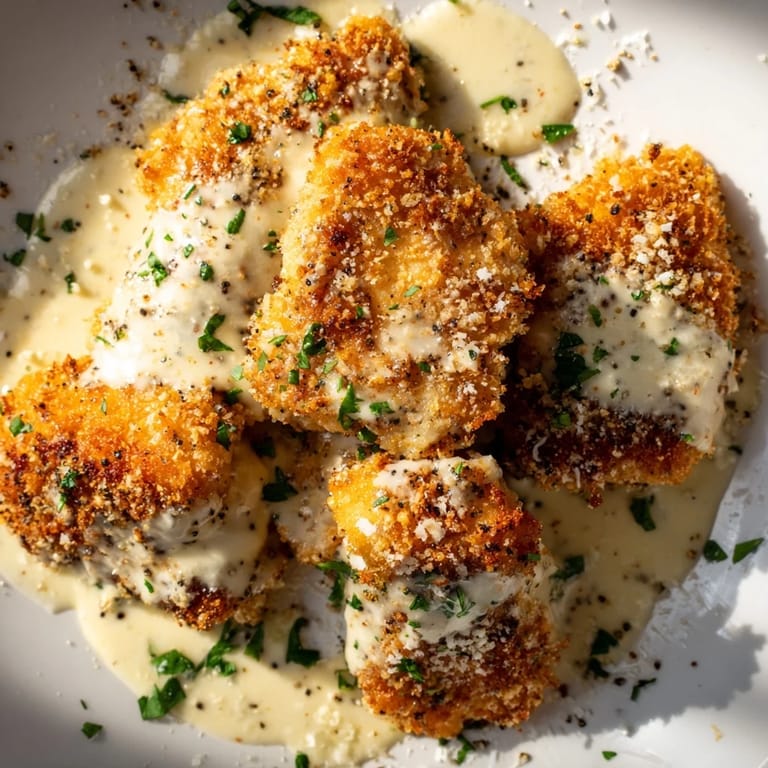
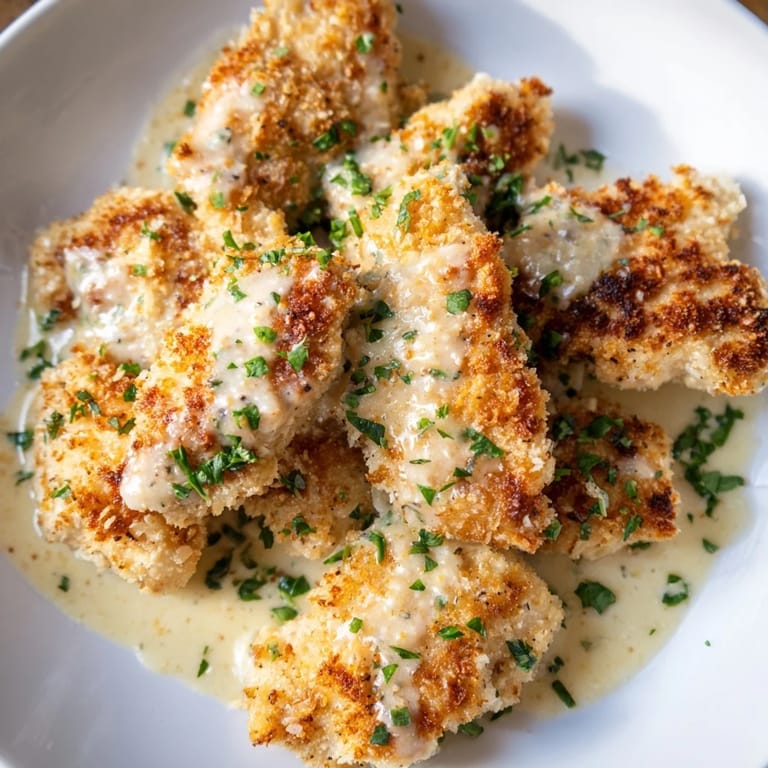
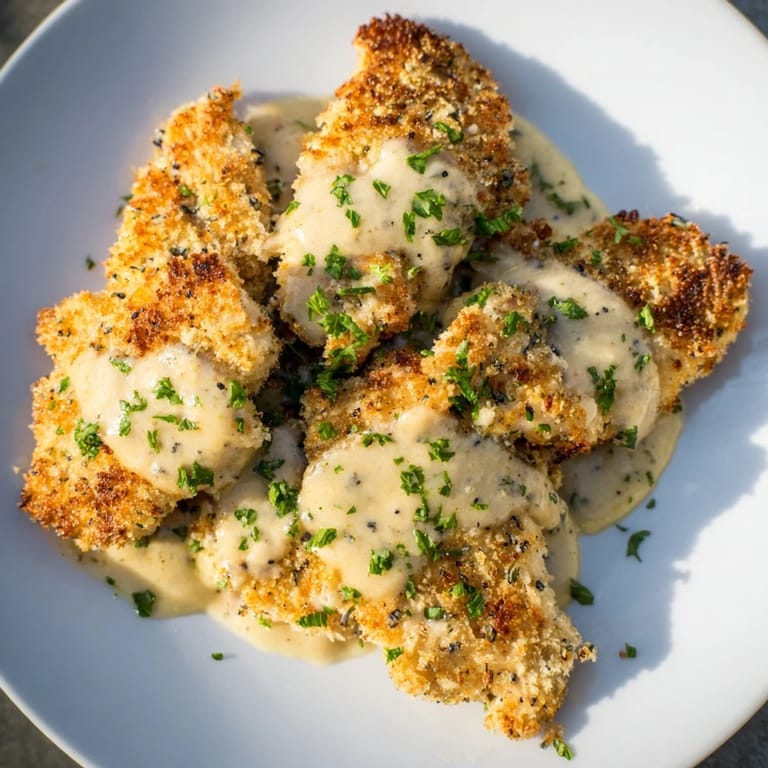
- Stir in salt, pepper, Parmesan, and fresh parsley, then let it simmer for another minute or two until the flavors marry together. Nestle the chicken back into the skillet, spoon the sauce over each piece, and warm through for just a minute so nothing overcooks.
 Save
Save There was an evening when this dish became something more than dinner—when a quiet family meal turned into my nephew asking for the recipe because he wanted to learn to cook it himself. Watching him take notes while we ate, genuinely interested in why each step mattered, reminded me that food is how we pass things forward, one meal at a time.
What to Serve Alongside
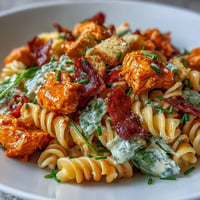
The sauce on this chicken is voluptuous and rich, so it wants something to soak into or balance against. Mashed potatoes are the obvious choice—that creamy sauce pooling into buttery potatoes is comfort incarnate. Pasta works beautifully too, catching all the sauce in every curve. If you want something lighter, buttered egg noodles or steamed green beans add a subtle contrast without fighting the main event.
How to Make It Your Own
This recipe is sturdy enough to handle small adjustments. I've made it with a squeeze of fresh lemon juice stirred into the finished sauce, and that brightness cuts through the richness in a way that feels both elegant and effortless. For a lighter version, swap half the heavy cream for half-and-half, though you'll lose a little of that luxurious mouthfeel. You can also add fresh thyme or a pinch of nutmeg to the sauce if you're feeling adventurous, or even a tablespoon of Dijon mustard for subtle complexity.
The Secret to Staying Crispy
The thing nobody tells you about breaded chicken is that the crust stays crunchier if you give it a moment to cool slightly before saucing it. That thin barrier of crust has a brief window where it's most crispy, and respecting that window means respecting your own labor. Some cooks double-coat their chicken—repeating the egg and panko step twice—which gives you almost a fried-chicken thickness if you're after that extra crunch and don't mind the extra ingredient. Make sure your oil is hot enough from the start; if it's tepid, the coating absorbs oil instead of browning, and you lose everything that makes this dish worth making.
- Let the chicken rest tented with foil for a few minutes after frying, then sauce just before serving.
- If you must make this ahead, store the cooked chicken and sauce separately and reheat gently together.
- The panko-Parmesan ratio matters—don't skimp on the cheese or the coating loses its savory edge.
 Save
Save This recipe has become my go-to when I want to feel like I'm cooking something restaurant-worthy but still have time to breathe on a weeknight. It never fails, and more importantly, it makes people happy in that uncomplicated way that matters.
Kitchen Q&A
- → How do I achieve a crispy coating on the chicken?
Ensure the chicken breasts are evenly coated by dredging in flour, dipping in beaten eggs, and then pressing the panko-Parmesan mixture firmly before frying in hot olive oil until golden.
- → Can I prepare the garlic cream sauce ahead of time?
Yes, you can prepare the sauce in advance and gently reheat it. Stir well before spooning over the chicken to maintain a smooth consistency.
- → What sides pair well with this dish?
Mashed potatoes, pasta, or steamed green beans complement the creamy and crispy textures beautifully.
- → How can I make the sauce lighter?
Substitute heavy cream with half-and-half for a lighter sauce, or add a squeeze of lemon juice for brightness.
- → Is double-coating the chicken necessary?
Double-coating by repeating the egg and panko steps provides extra crunch but is optional depending on your preferred texture.