 Save
Save There's something almost magical about the moment when butternut squash and broccoli transform into liquid velvet in the pot. I discovered this soup on a grey October afternoon when I had too many vegetables and not enough inspiration, but somehow combining the two created something so naturally elegant that it felt like I'd uncovered a secret. The pastry tops arrived later, born from rummaging through the freezer and remembering how cheese gets wonderfully smug when it's baked inside flaky pastry. This dish taught me that sometimes the best meals come from happy accidents and a willingness to let warm spices do the talking.
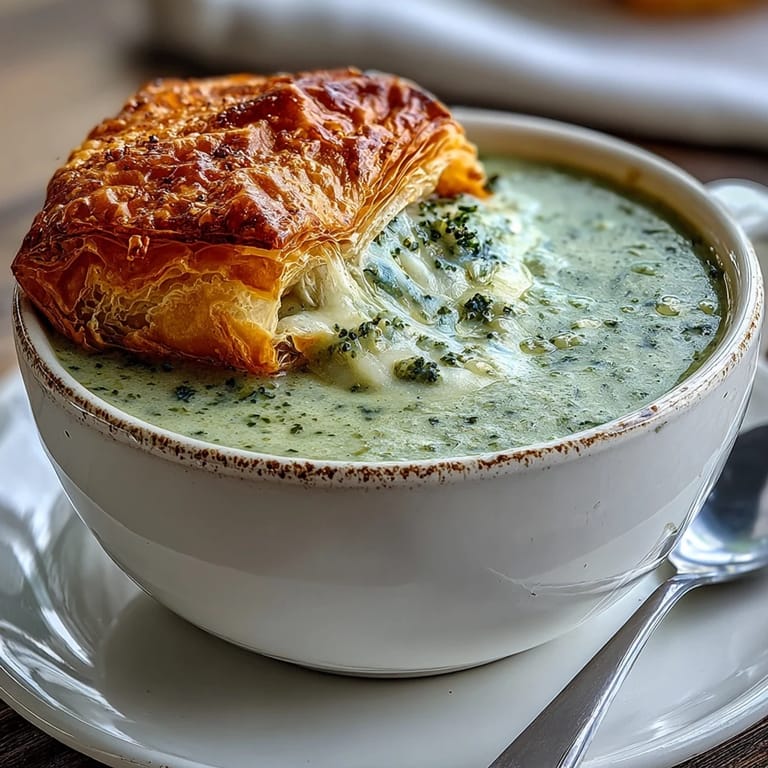
I made this for my neighbor who'd been dealing with a rough week, and watching her face soften at the first taste reminded me why I cook at all. She dipped her pastry into the soup and got that little thread of melted brie, and the whole thing just felt like the kind of gesture that doesn't need many words.
Ingredients
- Olive oil: Use good oil here since it's prominent at the start, and it'll help develop flavor in your aromatics.
- Onion and garlic: These two are your flavor foundation, so don't skip the proper sauté time or you'll miss that crucial sweetness.
- Butternut squash: Cut it carefully and remove the stringy bits for a silkier final soup.
- Broccoli florets: Fresh broccoli works best, but frozen works in a pinch if you thaw it first.
- Potato: This unsung hero helps thicken everything naturally without feeling starchy.
- Vegetable broth: Warmed broth helps everything cook more evenly than cold liquid straight from the carton.
- Heavy cream: Stir it in gently at the end to avoid breaking the emulsion if your soup is too hot.
- Dried thyme: A teaspoon is restrained but perfect; resist the urge to be heavy-handed with herbs here.
- Puff pastry: Keep it cold and work quickly when assembling your cheese parcels so the butter stays intact.
- Brie and cheddar cheese: The combination of mild brie and sharp cheddar creates a flavor that's deeper than either cheese alone.
- Egg wash: This gives pastry its signature shine and helps it brown evenly.
Tired of Takeout? 🥡
Get 10 meals you can make faster than delivery arrives. Seriously.
One email. No spam. Unsubscribe anytime.
Instructions
- Ready your oven and workspace:
- Set the oven to 200°C (400°F) and line your baking sheet with parchment paper while you're thinking about it. This tiny step prevents scrambling later when the pastries are ready to go in.
- Build your flavor base:
- Heat olive oil in a large pot over medium heat, then add diced onion and cook until it turns translucent and sweet, about 3 to 4 minutes. Add minced garlic and let it perfume the oil for just one minute more, breathing in that incredible smell as your signal that you're on the right track.
- Layer in your vegetables:
- Add butternut squash, broccoli, potato, and thyme to the pot, stirring everything together for about 2 minutes so the vegetables start to toast slightly in the oil. Season generously with salt and pepper at this point rather than waiting until the end.
- Simmer until tender:
- Pour in your vegetable broth and bring everything to a boil, then reduce heat and let it simmer gently for 20 to 25 minutes until the squash and broccoli are soft enough to break apart with a spoon. The kitchen will smell like autumn at this point.
- Prepare cheese pastry parcels:
- While soup is simmering, roll out your thawed puff pastry on a lightly floured surface and cut it into 8 rectangles. Take 4 rectangles and distribute small cubes of brie and grated cheddar in the center of each, leaving a border around the edges.
- Seal your pastry packages:
- Cover each filled rectangle with a remaining rectangle and press the edges together with a fork, creating a tight seal so the cheese stays inside during baking. Brush the tops generously with beaten egg wash for that golden appearance.
- Bake until puffed and golden:
- Place pastries on your prepared baking sheet and bake for 15 to 18 minutes until they're risen, golden, and making your kitchen smell like a French bakery. You'll know they're done when they sound hollow if you tap them gently.
- Blend your soup smooth:
- Remove the pot from heat and use an immersion blender to puree the vegetables until the soup reaches a velvety consistency, working in batches if you're using a regular blender. Be careful not to splash hot soup everywhere, and lean back from the steam.
- Finish with cream and warmth:
- Stir in heavy cream gently, taste for seasoning, and add more salt and pepper if needed, then reheat gently for 2 to 3 minutes without boiling. This step brings everything into harmony.
- Plate and serve:
- Ladle hot soup into bowls and top each with a warm cheese pastry, either resting it on top or partially dipped into the soup depending on your mood. The contrast of temperatures and textures is what makes this dish sing.
 Save
Save My friend came back three weeks later just to ask if I'd teach her how to make this. That's when I realized this soup had become something bigger than just a recipe to me, something that connected to people I cared about.
When You Want to Dress It Up
I've found that a light drizzle of truffle oil or crispy sage leaves scattered across the top transforms this into something dinner-party worthy without requiring any real extra work. The soup stays humble, but suddenly it looks like you've been thinking about it all day when really you just remembered something you had in the back of the cupboard at the last moment.
The Timing Dance
The beauty of this dish is that you can have everything ready and waiting, then bring the pastries to golden perfection while your soup is still simmering. If you're serving guests, this means no one is stranded in the kitchen watching things cook while everyone else sits around drinking wine. It all comes together in about an hour, which feels like magic when you're plating something this elegant.
Little Tricks That Make a Difference
Over time I've learned that adding just a whisper of nutmeg to the soup makes people pause and ask what that warmth is, even if they can't name it. A pinch of good sea salt right at the end reminds the soup of itself, and if you have the cream slightly warmed before stirring it in, it integrates more smoothly without the soup cooling down too much. These aren't revolutionary techniques, just small choices that show respect for what you're making.
- Warm your serving bowls with hot water before plating so the soup stays at that perfect temperature longer.
- If you're not serving immediately, keep the pastries in a warm oven and reheat the soup gently on low heat rather than blasting it on high.
- Leftover soup keeps beautifully in the fridge for three days, but the pastries are best eaten within a few hours of baking.
 Save
Save This soup has become my go-to when I want to feel like I'm taking care of someone, including myself. It's proof that comfort food doesn't have to choose between being delicious and being elegant.
Kitchen Q&A
- → Can I make this soup ahead of time?
Yes, the soup base can be prepared up to 2 days in advance and stored in the refrigerator. Reheat gently before serving, and bake the pastries fresh for the best texture.
- → What type of cheese works best in the pastries?
Brie provides creamy richness while sharp cheddar adds depth. You can also try Gruyère, fontina, or Swiss cheese for different flavor profiles.
- → How do I achieve the smoothest texture?
Use an immersion blender directly in the pot for convenience, or work in batches with a regular blender. Ensure vegetables are fully tender before pureing for the silkiest results.
- → Can I freeze this soup?
The soup freezes well for up to 3 months. However, prepare the pastries fresh since frozen and reheated puff pastry loses its signature flaky texture.
- → What can I serve alongside this dish?
A crisp green salad with vinaigrette balances the richness. Crusty bread, roasted vegetables, or a light white wine like Sauvignon Blanc also complement the flavors beautifully.