 Save
Save I'll never forget the first time I created a wine pairing platter for my book club. We were reading a French novel, and I wanted the spread to feel just as elegant and intentional as the story we were discussing. That evening, I realized that the most memorable gatherings aren't just about what you read—they're about the thoughtful moments you create around the table, where conversation flows as naturally as the wine.
I still remember my friend Sarah's face when she arrived and saw that first platter. She expected a simple spread, but instead found herself transported—there was intention in every placement, mystery in each section waiting to be paired with wine. That's when I understood: a beautiful platter is an invitation to slow down and savor both the food and the company.
Ingredients
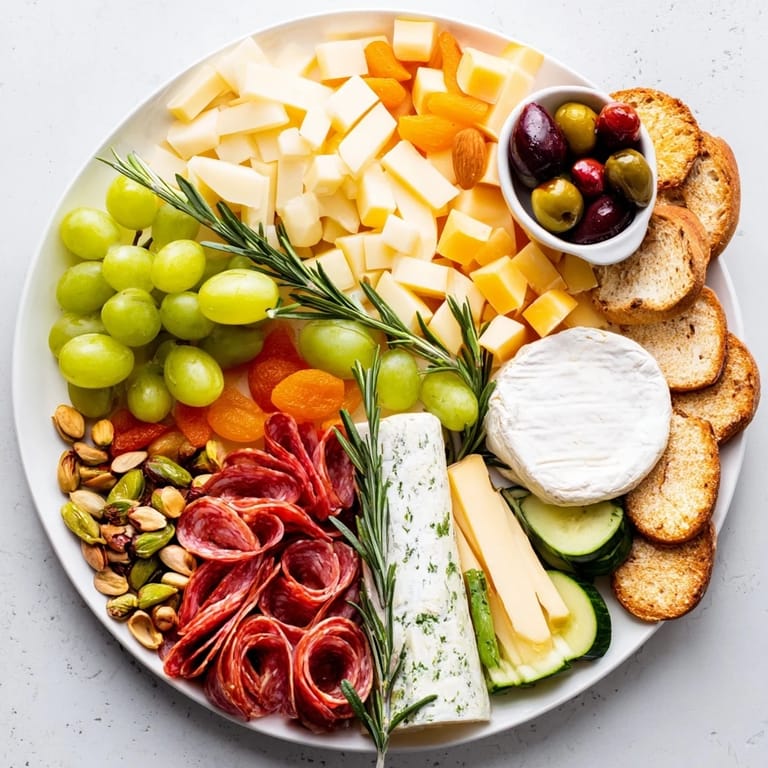
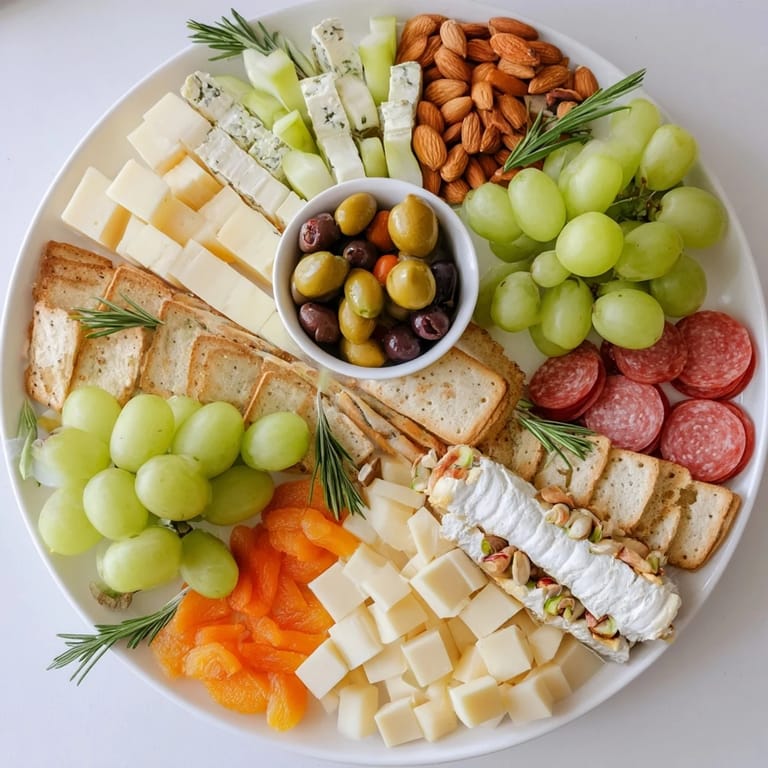
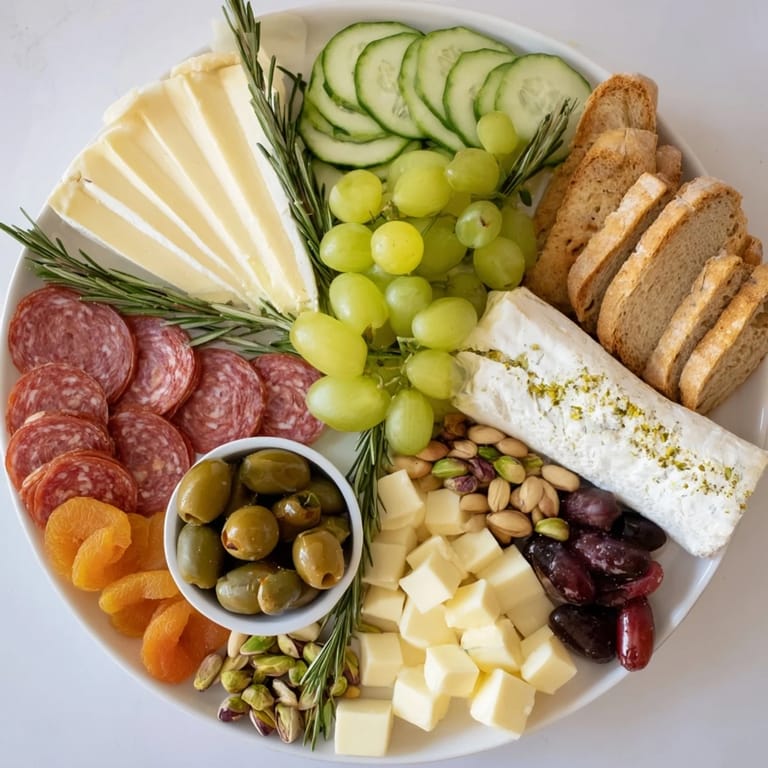
- Section 1: To Pair with Chardonnay (White Wine): This is where delicate, creamy, and bright flavors shine. The triple-cream brie brings luxurious richness that dances with buttery white wines, while Gruyère adds a subtle nuttiness. Green grapes provide little pockets of refreshment, the apple brings a crisp counterpoint that cuts through the wine's weight, and Marcona almonds add that whispered luxury that makes a platter feel intentional.
- Section 2: To Pair with Pinot Noir (Red Wine): Here you're building around deeper, earthier flavors. Aged cheddar has the complexity to stand up to red wine, while smoked gouda adds an unexpected warmth. The prosciutto and salami aren't just decoration—they're flavor anchors that echo the wine's savory notes. Cherry tomatoes provide bursts of acidity that keep the pairing lively and prevent it from feeling heavy.
- Section 3: To Pair with Sparkling Wine or Rosé: This section celebrates brightness and elegance. Herbed goat cheese with its tang is a sparkling wine's best friend, dried apricots add subtle sweetness that flatters rosé, roasted pistachios provide earthy depth, and olives with cucumber create a refreshing contrast that makes you reach for another sip.
- For Serving and Garnish: A good baguette is the vehicle for everything else—choose one that's crisp on the outside but tender within. Crackers offer variety in texture and flavor. Fresh rosemary sprigs do double duty: they're beautiful dividers that also subtly perfume the entire platter, making it feel like an event rather than just snacks.
Tired of Takeout? 🥡
Get 10 meals you can make faster than delivery arrives. Seriously.
One email. No spam. Unsubscribe anytime.
Instructions
- Start with your canvas:
- Choose a board or platter that feels substantial—you want it big enough that sections don't crowd into each other. This is your workspace for the next few minutes, so make sure you have good lighting and that everything is clean and ready.
- Create your dividers:
- Take those rosemary sprigs and arrange them to create three distinct territories. They don't need to be perfectly symmetrical—a little organic placement feels more authentic. As you place them, you'll notice how the fragrance begins to build in the air. This small detail transforms a board into an experience.
- Build Section 1 with intention:
- This is the white wine section, so think about balance. Slice your brie into elegant pieces and arrange them on one side. Group the Gruyère cubes nearby—not in a line, but in a gentle cluster. Add a small pile of grapes, fan your apple slices so they don't oxidize too quickly, and scatter the almonds like little jewels throughout. There should be breathing room, empty space that invites your eye to wander.
- Layer Section 2 with confidence:
- This red wine section can be a bit more casual and robust in appearance. Cube the aged cheddar and cluster it with the smoked gouda. Fold the prosciutto into loose shapes—don't lay it flat and rigid, but let it have dimension and movement. Roll or fold the salami for visual interest. Scatter cherry tomatoes like jewels, and don't worry if they roll a bit. This section should feel abundant and full of possibility.
- Finish Section 3 with grace:
- For the sparkling wine section, present that herbed goat cheese log proudly in the center of its section—it's the anchor. Arrange dried apricots in a loose arc, scatter pistachios so their green color pops against the board, add a small pile of mixed olives, and fan your cucumber slices. This section should feel fresh and inviting, with good color contrast.
- Fill the spaces:
- Now comes the part that feels like crafting. Take your baguette slices and lean them against the sections, creating little bridges between them. Scatter crackers strategically—some standing at angles for texture, some flat for stability. This is where you're creating a landscape, not just arranging food.
- Add the finishing touches:
- If you're using honey or fig jam, pour small amounts into shallow bowls and position them where they're accessible but not dominating. Step back and look at your work. Are there empty spots that need filling? Color gaps that need balancing? This is the moment where a good platter becomes one people talk about.
- Serve with ceremony:
- Bring it to the table with intention. The moment people see it is part of the experience. Explain the pairings if you'd like, or let them discover them. Either way, you've created something that says you care about the gathering, not just the food.
 Save
Save There was a moment during that book club when the conversation paused. Someone reached for a piece of brie with a grape, paired it with a sip of Chardonnay, and just closed their eyes. In that pause, I realized that this platter had become more than sustenance—it had become the quiet heart of our gathering, the thing that let us relax into conversation and connection.
The Art of Wine Pairing on a Platter
Creating a platter that actually pairs with wine is different from just assembling pretty things. When you taste a piece of brie with a green grape and then sip Chardonnay, there's a moment where they speak to each other. The wine's buttery notes echo the cheese's richness, and the grape provides a bright counterpoint that makes you want another sip. This isn't accidental—it's about understanding that wine pairing isn't pretentious, it's practical. Each component on that board should either complement the wine, contrast with it, or refresh your palate for the next taste. That's the invisible framework holding this platter together.
Why Presentation Actually Matters
I used to think beautiful food presentation was purely for Instagram, but I've learned it's more intimate than that. When you take time to arrange food thoughtfully, you're sending a message to your guests that they matter. You're saying you didn't just grab whatever was in the fridge—you chose these things, you thought about how they'd work together, you cared about creating a moment. That message lands quietly, beneath conscious thought, but it changes how people feel at your table. A platter that's been thoughtfully arranged tastes better because it arrives as a gift, not just as fuel.
Building Your Perfect Platter
The beauty of this structure is that it's infinitely adaptable to what you actually have on hand. If you can't find Marcona almonds, any good quality nut works. Don't have smoked gouda? Use a sharp cheddar or even a bold blue cheese. The framework—three sections, each with a cheese base, a protein or fresh element, a textural element, and a fresh component—remains solid no matter what you fill it with. I've made versions with what I pulled from my everyday kitchen, and they've been just as successful as the carefully sourced versions. The magic isn't in any single ingredient, it's in the thoughtfulness of the assembly.
- Swap cheeses and cured meats based on what your guests prefer or what's available at your market
- For a vegetarian platter, the structure still works—just double down on cheeses, nuts, dried fruits, and roasted vegetables
- Make this platter your own by adding something unexpected: spiced nuts, a good olive oil for dipping bread, or a single standout cheese that becomes the story of the board
 Save
Save Every time I make this platter, I'm reminded that hospitality isn't about perfection—it's about intention. It's about gathering people around something beautiful and nourishing, then getting out of the way so the gathering can happen.
Kitchen Q&A
- → How are the platter sections separated?
Fresh rosemary sprigs are used to divide the platter into three distinct aromatic sections.
- → Can this platter accommodate vegetarian preferences?
Yes, meats can be omitted and replaced with additional nuts or roasted vegetables to suit vegetarian diets.
- → What types of cheeses are included?
Selections include triple-cream brie, Gruyère, aged cheddar, smoked gouda, and herbed goat cheese.
- → Which fruits are used to complement the cheeses?
Green grapes, apple slices, cherry tomatoes, dried apricots, and cucumber slices add fresh and sweet elements.
- → How long does preparation take?
Preparation takes approximately 25 minutes with no cooking required.
- → What garnishes enhance the platter's flavor?
Baguette slices, assorted crackers, honey, or fig jam can be added to elevate taste and texture.