 Save
Save I discovered this arrangement trick at a dinner party where I was tasked with bringing an appetizer and found myself staring at four blocks of blue cheese, suddenly wondering if I could turn them into something memorable instead of just tossing them on a board. The idea hit me while I was thinking about the ridge lines near my cabin upstate, and before I knew it, I was standing at my kitchen counter creating what felt like a edible landscape. My guests actually gasped when they saw it, which might sound dramatic, but that moment made me realize that sometimes the best dishes come from a moment of playful inspiration rather than following a plan.
The first time I actually made this for company was for my neighbor who collects nature photographs, and when she walked in and saw the mountain range, she pulled out her camera immediately. We ended up spending an hour talking about landscape and flavor while picking at the board, and I realized that food arranged with intention creates a different kind of conversation than food just placed on a platter. She's requested it twice since, always saying she wants to photograph it again in different lighting.
Ingredients
- Roquefort cheese: This French powerhouse has a sharp, salty bite that anchors the whole arrangement—it's the peak that catches your attention first.
- Gorgonzola cheese: Creamier and slightly milder than Roquefort, it adds a different texture layer that keeps things interesting across your palate.
- Stilton cheese: The British entry brings a slightly earthier note with less salt punch, rounding out the flavor family without repeating.
- Bleu d'Auvergne cheese: Often the most delicate of the bunch, it provides a sophisticated finish that lingers after the others fade.
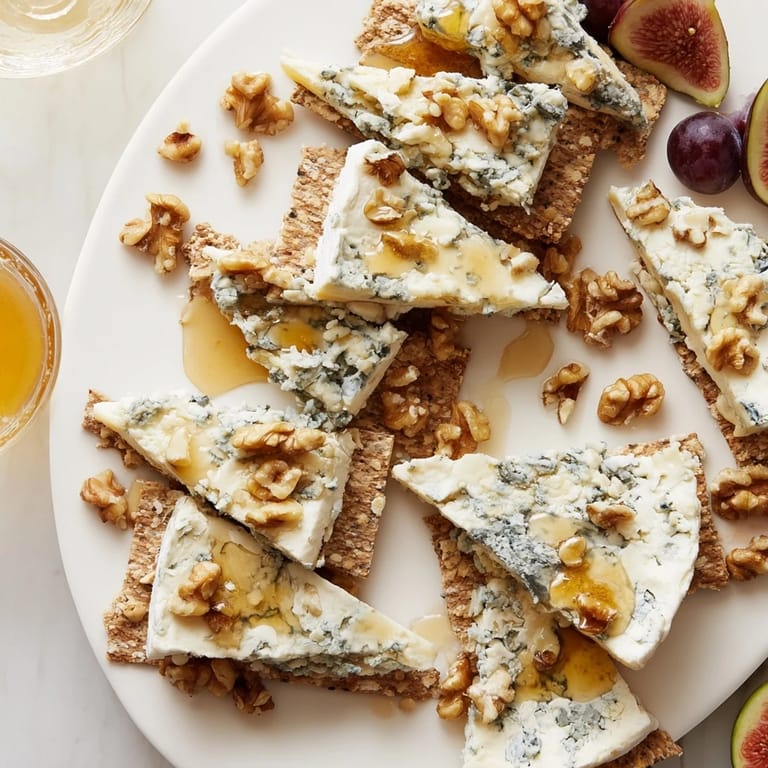
- Artisanal whole-grain crackers: These need enough structural integrity to hold the cheese weight and enough flavor to complement rather than disappear.
- Honey: A small drizzle becomes the sweetness that makes blue cheese suddenly approachable to people who think they don't like it.
- Toasted walnuts, chopped: The toasting step is crucial—it wakes up the nutty flavor and adds a textural contrast that raw nuts won't give you.
- Fresh grapes or sliced figs: These bring both color and a cleansing sweetness that helps reset your palate between cheese tastes.
- Fresh herbs (rosemary sprigs): A small visual garnish that also adds an unexpected aromatic quality when you lean in close to the board.
Tired of Takeout? 🥡
Get 10 meals you can make faster than delivery arrives. Seriously.
One email. No spam. Unsubscribe anytime.
Instructions
- Slice your cheeses into the peaks:
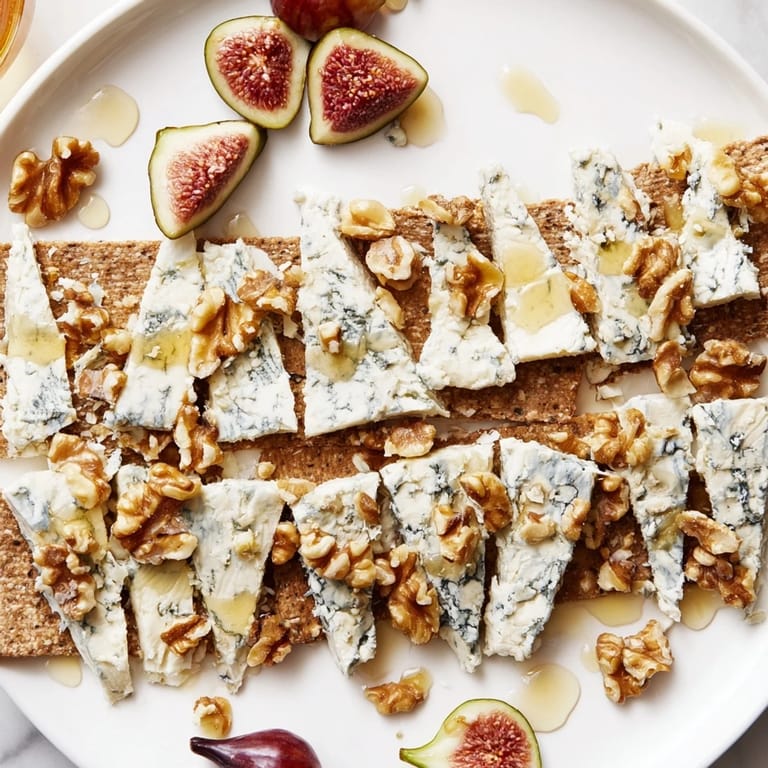
- Cut each blue cheese into wedges and blocks rather than uniform slices—you want them rough and jagged like actual mountain terrain. Let your knife be a little wild here; the irregularity is what makes this work.
- Build your sky and foundation:
- Lay the crackers in a single layer across your platter or board, letting them create the base landscape. This is your chance to arrange them in a way that feels balanced to you.
- Stack your range:
- Place the blue cheeses in a row, varying their heights and angles so they catch the light differently. Think about how actual mountain peaks don't line up perfectly—they overlap and jut out at different angles.
- Crown it with sweetness:
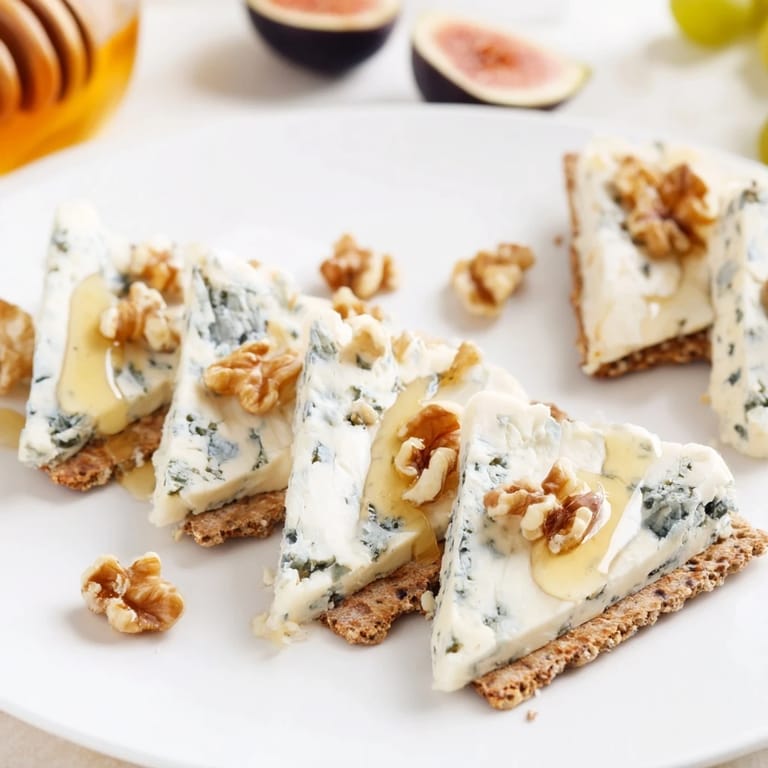
- Drizzle honey across the cheese tops in a light, casual way—you're not trying to coat everything, just add shimmer and sweetness where it catches. Follow immediately with the toasted walnuts scattered across.
- Add color and life:
- Scatter your grapes or fig slices around the base and edges of the mountain range. This is where the platter goes from conceptual to genuinely appetizing.
- Final touch and serve:
- A small sprig or two of rosemary adds aroma and visual interest if you have it. Serve immediately while the honey is still slightly warm and the cheese hasn't warmed up too much.
 Save
Save There's something about arranging food into a landscape that transforms it from an appetizer into a moment of conversation. When people eat from a board that looks intentional, they eat slower, they notice more, and somehow the flavors taste better simply because they're paying attention.
Choosing Your Blue Cheese Lineup
The magic of this platter lives in mixing blue cheeses because each one brings a completely different personality to the table. Roquefort tends to grab attention first with its boldness, while Gorgonzola slides in with a creamy smoothness that makes people say they actually like blue cheese. Stilton offers sophistication without aggression, and Bleu d'Auvergne reminds you that blue cheese can be subtle and complex. I learned this by accident when I ran out of one cheese and substituted another, and suddenly the tasting experience became more interesting than when I'd made it with just one type repeated.
The Cracker Question
Crackers are more important than they seem, and I say this as someone who once grabbed whatever was on sale and regretted it immediately. Whole-grain or seeded crackers have enough texture and flavor that they don't just become a vehicle for cheese—they become part of the eating experience. Cheap, bland crackers will actually make the blue cheeses taste more aggressive because there's nothing to buffer them.
Making It Your Own
This platter is as flexible as appetizers come, and I've made it a dozen different ways depending on what I had in the kitchen or what mood I was trying to create. The core idea is the arrangement and the mix of blue cheeses, but everything else is fair game for your own interpretation. One time I added a small drizzle of aged balsamic alongside the honey, and it completely shifted the flavor story in a way I didn't expect but absolutely loved.
- Try a nut-free version by swapping walnuts for toasted pumpkin seeds or sunflower seeds for the same crunch and richness.
- Add dried apricots, dates, or figs alongside fresh fruit for layers of sweetness and chew that complement the funk of blue cheese.
- Drizzle a small amount of aged balsamic or fig jam onto sections of the cheese for unexpected flavor moments.
 Save
Save Every time I make this, I'm reminded that the best appetizers are the ones that make people slow down and notice what they're eating. This mountain range does exactly that.