 Save
Save The first time I made baked feta pasta, I wasn't trying to follow a trend—I was just standing in my kitchen at 6 p.m. on a Tuesday with a block of feta, some cherry tomatoes from the farmers market, and the sudden realization that I could throw it all in a pan and let the oven do the work. Twenty minutes later, my apartment smelled incredible, and I had something that tasted restaurant-quality but felt entirely effortless. This lighter version with roasted vegetables is what I've been making ever since, because it turns out the original wasn't missing anything—just needed a few fresh additions to feel complete.
I made this for my friend who claims she doesn't like feta, and watching her face change after the first bite—that moment when someone realizes they've been wrong about something their whole life—made the whole meal worth it. She came back the next week asking for the recipe, which told me everything I needed to know about how good this actually is.
Ingredients
- Reduced-fat feta cheese block (200 g): The heart of everything—buy a block, not crumbles, because it melts into something creamy and luxurious that pre-crumbled cheese just can't achieve.
- Cherry tomatoes (400 g, halved): They burst and caramelize in the oven, creating little pools of sweet, concentrated flavor that anchor the whole dish.
- Zucchini (1 medium, diced): Roasted zucchini gets tender and slightly golden at the edges, adding substance without heaviness.
- Red bell pepper (1, diced): It softens beautifully in the heat and brings natural sweetness that balances the salty feta.
- Red onion (1 small, sliced): Raw would be sharp, but roasted it becomes mellow and almost caramelized, adding depth.
- Garlic (2 cloves, minced): Add this after roasting so it doesn't burn—it wakes up the entire dish in the last few minutes.
- Extra-virgin olive oil (2 tbsp): Don't skimp here; this is your sauce base and flavor foundation.
- Dried oregano (1 tsp): A Mediterranean anchor that ties everything together without shouting.
- Crushed red pepper flakes (½ tsp, optional): Just enough heat to make you appreciate the cooling effect of feta.
- Salt and black pepper: Season the vegetables generously before roasting—they need it to develop flavor.
- Fresh basil leaves: Tear these over at the end for brightness and a reminder that this is summer on a plate.
- Whole-grain pasta (300 g penne or fusilli): Whole grain adds nuttiness and texture that complements the creamy sauce perfectly.
Tired of Takeout? 🥡
Get 10 meals you can make faster than delivery arrives. Seriously.
One email. No spam. Unsubscribe anytime.
Instructions
- Get your oven ready:
- Preheat to 200°C (400°F) so it's hot and ready when you need it.
- Build your vegetable base:
- Combine the tomatoes, zucchini, pepper, and onion in a large baking dish, then drizzle with olive oil and season with oregano, pepper flakes, salt, and pepper. Toss everything until it's evenly coated—this even coating matters because it helps the vegetables caramelize instead of steam.
- Crown it with feta:
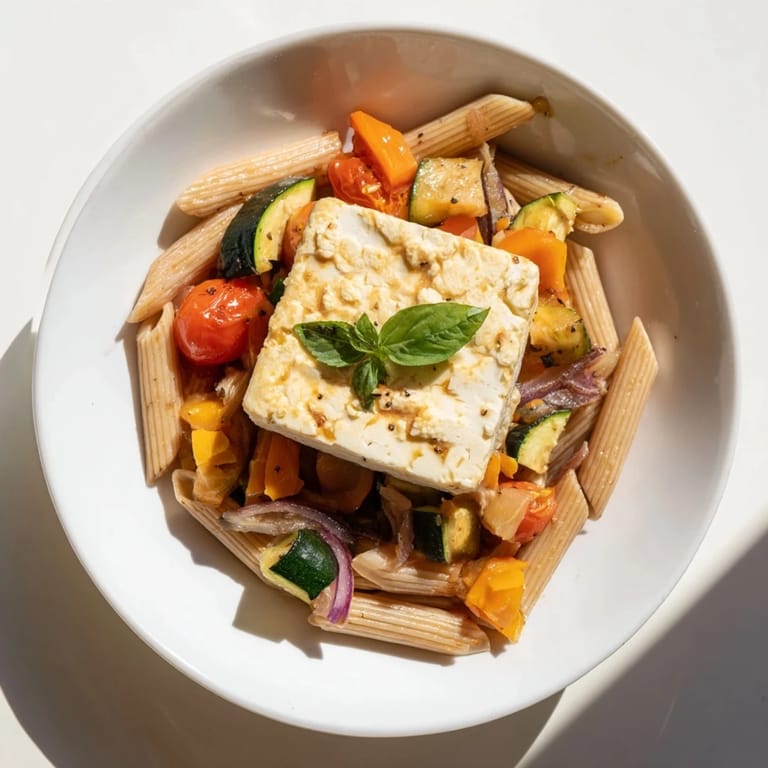
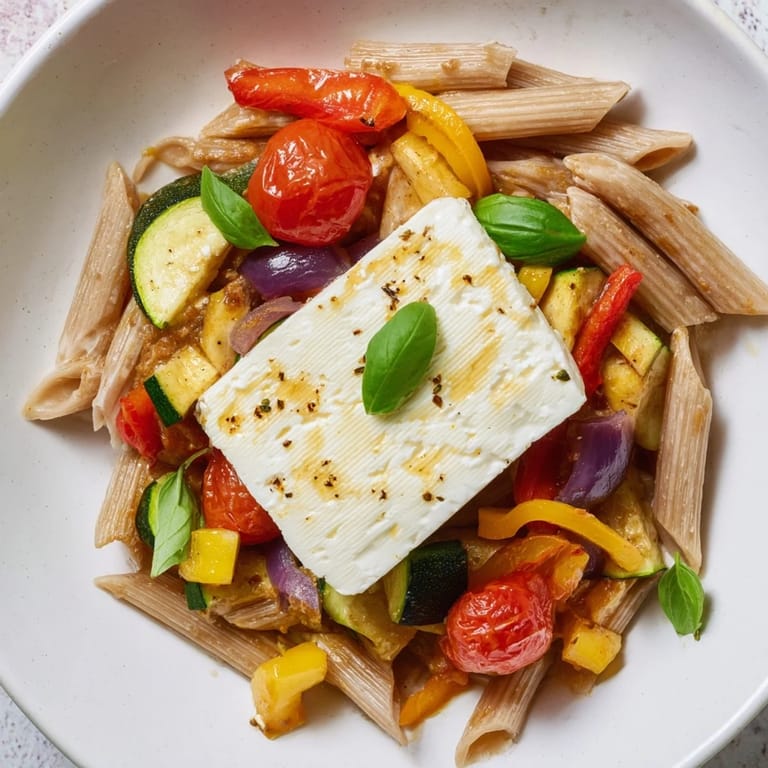
- Place the feta block right in the center of the vegetables and give it a light drizzle of olive oil so it gets golden and creamy.
- Let the oven work:
- Roast for 25–30 minutes until the vegetables are caramelized with slightly charred edges and the feta is soft and golden. You'll know it's ready when the feta looks like it's melting into the pan.
- Cook the pasta:
- While everything roasts, get a large pot of salted water boiling and cook your whole-grain pasta according to package directions. Before you drain it, scoop out and reserve about ½ cup of that starchy pasta water—this liquid is your secret to a silky sauce.
- Bring it together:
- Once the roasted vegetables are done, remove the dish from the oven and immediately stir in the minced garlic, then gently mash the soft feta into the vegetables and their juices, breaking it down into a creamy, textured sauce.
- Combine and toss:
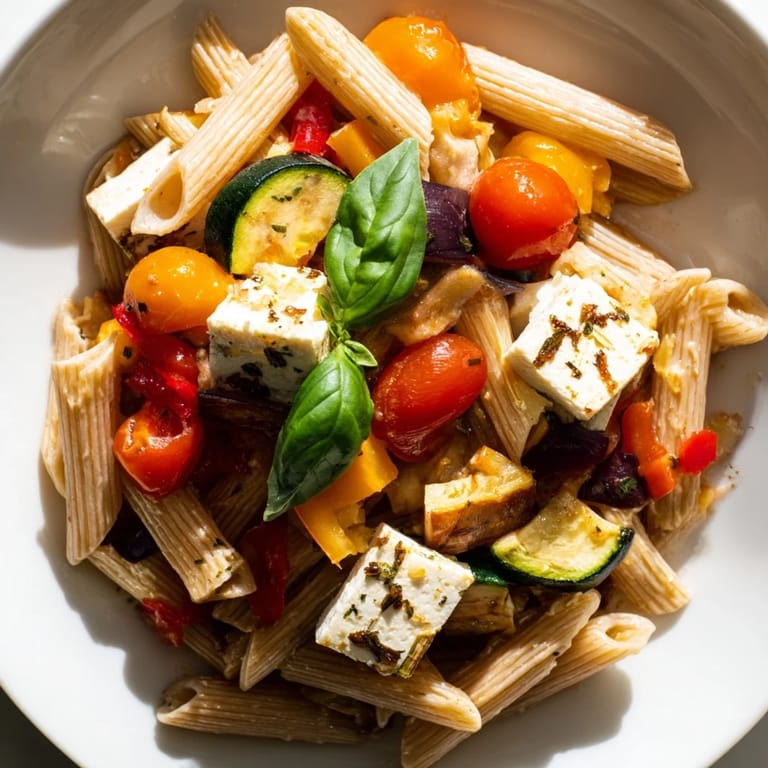
- Add the drained pasta directly to the baking dish along with a splash of reserved pasta water, then toss everything together until the pasta is coated in that creamy feta-vegetable sauce. Add more pasta water if you need it to reach a silky consistency.
- Finish and serve:
- Tear fresh basil over the top and serve it straight from the baking dish while it's still warm.
 Save
Save There's something about baked feta pasta that turned it from a recipe into a ritual for me—it's become the meal I make when I want to feel like I've accomplished something without actually trying that hard. It's the dish that proved to me that good food doesn't require complexity, just the right combination of simple ingredients and permission to let the oven do most of the thinking.
Why This Lighter Version Works
The viral baked feta pasta was genius, but adding roasted vegetables wasn't about being healthier—it was about texture and flavor depth. The zucchini adds volume and creaminess as it softens, the peppers bring natural sweetness, and the tomatoes collapse into jammy pockets of flavor. The whole-grain pasta holds up to the creamy sauce better than delicate white pasta would, and somehow the entire dish feels more substantial and complete, like you've actually cooked something rather than heated up a shortcut.
Timing and Temperature Matter
The oven temperature of 200°C is your sweet spot—hot enough to caramelize the vegetables and soften the feta, but not so brutal that things burn before they have time to develop flavor. I learned this the hard way after trying 220°C and ending up with blackened tomatoes and feta that split instead of melted. The 25–30 minute window matters too; start checking around minute 22 so you catch that moment when everything is golden and creamy but not dry.
Variations and Seasonality
One of the best things about this recipe is how forgiving it is with seasonal swaps. In spring, I add asparagus and peas; in late summer, I throw in diced eggplant; in fall, I've even added roasted butternut squash alongside the tomatoes. The structure stays the same, but the dish tastes like the season you're cooking in, which somehow makes it feel less like following instructions and more like cooking with intention.
- Add drained chickpeas or white beans for extra protein and heartiness if you want to make it a more filling meal.
- Spinach wilts directly into the hot pan after roasting if you want to add greens without extra prep.
- Swap feta for creamy goat cheese or a soft ricotta if you want a different flavor direction, though the result will taste distinctly different.
 Save
Save This recipe taught me that sometimes the best meals are the ones that come together almost by accident, where you're not following a formula but responding to what's in your kitchen and what the oven is telling you. That's the version of baked feta pasta I keep coming back to, and it's the one I'm sharing with you.
Kitchen Q&A
- → What pasta works best with baked feta and veggies?
Whole-grain penne or fusilli are ideal as they hold the creamy sauce well and add a wholesome texture.
- → Can I substitute vegetables in this dish?
Yes, you can swap in seasonal favorites like spinach, eggplant, or asparagus for variety and freshness.
- → How do I achieve a creamy texture without extra cream?
The softened, roasted feta melds with the pasta water and vegetables to form a naturally creamy sauce.
- → Is this dish suitable for a gluten-free diet?
Use certified gluten-free pasta to adapt the dish while maintaining its delicious flavor.
- → What herbs complement the baked feta and veggies?
Oregano and fresh basil provide aromatic notes that enhance the Mediterranean profile of the dish.