 Save
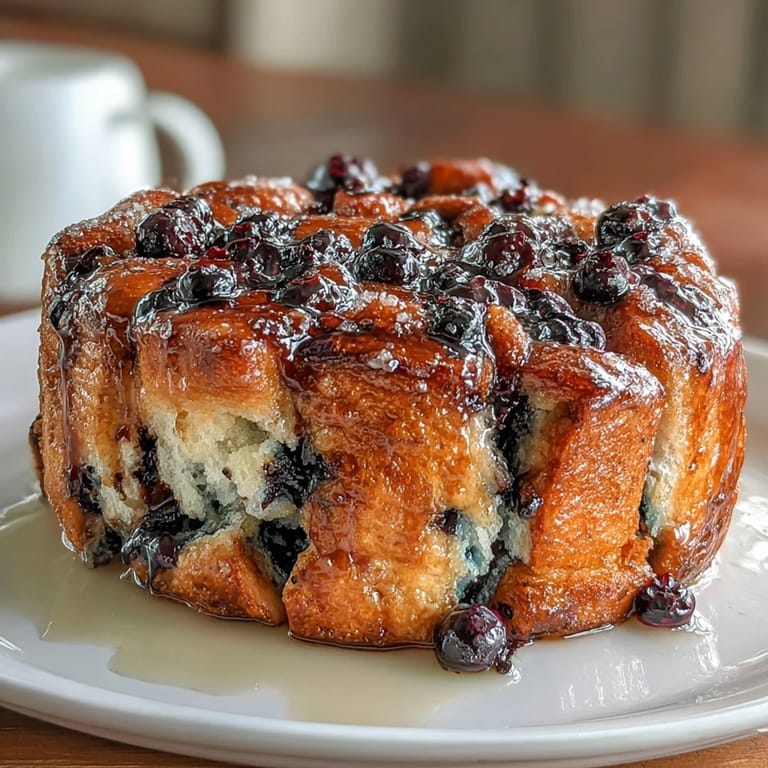
Save My sister called me in a panic the morning before her brunch party, asking if I could bring something special that would make people linger at the table a little longer. I found myself at the farmer's market that afternoon, drawn to a heap of blueberries still dewy from the morning, and suddenly remembered a sourdough starter I'd been nurturing for weeks. By evening, I'd dreamed up this pull-apart bread, and when I pulled it from the oven the next morning, the kitchen smelled like sunshine and butter.
I watched my brother pull apart those warm squares at brunch, and he closed his eyes after the first bite—not in a dramatic way, just that quiet moment when food stops being fuel and becomes a conversation. People kept coming back to the bread before dessert even happened, and I realized I'd stumbled onto something that felt both elegant and deeply comforting.
Ingredients
- All-purpose flour (2 1/2 cups): This is your foundation, and measuring by weight rather than volume really does make a difference in how the dough feels.
- Granulated sugar (1/4 cup for dough): Just enough to feed the yeast and add subtle sweetness without overpowering the tang.
- Fine sea salt (1/2 teaspoon): A touch of salt amplifies flavor and controls fermentation, so don't skip it even though it seems small.
- Active sourdough starter (1/2 cup): This is the heart of the recipe—use a starter that's bubbly and at peak activity after feeding, ideally 4-8 hours post-feed.
- Whole milk, lukewarm (1/2 cup): Room temperature matters here; cold milk will slow everything down, hot milk will damage the yeast.
- Large eggs, room temperature (2): Cold eggs make the dough sluggish, so pull them out 30 minutes before mixing.
- Unsalted butter, softened (1/4 cup for dough, 2 tablespoons melted for filling): Soft butter incorporates smoothly without toughening the gluten network.
- Granulated sugar for filling (1/2 cup): This becomes the sweetened layer between those beautiful layers of dough.
- Fresh lemon zest (2 tablespoons): Zest just before mixing so the oils are bright and fragrant; a microplane makes this effortless.
- Fresh blueberries (1 cup): Room temperature berries distribute more evenly, and if you must use frozen, don't thaw them or they'll bleed into the dough.
- Powdered sugar for glaze (1 cup): Sift it first if it's lumpy, so your glaze drapes smoothly.
- Fresh lemon juice (2-3 tablespoons): Adjust to taste, starting with 2 tablespoons and adding more if you like it tarter.
Tired of Takeout? 🥡
Get 10 meals you can make faster than delivery arrives. Seriously.
One email. No spam. Unsubscribe anytime.
Instructions
- Mix the dough with intention:
- Whisk your dry ingredients together in a large bowl, creating a small well in the center. In another bowl, combine your starter, milk, and eggs until mostly smooth, then pour this into the well and start drawing the flour in from the edges with a wooden spoon. Once it's shaggy, add your softened butter and knead for 7-10 minutes—by hand feels meditative, or use a stand mixer on medium speed until the dough is smooth and springs back when you poke it.
- Let time do the work (First Rise):
- Cover your bowl loosely with plastic wrap or a damp kitchen towel and leave it on the counter overnight or for 6-8 hours at room temperature. You'll watch it slowly expand, and by morning it should have roughly doubled, with visible bubbles across the surface.
- Wake up your flavor layers:
- While the dough rises, mix your sugar and lemon zest together in a small bowl, pressing gently with your fingertips to release the oils and create an aromatic, slightly damp mixture.
- Shape the magic:
- Flour your work surface lightly and stretch the dough into a rough 12x18-inch rectangle—it doesn't need to be perfect. Brush it generously with melted butter, then scatter your lemon sugar evenly across, followed by your blueberries, letting a few sink slightly into the dough.
- Cut and stack like you're building something special:
- Using a sharp knife or bench scraper, cut the dough into six 3-inch strips running lengthwise. Stack those strips on top of each other and cut into six squares, then stand each square upright in your buttered loaf pan so you can see those beautiful layered sides.
- Give it one last rise:
- Cover the pan and let it rest for 1-2 hours at room temperature—you're aiming for puffy and pillowy, not doubled, since the second rise is shorter than the first.
- Bake until golden and fragrant:
- Preheat your oven to 350°F. Slide the pan in and bake for 35-40 minutes, checking around the 30-minute mark—if the top is browning faster than you'd like, loosely drape some foil over it. The bread is done when it's deep golden and a skewer inserted in the center comes out clean.
- Finish with brightness:
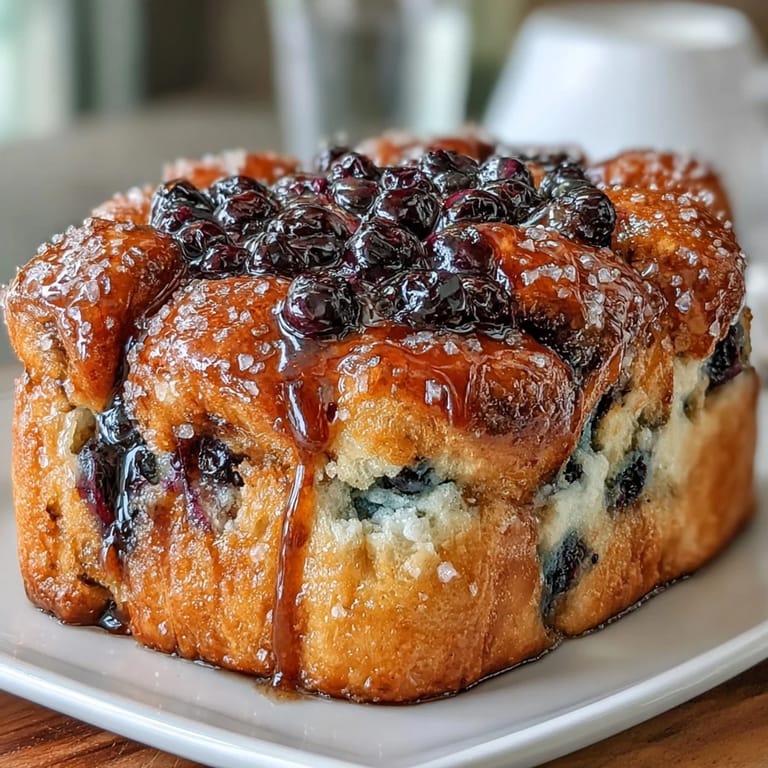
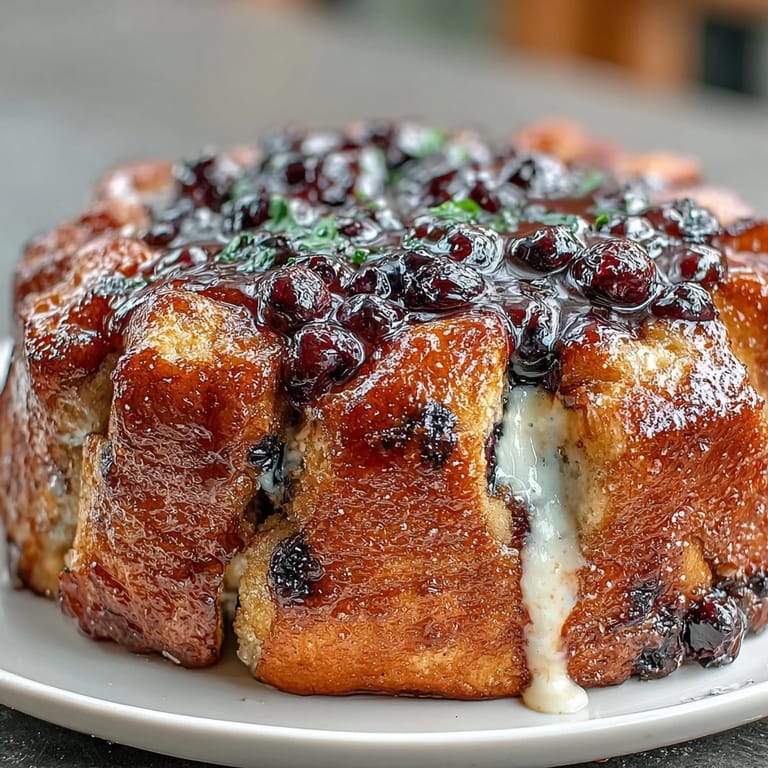
- Cool the bread in its pan for 15 minutes (this helps it stay intact), then turn it out onto a wire rack. Whisk together your powdered sugar and lemon juice until pourable, then drizzle it over the still-warm bread, letting it cascade down the sides.
 Save
Save I made this bread on a rainy Sunday afternoon, and my neighbor stopped by while it was cooling. She took one square home with her tea, and I got a text later saying it was the first time she'd understood why people make sourdough on purpose instead of just buying bread.
Why Sourdough Starter Makes All the Difference
Using a sourdough starter instead of commercial yeast changes everything about this bread—the fermentation is slower and gentler, which means the dough has time to develop flavor and the crumb becomes more interesting and complex. The starter also contributes its own tang, which plays perfectly against the sweetness of the filling without needing any vinegar or other tricks.
Timing and Temperature Secrets
Temperature is your invisible hand in this recipe, and I learned this the hard way by rushing the first rise in my warm kitchen one summer and ending up with dense bread that rose all at once instead of slowly building flavor. The sweet spot is a cool room—around 68-72°F if possible—and if your kitchen runs warm, you can even use the refrigerator for part of the rise. Cold dough develops better flavor because the yeast works slower, and cold butter doesn't melt into the dough, which keeps the texture light and fluffy rather than dense.
Variations Worth Trying
This bread is forgiving and loves company—I've added sliced almonds for crunch, swapped blueberries for raspberries in summer, and even sprinkled cardamom into the sugar mixture when I was feeling fancy. You could brush the baked bread with honey instead of glazing it, or add a squeeze of vanilla extract to the glaze if you want something deeper. The structure stays solid even when you play with it, so don't be afraid to experiment.
- Cardamom and blueberry is a Nordic twist that feels sophisticated without any extra effort.
- A drizzle of white chocolate glaze instead of lemon creates something richer, more decadent.
- Overnight refrigeration of the shaped loaf develops even more flavor if you have the time.
 Save
Save There's something deeply satisfying about pulling this bread apart at the table, watching the layers separate into warm, tender pieces that smell like lemon and yeast. It reminds me that some of the best moments in the kitchen come from slow, patient work—the kind that rewards you while people are still eating.
Kitchen Q&A
- → Can frozen blueberries be used instead of fresh?
Yes, frozen blueberries can be used directly without thawing to maintain the bread's texture and moisture balance.
- → How long should the dough rise for best results?
The dough benefits from an overnight rise of 6–8 hours at room temperature to develop flavor and a light texture.
- → What is the best way to achieve a lemon glaze?
Mix powdered sugar with fresh lemon juice until smooth, then drizzle over warm bread for a bright, tart finish.
- → Can sliced almonds be added for texture?
Yes, adding a handful of sliced almonds before baking provides a pleasant crunch complementing the soft layers.
- → What temperature should the oven be set to?
Bake at 350°F (175°C) until the bread turns golden brown and a toothpick inserted comes out clean.