 Save
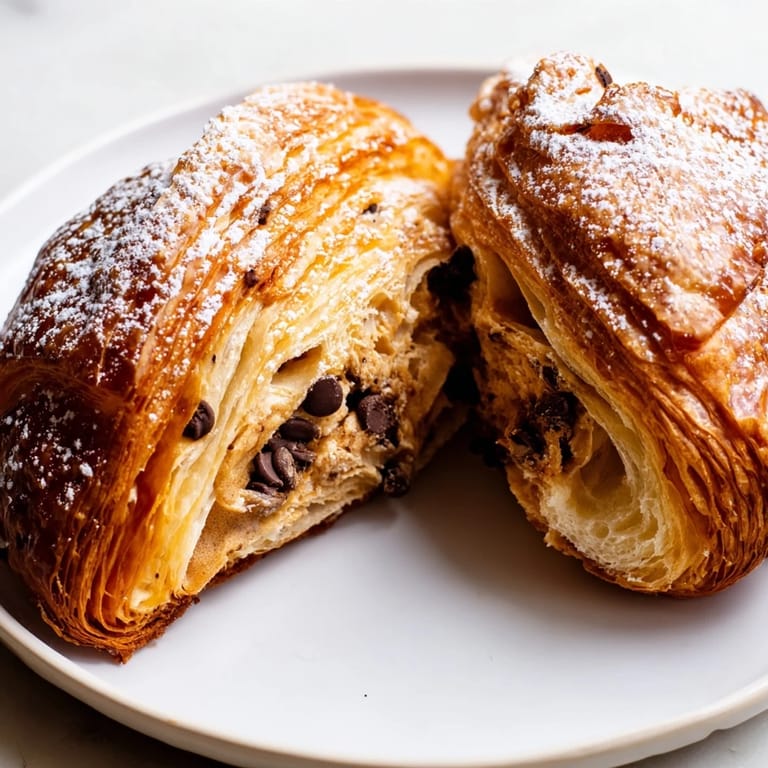
Save The first time I made these, I was staring at a box of butter croissants left over from Sunday brunch, wondering what to do with them before they got stale. That same afternoon, I'd been craving warm cookie dough straight from the bowl—you know that feeling—and suddenly it hit me: why choose between one pastry love and another? Twenty minutes later, my kitchen smelled like toasted butter and melting chocolate, and I had accidentally created something that felt both indulgent and weirdly simple.
I made a batch for my friend Sarah's birthday breakfast, and watching her face when she bit into one—that moment when you realize the warm cookie dough is still slightly underbaked inside—was worth every buttery crumb. She sat at my kitchen table in complete silence for maybe ten seconds, which is how I knew I'd nailed it.
Ingredients
- 6 large, all-butter croissants (fresh or day-old): The foundation here—all-butter is non-negotiable because you want that laminated, flaky texture that shatters when you bite. Day-old is actually better; they're sturdier and won't fall apart when you're stuffing them.
- 90 g unsalted butter, softened: This creams into the sugar and gives the dough that tender, slightly underbaked quality you're after, not the dense chewiness of overbaked cookies.
- 100 g light brown sugar and 50 g granulated sugar: The combination matters—brown sugar brings molasses depth, granulated keeps things from spreading too much in the oven.
- 1 large egg: Binds everything together without making the dough tough; use it at room temperature so it blends smoothly.
- 1 tsp vanilla extract: A small amount that whispers in the background rather than shouts.
- 150 g all-purpose flour, 1/2 tsp baking soda, and 1/4 tsp fine sea salt: These work together to give you structure without creating a traditional baked cookie texture—you want something that stays soft inside.
- 120 g semi-sweet chocolate chips: The sweet spots of richness—fold them in gently at the end so they don't break down from overmixing.
- 1 beaten egg (for egg wash) and icing sugar (optional): The egg wash gives you that glossy, golden-brown finish; the icing sugar is your flourish if you're feeling fancy.
Tired of Takeout? 🥡
Get 10 meals you can make faster than delivery arrives. Seriously.
One email. No spam. Unsubscribe anytime.
Instructions
- Get your workspace ready:
- Preheat your oven to 180°C (350°F) and line a baking sheet with parchment paper. There's something grounding about this ritual—it signals to your brain that something good is about to happen.
- Make the cookie dough base:
- Cream the softened butter with both sugars in a medium bowl until it's light, fluffy, and noticeably paler than when you started. This takes about 2–3 minutes with a hand mixer or vigorous whisking, and you'll know it's right when you can run your finger through it and see a ribbon of mixture fall back into the bowl.
- Build the dough flavor:
- Add the egg and vanilla, mixing until fully incorporated—you're not looking for a smooth, homogeneous batter, just enough that no streaks of egg white show. Sift in the flour, baking soda, and salt, mixing gently until the dough just comes together; overmixing creates tough cookies, which is the last thing you want here.
- Add the chocolate:
- Fold in the chocolate chips with a spatula, being gentle enough that they stay mostly whole. This is also where you'd add walnuts or hazelnuts if you're feeling it—fold them in at the same time.
- Prepare your croissants:
- Using a sharp knife, slice each croissant horizontally but leave about a half-inch of pastry still connected at one edge so they open like a book rather than falling apart. This hinge is everything; it holds the whole thing together while you stuff it.
- Fill with intention:
- Spoon 2–3 tablespoons of cookie dough into each croissant, pressing gently to distribute it evenly without crushing the delicate layers. You'll feel slight resistance as you press—that's the pastry letting you know its limits, so respect that.
- Seal and shine:
- Close each croissant carefully and brush the top with beaten egg until it's lightly glossy. This isn't a heavy coating; think of it as a light wash that will turn golden in the oven.
- Bake until magic happens:
- Place the filled croissants on your prepared baking sheet and bake for 16–18 minutes, watching them turn deep golden around the edges. You'll know they're done when they smell incredible and the pastry is crisp while the center still gives slightly when you press it gently.
- The final touch:
- Cool them just slightly—five minutes is enough—then dust with icing sugar if you're in the mood for it. The key is serving them while the cookie dough inside is still warm and slightly oozing, so don't let them sit too long.
 Save
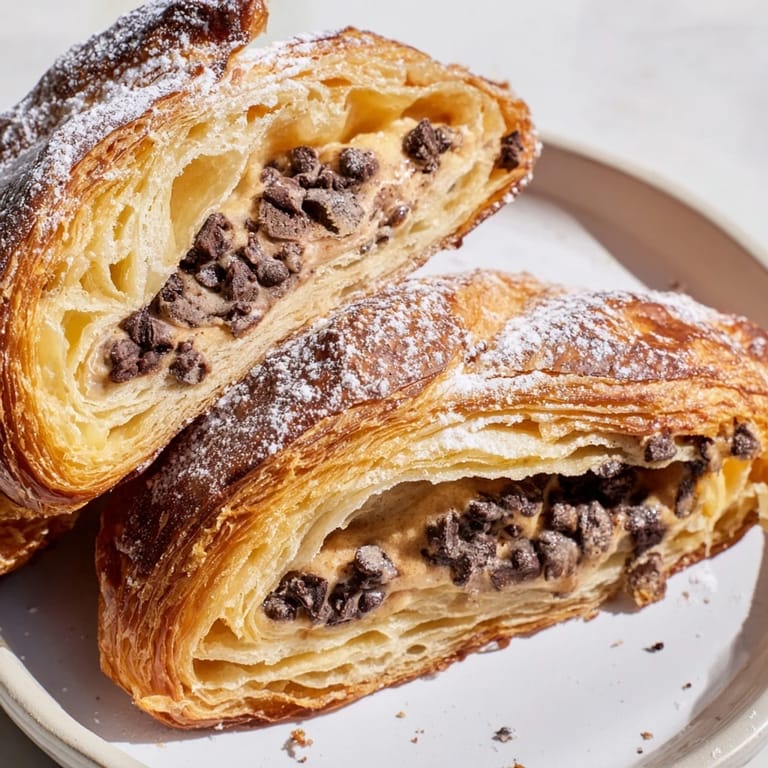
Save There's this moment after they come out of the oven, when you bite through the crispy, buttery exterior and hit that pocket of warm, soft cookie dough studded with melted chocolate—it's the kind of moment that makes you feel like you've figured something out. It tastes like you're doing something elaborate when really you're just combining two things that were always meant to go together.
Flavor Combinations That Work
Once you nail the basic version, you can start playing. Dark chocolate chips instead of semi-sweet will give you a deeper, more sophisticated bite, while white chocolate feels more indulgent and pairs beautifully with a pinch of sea salt in the dough. I've also swapped in chopped toasted hazelnuts or walnuts for some of the chocolate chips, and it shifts the whole thing into nutty territory—less pure indulgence, more complex and grown-up tasting. The cookie dough itself is forgiving; if you want to add a tablespoon of espresso powder to deepen the chocolate flavor, or a touch of cinnamon for warmth, it welcomes those additions without complaining.
Serving Moments
These are best served warm, ideally within fifteen minutes of coming out of the oven, though they're still good at room temperature if you have leftovers (which is rare). If you want to push the indulgence even further, serve them with a small scoop of vanilla ice cream alongside—the contrast between the warm pastry and cold ice cream is almost unfair in how good it is. You could also dust them with fleur de sel before serving for a sweet-salty play that makes people pause and ask what you did to make them taste so good.
Make-Ahead and Storage
You can prepare the cookie dough up to two days ahead and keep it covered in the refrigerator, which actually helps it hold together better when you're stuffing the croissants. If you want to fill them ahead of time, do it no more than a few hours before baking, and keep them covered and cool until you're ready to brush with egg wash and bake. These don't really keep well for more than a day after baking—they're at their best fresh—but if you do have leftovers, a quick five-minute warm-up in a 160°C oven will bring them back to life.
- Make the dough up to two days ahead, stored covered in the refrigerator for better structure and easier handling.
- Fill croissants a few hours before baking, keeping them covered and cool so the pastry doesn't start sweating.
- Enjoy them fresh and warm for maximum gooeyness and that perfect textural contrast.
 Save
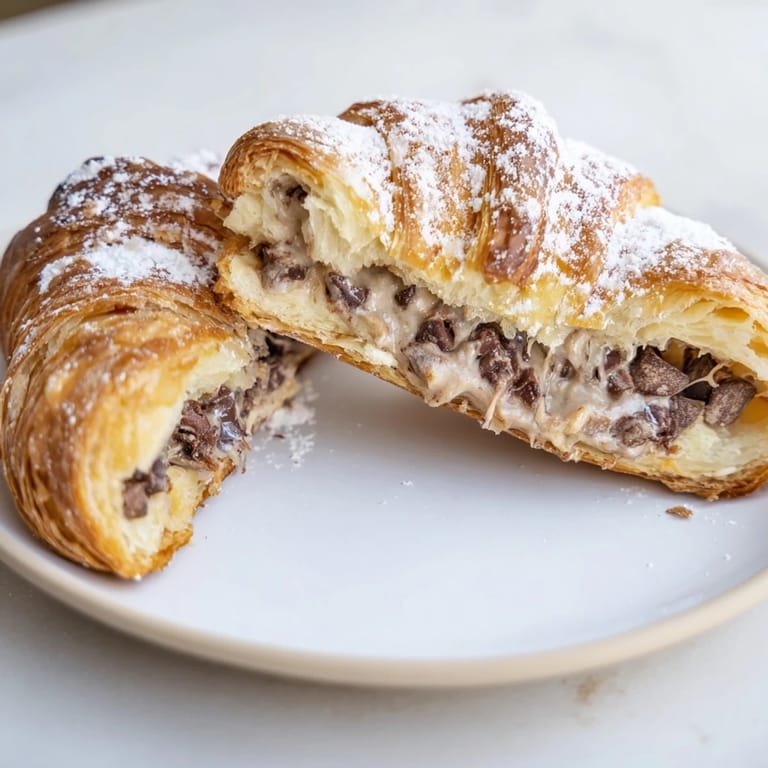
Save This recipe is proof that sometimes the best food comes from standing in front of your fridge and wondering what two things have never been properly introduced to each other. Now they're good friends, and your breakfast or afternoon snack will never be quite the same.
Kitchen Q&A
- → Can I use day-old croissants for this filling?
Yes, day-old croissants work well as their slightly firmer texture holds the filling better during baking.
- → What type of chocolate chips suit this filling best?
Semi-sweet chocolate chips are ideal for balanced sweetness, but dark or white chocolate chips can be used based on preference.
- → How do I keep the croissants from becoming soggy inside?
Slicing the croissants horizontally with a hinge allows even distribution of dough and prevents sogginess by enabling steam escape during baking.
- → Can I add nuts to the filling?
Yes, adding toasted walnuts or hazelnuts to the dough adds a pleasant crunch and nutty flavor.
- → Is it necessary to brush the croissants with egg wash?
Brushing with beaten egg gives croissants a glossy, golden finish but can be omitted for a softer crust.